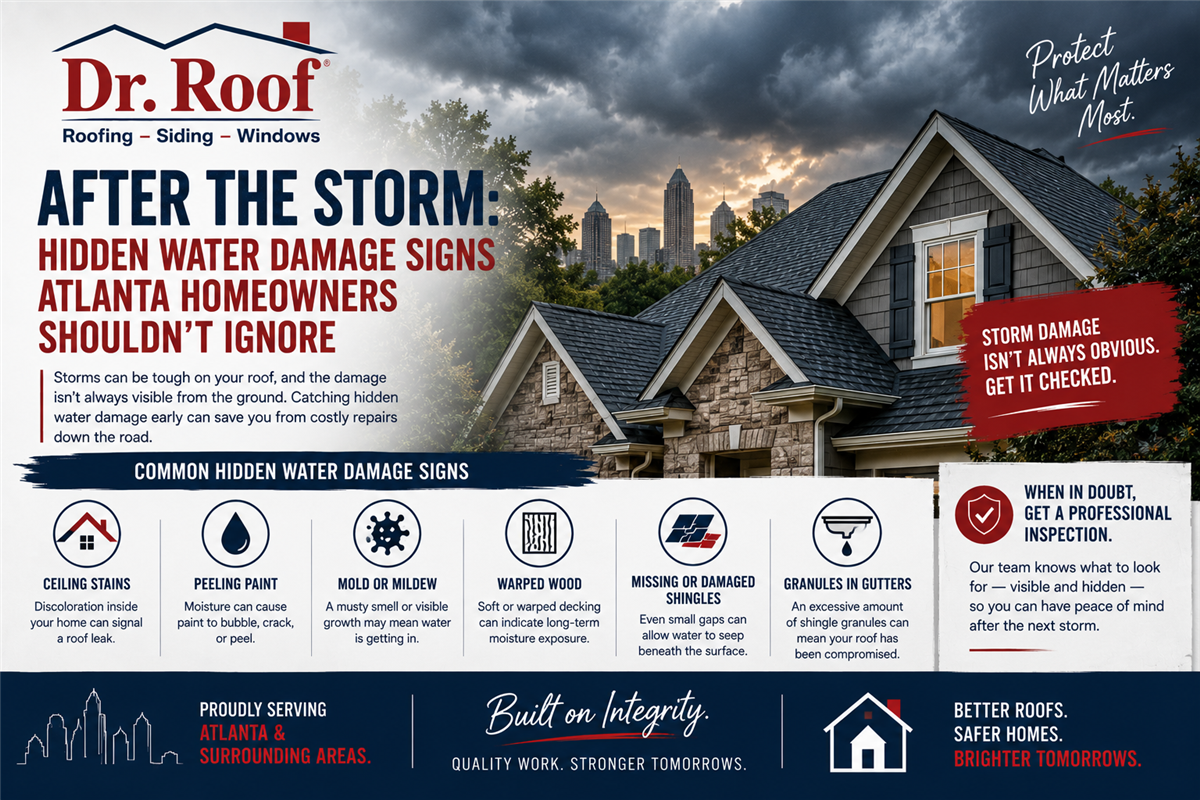
This guide helps Atlanta homeowners recognize the often-overlooked signs of water damage after a severe storm. It challenges the myth that only obvious leaks or ceiling stains matter and explains why hidden storm water damage can quietly affect your roof, attic, walls, insulation, and structural components.
For homeowners dealing with storm damage, damaged asphalt shingles, roof leaks, attic moisture, or water intrusion concerns, working with an experienced Georgia roofing company like Dr. Roof can help identify problems early and protect your home from more serious damage.
The Silent Threat: Overview and Key Discoveries
After severe weather moves through the Atlanta metropolitan area, many homeowners feel relieved when they do not immediately see an active leak or major ceiling stain.
That reaction is understandable.
However, the absence of obvious water damage does not always mean your home escaped the storm without issues.
Hidden storm water damage can develop slowly. Water may enter through damaged asphalt shingles, lifted flashing, cracked pipe boots, clogged gutters, or roof penetrations before traveling into the attic, walls, insulation, or ceilings.
By the time the damage becomes visible indoors, the problem may have been developing for weeks or even months.
That is why homeowners should know what signs to watch for after heavy rain, hail, wind, or severe storms.
The Common Misconception: Visible vs. Hidden Damage
One of the most common misconceptions about storm damage is that it will always be obvious.
Homeowners may expect to see water dripping from the ceiling, missing shingles in the yard, or a large stain right away.
In reality, water can be difficult to trace.
It may enter through a small opening in the roofing system and move along rafters, insulation, decking, drywall, or wall cavities before showing visible signs inside the home.
A small ceiling stain may point to a much larger moisture issue above it. A musty odor may signal damp insulation or hidden mildew. A roof that looks fine from the ground may still have bruised, lifted, cracked, or loosened asphalt shingles.
This is why professional storm damage detection matters.
A careful inspection can help identify problems that are easy to miss during a quick visual check.
Beyond the Obvious: Why Hidden Damage Matters
Hidden water damage after a severe storm should never be ignored.
Moisture can affect more than the roof surface. It can spread into the attic, insulation, drywall, ceilings, trim, flooring, and structural wood.
One early warning sign is a musty odor.
A persistent damp or earthy smell in the attic, upstairs rooms, closets, or areas near exterior walls may indicate trapped moisture. Even if no water is visible, the smell can suggest that mold or mildew may be developing in a hidden area.
Interior surface changes are another clue.
Peeling paint, bubbling paint, warped drywall, soft spots, or discoloration on ceilings and walls may indicate that water has entered behind the surface. These signs are not just cosmetic. They may point to moisture inside the wall or ceiling cavity.
Ceiling stains can also be misleading.
A yellow or brown stain may appear dry by the time you notice it, but that does not mean the problem has stopped. It may indicate an intermittent roof leak that appears only during wind-driven rain or heavy storms.
Flooring can also reveal hidden storm water damage.
Hardwood floors may cup or buckle. Laminate may swell at the seams. Carpet may feel damp or develop dark areas. These signs can point to moisture moving through walls, subfloors, or lower-level spaces.
The sooner these clues are evaluated, the better chance homeowners have of preventing larger roof repair or interior repair needs.
Decoding the Clues: Signs of Concealed Water Intrusion
Exterior signs are just as important as interior ones.
After a severe storm, homeowners should look for roof and exterior changes that may allow water to enter the home.
Some signs can be seen from the ground, while others may require a professional roof inspection.
Potential exterior warning signs include:
Missing asphalt shingles
Lifted or curled shingles
Cracked shingles
Granule loss
Shingle bruising after hail
Loose ridge caps
Damaged flashing
Cracked pipe boots
Debris on the roof
Bent or detached gutters
Overflowing gutters
Damaged fascia or soffits
Water pooling near the foundation
Loose siding or trim
Damage around chimneys, skylights, or vents
Even subtle damage can matter.
A lifted shingle may allow wind-driven rain to enter beneath the roofing system. Damaged flashing can create slow leaks around chimneys, skylights, valleys, or walls. Clogged or damaged gutters can send water into areas it was never meant to reach.
A trusted Georgia roofing company can evaluate these details and explain whether roof repair, storm damage repair, or a more comprehensive solution may be needed.
Case Study: Uncovering Hidden Damage After a Storm
Consider an Atlanta-area homeowner who notices a faint musty smell in the attic after a strong storm.
At first, there may be no visible ceiling stain, no active leak, and no obvious missing shingles from the ground.
However, a professional inspection may reveal that wind or hail affected the asphalt shingles, allowing small amounts of water to enter the roofing system during heavy rain.
The inspection may also uncover damp insulation, water marks on the underside of the roof decking, or staining near a roof penetration.
Without a detailed inspection, the homeowner might assume everything is fine.
This type of situation shows why hidden storm water damage can be so difficult to identify without professional help.
Preventing Escalation: Why Early Detection Matters
Early detection can help homeowners avoid bigger problems.
When water intrusion is caught early, the repair may be more limited. If it is ignored, moisture can continue spreading and create more serious damage over time.
Hidden storm water damage may lead to:
Damaged roof decking
Wet attic insulation
Ceiling stains
Drywall damage
Mold or mildew concerns
Rotted fascia or soffits
Interior water damage
Repeated roof leaks
Larger roof repair needs
Premature roof replacement
Prompt action helps protect the roof, the interior of the home, and the homeowner’s peace of mind.
If storm damage is suspected, Dr. Roof can provide photos, written findings, and repair or replacement recommendations to help homeowners better understand the roof’s condition. This documentation may also help support the insurance claim process. Every policy and claim is different, and coverage decisions are made by the insurance company.
Essential Lessons for Home Protection
The biggest lesson for homeowners is simple: storm damage is not always obvious.
A roof may look normal from the ground while still having damaged asphalt shingles, loosened flashing, weakened seals, or hail impact marks.
Interior signs may also be subtle.
A musty odor, small stain, soft drywall, or bubbling paint may be the first clue that water has entered the home.
Homeowners should watch for:
Musty smells
Ceiling stains
Wall discoloration
Bubbling or peeling paint
Soft drywall
Damp attic insulation
Water stains on rafters or decking
Warped flooring
Moisture around windows or doors
Missing or lifted asphalt shingles
Damaged flashing
Gutter overflow
Loose exterior trim
The sooner these signs are investigated, the easier it may be to limit damage.
A professional inspection provides clarity when the signs are uncertain.
Your Action Plan: Detecting & Addressing Storm Damage
Here is a practical step-by-step approach homeowners can take after a severe storm. Safety should always come first. Do not climb onto the roof or enter unsafe areas.
Perform a Ground-Level Exterior Check. Walk around your home and look for missing asphalt shingles, loose debris, damaged gutters, bent downspouts, fallen branches, damaged fascia, or visible roof concerns.
Check the Attic if It Is Safely Accessible. Use a flashlight to look for water stains, damp insulation, dark spots on decking, daylight coming through the roof, or musty odors.
Inspect Ceilings and Walls. Look for stains, peeling paint, bubbling drywall, discoloration, or soft areas. Pay close attention to upper floors, closets, and rooms below roof valleys or penetrations.
Look Around Windows and Doors. Wind-driven rain can enter around damaged seals, trim, or exterior openings. Check for peeling paint, swelling, moisture marks, or warped frames.
Review Gutters and Drainage. Clogged, damaged, or overflowing gutters can push water into fascia, soffits, siding, and foundation areas.
Schedule a Professional Roof Inspection. A trained roofing specialist can evaluate asphalt shingles, flashing, pipe boots, gutters, roof penetrations, attic moisture, decking concerns, and other signs of storm damage.
Dr. Roof has served Atlanta-area homeowners since 1988, providing roof inspections, roof repair, roof replacement, storm damage documentation support, and exterior home services.
As a trusted Georgia roofing company and GAF Master Elite Certified Contractor, Dr. Roof brings local experience, quality workmanship, and clear communication to storm damage inspections and roof repair recommendations.
Our Make-It-Right mindset reflects our commitment to helping homeowners feel confident, informed, and protected after severe weather.
If your home has recently been through heavy rain, hail, wind, or a severe storm, contact Dr. Roof to schedule a professional inspection and check for signs of hidden water damage before small problems become larger ones.
Frequently Asked Questions
Is it true that water damage always shows immediately after a storm?
No, this is a common myth. While severe leaks can be immediate, much of the damage, especially hidden storm water damage, can be subtle and manifest over days, weeks, or even months as water slowly permeates materials like insulation, drywall, and wood structures. It's often indicated by musty odors or faint discolorations before becoming obvious.
What are the most common hidden signs of storm water damage that homeowners miss?
Homeowners often miss musty odors, subtle ceiling or wall discoloration that dries out, warped flooring or swelling wood, peeling paint in unusual areas, and softened drywall. External signs like lifted or bruised shingles, or compromised flashing, are also frequently overlooked from ground level.
How can professionals detect hidden storm water damage that I can't see?
Professionals use specialized equipment such as moisture meters and thermal imaging cameras to detect moisture within walls, ceilings, and other inaccessible areas. Their extensive experience also allows them to identify subtle indicators and common entry points that often go unnoticed by the untrained eye, ensuring comprehensive detection.
Does my homeowner's insurance policy typically cover hidden storm water damage?
Most homeowner's insurance policies cover sudden and accidental water damage from storms. However, the exact coverage depends on your specific policy and the cause of the damage. Prompt reporting and professional documentation of hidden storm water damage are crucial for a successful claim. Dr. Roof can assist with navigating these claims effectively.
Why is prompt inspection crucial for preventing hidden storm water damage from worsening?
Prompt professional inspection is crucial because even minor hidden leaks can lead to significant problems over time, including widespread mold growth, wood rot, compromised structural integrity, and electrical hazards. Early detection and repair can prevent these issues from escalating into far more costly and extensive remediation projects, saving you time and money.
Subscribe to Dr. Roof's Blog








Comments