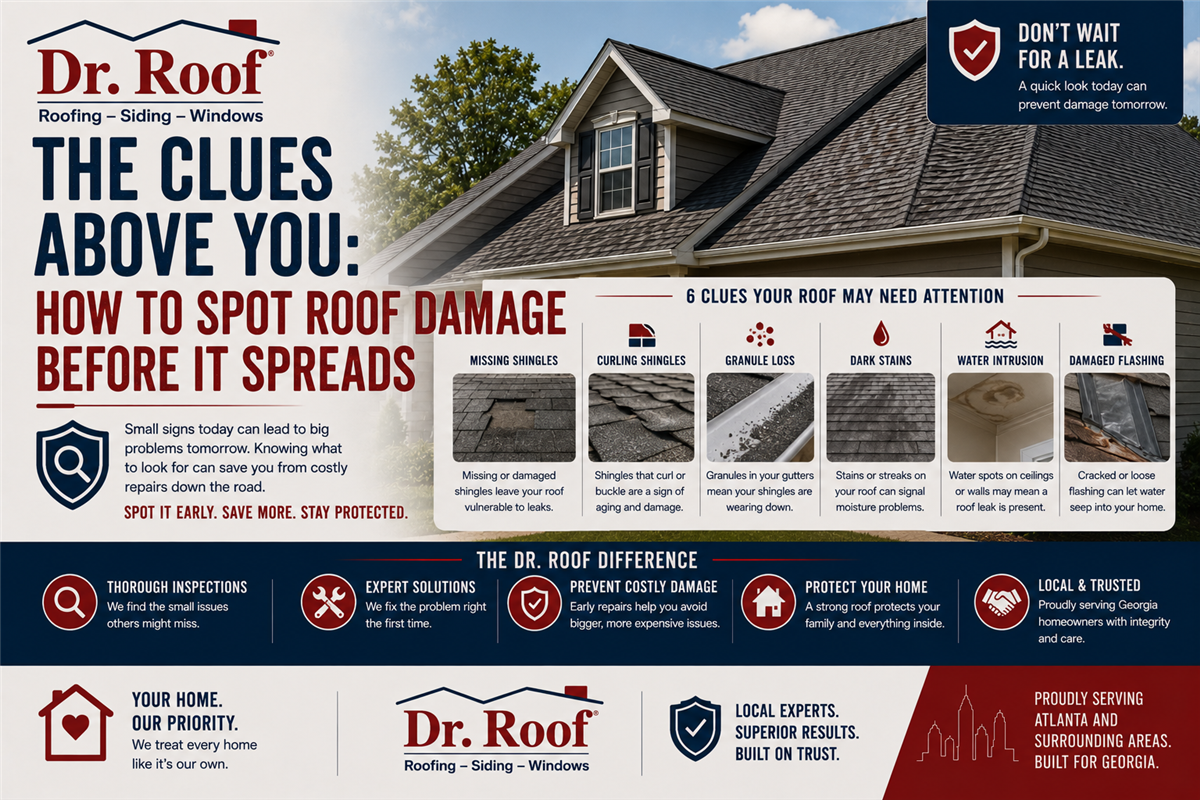
This guide helps Atlanta homeowners understand the roof damage signs that are often missed during a quick visual check. It challenges the common belief that roofing problems are always obvious and explains why subtle issues with asphalt shingles, flashing, gutters, attic moisture, and roof penetrations can lead to larger roof repair needs if ignored.
For homeowners who want to protect their property, working with an experienced Georgia roofing company like Dr. Roof can help identify roof damage early and provide clear repair recommendations before minor concerns become major problems.
Introduction: Unmasking Hidden Roof Damage
Many homeowners assume roof damage is easy to spot.
They expect to see missing asphalt shingles, a large hole, an active leak, or obvious storm damage before calling a roofing contractor.
In reality, many roof problems begin quietly.
A lifted shingle, worn flashing, granule loss, cracked pipe boot, clogged gutter, or small attic stain may not seem urgent at first. But these early warning signs can allow water to enter the roofing system and spread into the decking, insulation, ceilings, or walls over time.
Waiting for a major leak can turn a manageable roof repair into a much larger issue.
Dr. Roof has served Atlanta-area homeowners since 1988, and our team has seen how hidden roof damage can go unnoticed until it becomes more serious. As a GAF Master Elite Certified Contractor, Dr. Roof brings professional training, local experience, and careful inspection practices to roof repair and roof replacement recommendations.
Prerequisites: Embracing a Proactive Approach
Protecting your home starts with a proactive mindset.
Instead of waiting for water to drip through the ceiling, homeowners should watch for subtle roof damage signs and schedule a professional inspection when something seems off.
For example, a homeowner may notice a small discoloration on the ceiling and assume it is a minor issue. But during a professional inspection, the source could turn out to be damaged flashing near a chimney, lifted asphalt shingles, or moisture entering through a roof penetration.
The visible stain may be only one clue.
Water often travels before it appears indoors, which means the source of the leak may not be directly above the stain.
That is why roof damage should be evaluated carefully. A trained roofing professional can look at the full system, including asphalt shingles, flashing, gutters, vents, pipe boots, attic spaces, and signs of storm damage.
How to Spot Hidden Roof Damage Signs
Spotting common roof damage signs starts with knowing where to look. Homeowners can perform safe visual checks from the ground, but they should avoid climbing onto the roof.
Here is a structured approach to identifying possible roof damage:
Inspect Asphalt Shingles From the Ground. Look for missing, curling, cracked, lifted, buckling, or blistering shingles. Also watch for uneven areas, dark patches, or shingles that look different from the surrounding roof surface.
Look for Granule Loss. Asphalt shingles are covered with granules that help protect them from sun and weather exposure. If you notice excessive granules in gutters, near downspouts, or along walkways, it may be a sign of aging shingles, hail impact, or weather-related wear.
Examine Flashing Around Chimneys, Vents, and Skylights. Flashing helps direct water away from vulnerable roof transitions. Rust, cracks, gaps, lifted edges, or deteriorated sealant can create openings for water intrusion.
Check Gutters and Downspouts. Gutters should be secure, clear, and draining properly. Sagging gutters, overflowing water, loose fasteners, or heavy debris buildup can contribute to fascia damage, roof edge problems, and drainage concerns.
Inspect Soffits and Fascia. Look for peeling paint, rotting wood, staining, soft spots, or signs of animal activity. These may point to long-term moisture exposure or ventilation concerns.
Watch for Interior Warning Signs. Ceiling stains, peeling paint, musty odors, damp insulation, or dark spots in the attic can all indicate roof damage or water intrusion.
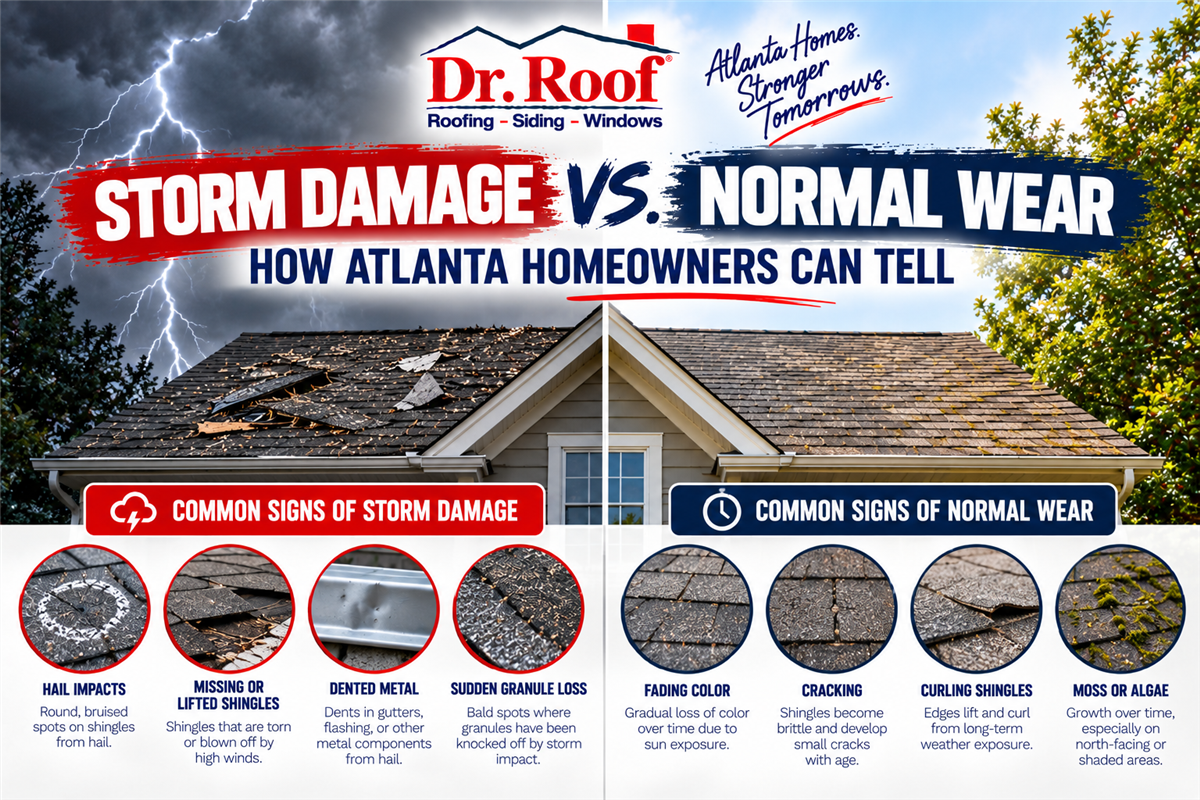
Look After Storms. After hail, strong wind, or heavy rain, check for shingle pieces in the yard, dented gutters, granules near downspouts, fallen branches, or new leaks.
These signs do not always mean the roof needs replacement, but they should be evaluated before the problem grows.
Common Mistakes to Avoid
One of the most common mistakes homeowners make is assuming the roof is fine because there is no active leak.
Roof leaks often begin before water appears inside the home. Moisture may first affect underlayment, decking, insulation, or attic materials.
Another mistake is relying only on a quick glance from the ground.
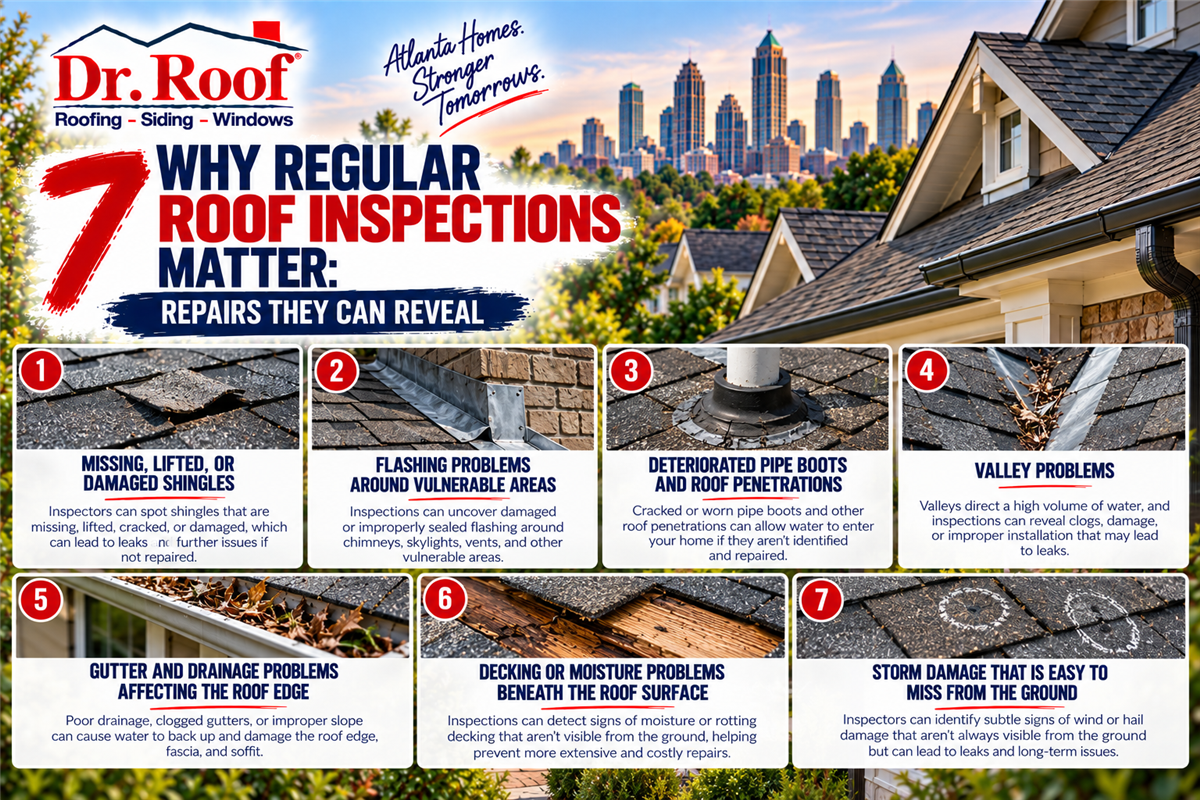
Ground-level checks are helpful, but they cannot reveal every issue. Subtle hail damage, lifted shingle seals, cracked pipe boots, damaged flashing, soft decking, or attic moisture may require a closer professional inspection.
Homeowners should also avoid temporary patches that do not address the true source of the problem. Sealing a visible spot without understanding where water is entering can allow the leak to return.
Common mistakes include:
Waiting for a leak before calling a contractor
Ignoring granules in gutters
Overlooking lifted asphalt shingles
Assuming storm damage is always obvious
Forgetting to check the attic
Ignoring damaged flashing or pipe boots
Delaying roof repair after heavy wind or hail
Choosing a quick fix without a full inspection
Early attention can help prevent larger repair needs and protect the home more effectively.
Advanced Tips for Comprehensive Roof Assessment
For a more complete understanding of roof damage, the attic can provide valuable clues.
Homeowners should only inspect attic spaces if it is safe to do so. Look for water stains on roof decking, damp insulation, dark spots, musty odors, light entering through the roof, or signs of mold or mildew.
Attic issues may point to a roof leak, poor ventilation, condensation, or hidden moisture problems.
A professional roof inspection goes even further.
Dr. Roof evaluates the full roofing system, including asphalt shingles, ridge caps, valleys, flashing, pipe boots, vents, gutters, roof penetrations, attic conditions, and possible storm damage.
As an experienced Georgia roofing company, Dr. Roof understands how Atlanta weather affects asphalt shingles and full roofing systems. Heat, humidity, heavy rain, hail, wind, and falling debris can all contribute to roof damage over time.
If storm damage is suspected, Dr. Roof can provide photos, written findings, and repair or replacement recommendations to help support the insurance claim process. Every policy and claim is different, but clear documentation can help homeowners better understand their roof’s condition.
Key Points for Sustained Roof Health
Recognizing roof damage signs early is one of the best ways to protect your home.
Homeowners should pay attention to changes in the roof surface, gutters, attic, ceilings, and areas around chimneys, vents, skylights, and roof edges.
Important signs to watch for include:
Missing or lifted asphalt shingles
Cracked or curling shingles
Granule loss
Damaged flashing
Cracked pipe boots
Sagging gutters
Water stains indoors
Damp attic insulation
Musty odors
Dented gutters or vents after hail
Shingle pieces in the yard
New leaks after storms
A professional inspection is the most reliable way to determine whether roof repair is needed.
Dr. Roof provides clear recommendations based on the condition of the roof, helping homeowners understand whether the issue can be repaired or whether a larger roofing solution may be needed.
Conclusion: Your Next Steps for a Secure Home
Do not wait for major water damage to take roof concerns seriously.
Small roof damage signs can point to larger issues beneath the surface. Acting early can help protect asphalt shingles, roof decking, attic insulation, ceilings, and the overall structure of the home.
Dr. Roof has served Atlanta-area homeowners since 1988, providing roof inspections, roof repair, roof replacement, storm damage documentation support, and exterior home services.
As a trusted Georgia roofing company and GAF Master Elite Certified Contractor, Dr. Roof helps homeowners identify roof damage, understand repair options, and make informed decisions about protecting their homes.
If you have noticed missing shingles, granule loss, damaged flashing, ceiling stains, attic moisture, or signs of storm damage, contact Dr. Roof to schedule a professional inspection and get clear guidance on your next step.
Frequently Asked Questions
Is roof damage always obvious after a storm?
No, this is a common misconception. While severe storms can cause visible damage like missing shingles, much of the impact, such as subtle granule loss, hairline cracks, or displaced flashing, can be easily overlooked.
It's crucial to know how to spot roof damage signs that are hidden after any weather event, as these can lead to leaks and greater problems down the line.
Can I truly spot roof damage signs myself or do I need a professional?
While homeowners can perform a preliminary visual check from the ground or attic for common indicators, a comprehensive assessment truly requires a professional. Experts have the training and safety equipment to identify hidden or nuanced damage not apparent to an untrained eye.
For a thorough evaluation and peace of mind, a certified contractor like Dr. Roof is always recommended.
What are some early, non-obvious interior signs that my roof might need repair?
Beyond active leaks, look for subtle interior signs such as faint water stains on ceilings or walls, especially in upper rooms. Peeling paint, discoloration, or a musty odor in your attic or near exterior walls can also indicate moisture intrusion.
These early clues often mean water is making its way into your home before an obvious drip begins.
What's the risk of delaying roof repair even for minor damage?
Delaying roof repair, even for seemingly minor issues like a few loose shingles or small cracks, significantly increases the risk of extensive and costly problems. Small entry points can allow water to seep into your attic, damaging insulation, rotting wood structures, and even leading to hazardous mold growth.
Proactive attention to spot roof damage signs can prevent these escalations.
How long does a professional roof inspection take?
A thorough professional roof inspection typically takes about 30 to 60 minutes, depending on the size and complexity of your roof. Our GAF Master Elite certified inspectors at Dr. Roof take the time to meticulously examine all components, both exterior and interior.
This comprehensive approach provides a detailed assessment and report on your roof’s condition.
Subscribe to Dr. Roof's Blog






Comments