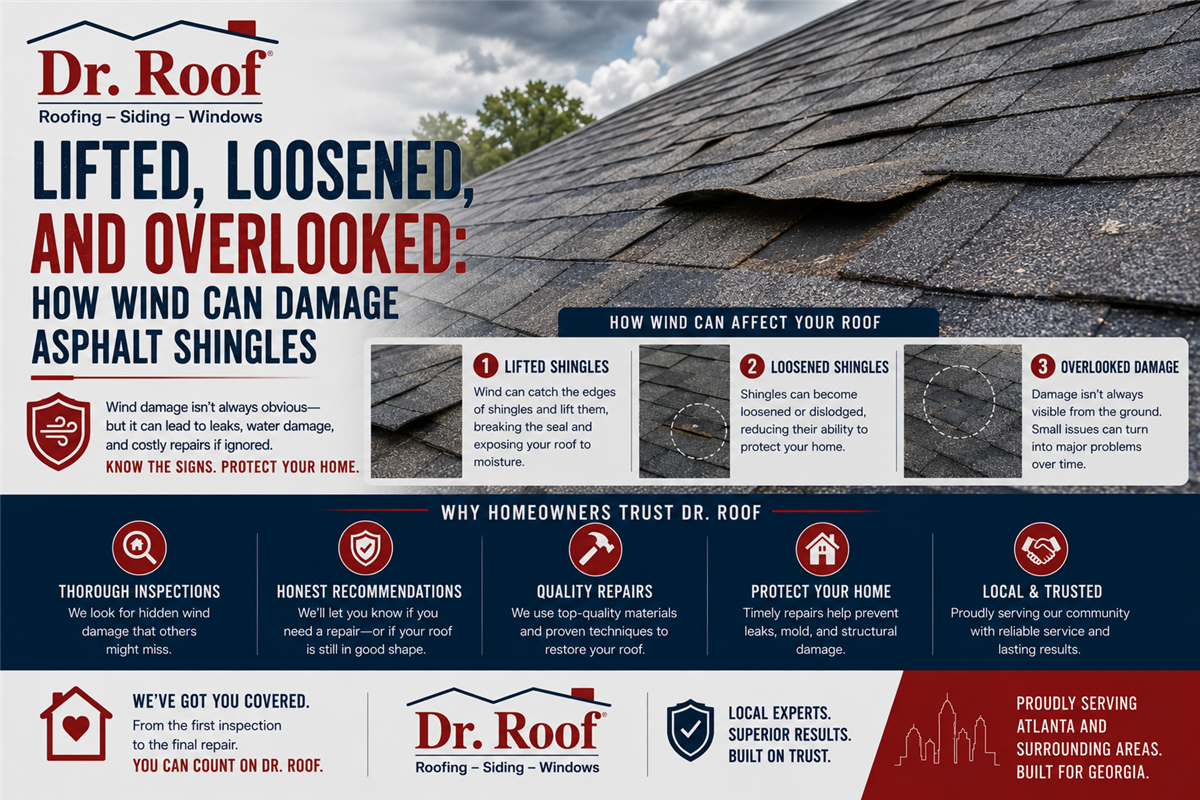
This guide helps homeowners understand how strong winds can affect asphalt shingles, even when roof damage is not obvious from the ground. It challenges the common misconception that wind damage always means missing shingles or visible roof failure.
For Atlanta homeowners, recognizing subtle signs of wind damage is an important part of protecting the home, scheduling timely roof repair, and understanding when professional storm restoration may be needed. With insight from Dr. Roof, homeowners can better understand how an experienced Georgia roofing company evaluates wind damage to asphalt shingles and recommends the right next step.
Understanding Hidden Wind Damage
Many homeowners believe that if their roof still looks intact after a storm, it must be fine.
Unfortunately, wind damage to asphalt shingles is not always easy to see.
A roof may have no missing shingles and no active leaks, yet still have areas where wind has lifted, loosened, creased, or weakened the shingles. These problems may not be visible from the ground, but they can make the roof more vulnerable during the next storm.
Strong winds can affect asphalt shingles over time, especially along roof edges, corners, ridges, valleys, and areas where shingles are already aging or exposed.
Even if the roof does not fail immediately, hidden wind damage can create openings for water intrusion, loosen protective seals, and shorten the life of the roofing system.
That is why a professional roof inspection is important after severe weather.
How Wind Silently Compromises Your Roof
Wind creates pressure as it moves across the roof. This pressure can lift the edges of asphalt shingles and weaken the adhesive seal that helps hold them in place.
Once that seal is broken, the shingle may no longer perform as intended.
A lifted shingle can settle back down after the storm, making the roof appear normal from the ground. However, the seal may still be compromised. During future wind or rain, water can get beneath the shingle and reach the underlayment or roof decking.
Common signs of wind damage to asphalt shingles may include:
Missing shingles
Lifted shingles
Creased shingle tabs
Curled shingle edges
Loose or unsealed shingles
Exposed nail heads
Damaged ridge caps
Granule loss
Shingle pieces in the yard
Water stains in the attic
New leaks after wind-driven rain
Granule loss is another important warning sign.
Asphalt shingles are covered with protective granules that help shield the roof from sun exposure and weather. Strong winds can blow debris across the roof and loosen granules, especially after hail or heavy storm activity.
If homeowners notice a large amount of granules near downspouts or in gutters after a storm, it may be time to schedule a professional inspection.
Your First Steps After a Storm
After strong winds move through your area, homeowners should take a safe and practical approach.
Do not climb onto the roof. Wind-damaged shingles may be loose, wet, or unstable, and walking on the roof can be dangerous.
Instead, follow these steps:
Inspect From the Ground. Look for missing asphalt shingles, lifted edges, debris on the roof, damaged ridge caps, or shingle pieces in the yard.
Check Gutters and Downspouts. Look for excessive granules, dents, loose gutters, or drainage problems. Granules collecting near downspout exits may signal shingle wear or storm damage.
Look Inside the Attic. If it is safe to access, check for water stains, damp insulation, musty odors, dark spots on decking, or light coming through roof openings.
Document What You See. Take photos or videos from the ground of any visible damage, fallen branches, loose shingles, or signs of water intrusion.
Schedule a Professional Roof Inspection. A GAF Master Elite Certified Contractor like Dr. Roof can evaluate asphalt shingles, flashing, vents, roof penetrations, gutters, and attic spaces for visible and hidden storm damage.
A professional inspection helps determine whether the roof needs minor repair, more extensive roof repair, storm restoration, or replacement.
Don't Overlook These Wind Damage Pitfalls
One of the biggest mistakes homeowners make after a windstorm is waiting for a leak before calling a roofing contractor.
By the time water appears inside the home, the roof may have already experienced damage beneath the surface.
Another common mistake is assuming that wind damage only counts if shingles are missing. In reality, lifted or creased asphalt shingles can be just as important because they may no longer seal properly.
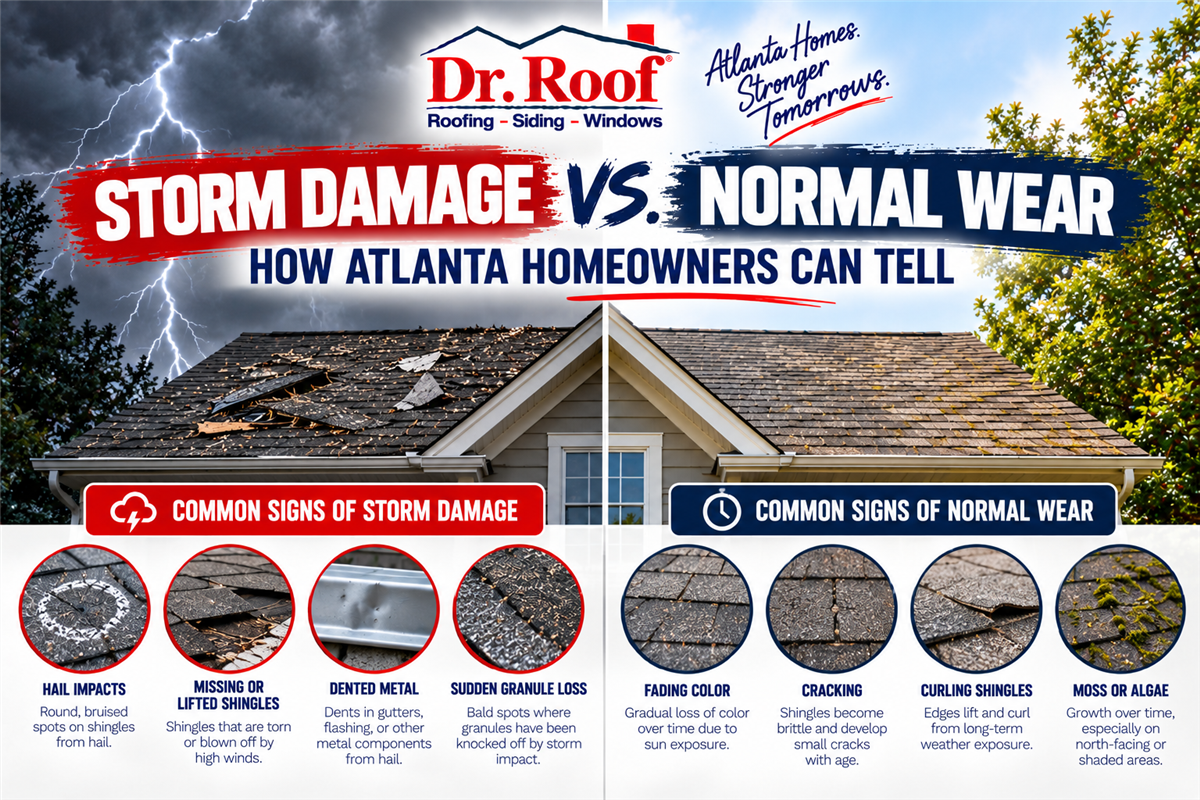
Homeowners may also mistake wind damage for normal aging.
While all roofs experience wear over time, storm-related damage may appear suddenly, in specific patterns, or along wind-exposed areas. A trained roofing professional can help determine whether the issue appears to be age-related, storm-related, or a combination of both.
Common wind damage pitfalls include:
Ignoring lifted shingles
Overlooking creased shingle tabs
Assuming granule loss is always normal
Waiting until water appears indoors
Failing to inspect the attic
Not checking gutters and downspouts
Choosing a temporary patch without identifying the source
Delaying storm damage documentation
As an experienced Georgia roofing company, Dr. Roof understands how strong winds affect asphalt shingles and full roofing systems throughout the Atlanta area.
Expert Strategies for Long-Term Roof Integrity
Choosing the right contractor after a wind event matters.
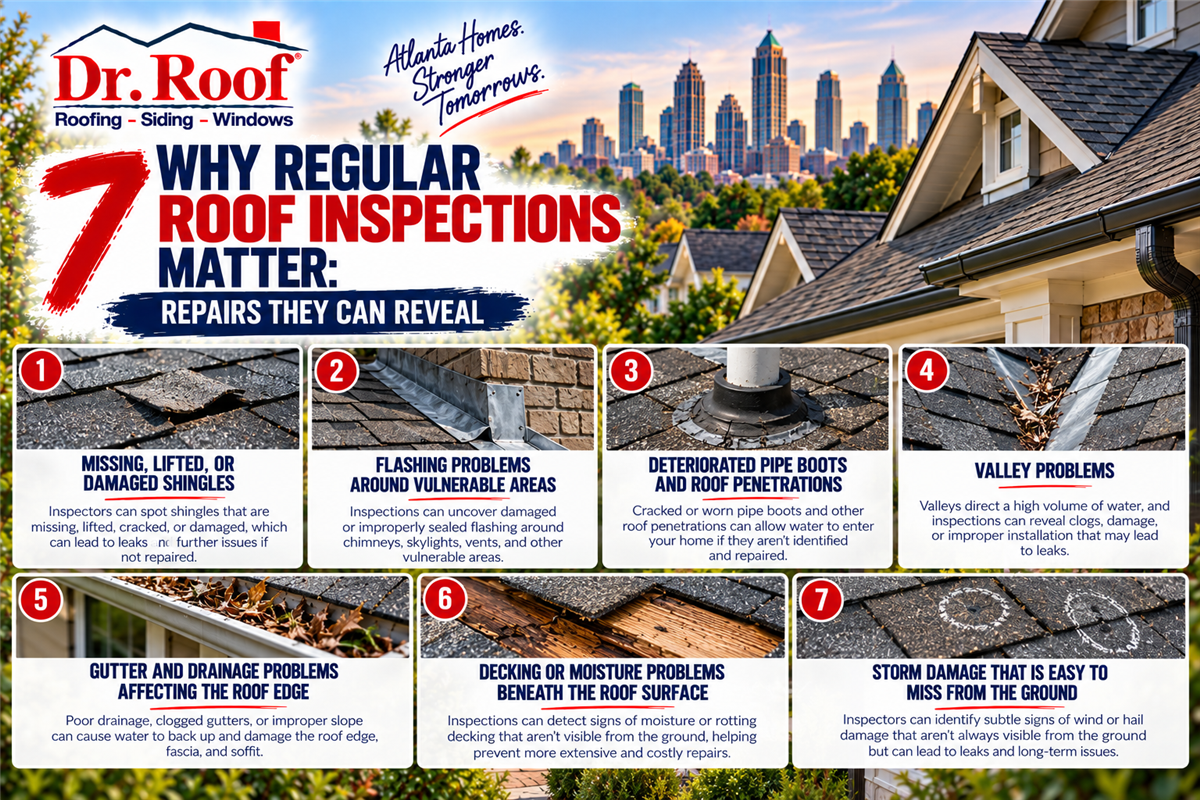
A professional roof inspection should evaluate more than the visible shingle surface. The contractor should look at the full roofing system, including asphalt shingles, flashing, pipe boots, vents, ridge caps, gutters, valleys, roof penetrations, attic moisture, and drainage.
Dr. Roof brings decades of Atlanta-area experience to storm damage inspections, roof repair, roof replacement, and storm restoration recommendations.
As a GAF Master Elite Certified Contractor, our team is trained to recognize both obvious and subtle damage and to explain the findings clearly.
If storm damage is suspected, Dr. Roof can provide photos, written findings, and professional repair or replacement recommendations to help support the insurance claim process. Every policy and claim is different, and coverage decisions are made by the insurance company, but clear documentation can help homeowners better understand the condition of their roof.
Long-term roof protection depends on addressing the true source of the problem, not just the most visible symptom.
That may include replacing damaged asphalt shingles, repairing flashing, replacing pipe boots, addressing ridge cap damage, improving ventilation, or recommending roof replacement if the system is too compromised for repair.
Protecting Your Investment: Next Steps
Strong winds can damage asphalt shingles in ways that are easy to miss.
A roof may look fine from the ground but still have lifted shingles, broken seals, creased tabs, granule loss, or vulnerable areas that need attention.
Dr. Roof has served Atlanta-area homeowners since 1988, providing roof inspections, roof repair, roof replacement, storm damage documentation support, and exterior home services.
As a trusted Georgia roofing company, Dr. Roof understands how Georgia weather affects asphalt shingles and full roofing systems.
If your home has recently experienced strong winds, hail, heavy rain, or storm debris, contact Dr. Roof to schedule a professional roof inspection and get clear guidance on the best next step for protecting your home.
Frequently Asked Questions
Does minor wind damage to asphalt shingles really require immediate repair?
Yes, even seemingly minor wind damage can lead to significant problems if left unaddressed. Small lifts or creased shingles compromise the roof's protective seal, making it vulnerable to water intrusion and further deterioration. Proactive storm restoration prevents costly future repairs.
How can I identify hidden wind damage on asphalt shingles if it's not obvious?
Hidden wind damage often manifests as loosened seals, creased shingles that haven't blown off, or excessive granule loss in gutters. These signs are difficult to spot from the ground. A professional inspection by GAF Master Elite certified experts is crucial to identify these subtle indicators.
Is my roof covered by insurance for high wind roof damage?
Most homeowner's insurance policies do cover damage caused by high winds. However, understanding the specifics of your policy and navigating the claims process can be complex. Dr. Roof offers comprehensive storm damage insurance assistance to help you through every step, maximizing your benefits.
What wind speed can asphalt shingles typically withstand before damage occurs?
Many asphalt shingles are rated to withstand winds up to 90 mph, but this is a general guideline. Actual damage can occur at lower speeds due to factors like shingle age, installation quality, and prolonged exposure to gusts. This highlights why focusing on the nuanced impact of wind damage asphalt shingles is important.
Why is professional storm restoration essential for wind-damaged roofs?
Professional storm restoration goes beyond simple repairs. It involves a thorough assessment to identify all damage, using quality materials and expert installation techniques to restore your roof's integrity and extend its lifespan. Our experienced team ensures lasting protection and peace of mind, especially with our industry-leading warranties.
Subscribe to Dr. Roof's Blog







Comments