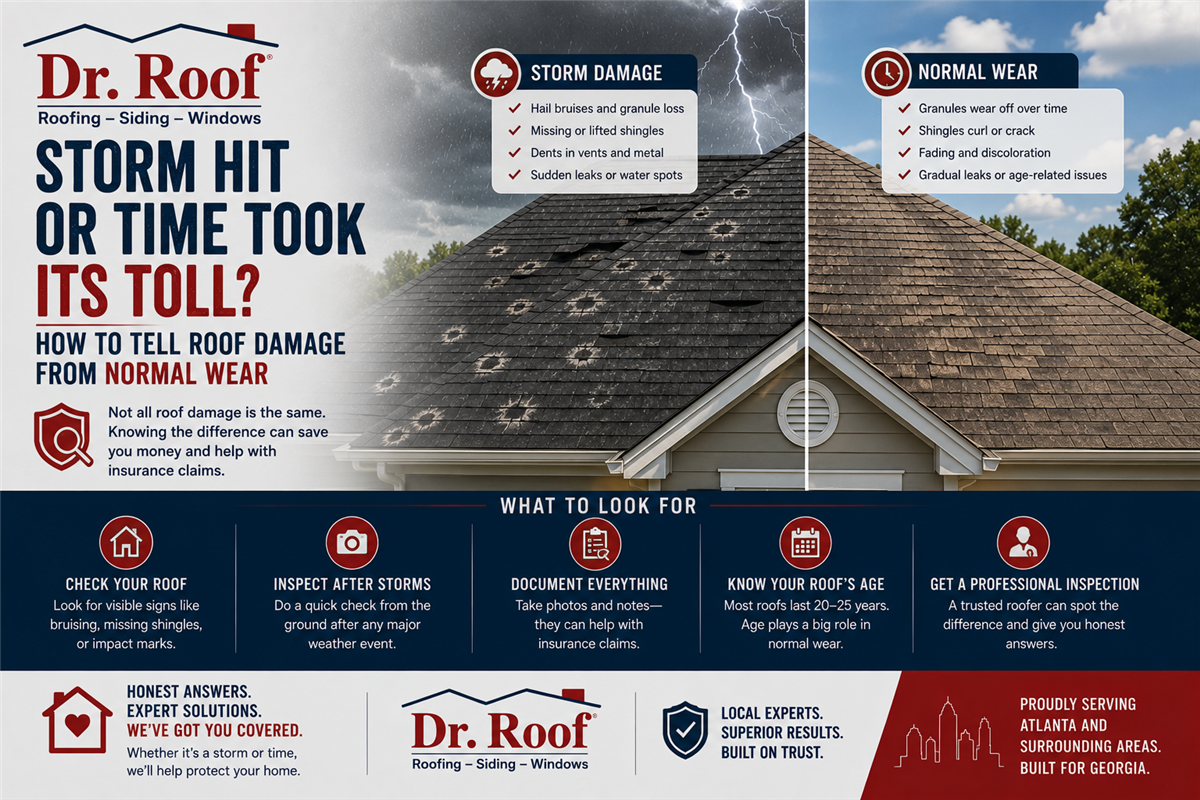
This guide helps Atlanta homeowners understand the difference between roof storm damage and normal aging wear. It challenges the common misconception that all roof deterioration is the same and explains why identifying the cause matters for roof repair, storm restoration, and long-term home protection.
For homeowners with asphalt shingles, working with an experienced Georgia roofing company like Dr. Roof can help provide a clearer understanding of what happened to the roof, what type of repair may be needed, and what documentation may help support the insurance claim process when storm damage is involved.
Debunking the Myth: Storm Damage vs. Aging Wear
Many Atlanta homeowners assume it is easy to tell the difference between roof storm damage and normal wear.
In reality, the difference is not always obvious.
Some homeowners may believe every roof problem after bad weather must be storm damage. Others may assume that leaks, missing shingles, or granule loss are simply signs of an aging roof.
The truth is more detailed.
Normal roof wear develops gradually over time. It is caused by long-term exposure to sun, heat, humidity, rain, wind, and daily weather conditions. On asphalt shingles, aging may appear as gradual granule loss, fading, curling edges, brittle shingles, or general wear across large areas of the roof.
Storm damage is different. It usually happens suddenly because of a specific weather event, such as hail, strong wind, falling limbs, or heavy rain. It may appear in isolated areas, along certain slopes, or in patterns that match the direction and force of the storm.
Understanding the difference matters because it affects the recommended repair approach, the urgency of the issue, and whether storm damage documentation may be needed.
The Hidden Truth About Roof Deterioration
Normal roof wear and storm damage can sometimes look similar from the ground.
That is one reason homeowners should avoid guessing.
Aging asphalt shingles may show widespread wear across the roof. The granule loss may be fairly even, the color may look faded, and the shingles may gradually lose flexibility over time.
Storm damage often looks more sudden or concentrated.
Hail may leave bruises, impact marks, circular areas of granule loss, damaged ridge caps, dented vents, or marks on gutters and downspouts. Wind may lift shingles, crease tabs, loosen seals, tear shingles away, or damage vulnerable roof edges.
Some roof storm damage is obvious. Missing shingles after high winds or dented gutters after hail are easy to recognize.
Other damage is subtle.
Hail can weaken the mat beneath asphalt shingles without creating an immediate hole. Wind can lift shingles and break the seal, then allow them to settle back down, making the damage harder to see. Flashing, pipe boots, and roof penetrations may also be affected during severe weather.
This is why a professional inspection is important after a major storm. A trained roofing expert can evaluate whether the roof is showing signs of normal aging, storm-related damage, or a combination of both.
A Client's Story: Unmasking Hidden Damage
Dr. Roof has served the Atlanta area since 1988, and our team has inspected many roofs where the difference between storm damage and wear was not immediately clear.
For example, a homeowner may notice leaks after a period of heavy wind and rain and assume the roof is simply getting old. From the ground, the asphalt shingles may look worn but not severely damaged.
During a professional inspection, however, the roofing contractor may find lifted shingles, creased tabs, damaged flashing, or concentrated granule loss that points to storm-related impact.
This type of finding can change the conversation.
Instead of assuming the entire issue is age-related, the homeowner receives clearer information about what may have happened, where damage is located, and whether roof repair or roof replacement should be considered.
A professional inspection also helps avoid the opposite problem: assuming storm damage is present when the issue is actually normal aging, poor ventilation, clogged gutters, or long-term deterioration.
The goal is accuracy.
Knowing the difference between roof storm damage and wear helps homeowners make informed decisions and avoid unnecessary confusion.
Expert Solutions for Complex Claims
The difference between storm damage and normal wear is especially important when insurance may be involved.
Homeowners insurance may respond differently depending on the cause of the damage, the policy terms, and the condition of the roof. Every policy and claim is different, and coverage decisions are made by the insurance company.
That is why clear documentation matters.
Dr. Roof can provide photos, written findings, and professional repair or replacement recommendations to help support the insurance claim process when storm damage may be present.
A detailed inspection may include:
Reviewing asphalt shingles for hail impact, wind damage, granule loss, cracking, or lifting
Checking ridge caps, valleys, and vulnerable roof slopes
Inspecting flashing, vents, pipe boots, chimneys, and skylights
Looking for dented gutters, downspouts, or roof accessories
Checking attic spaces for signs of water intrusion
Documenting findings with photos when applicable
Explaining whether the damage appears sudden, gradual, or mixed
As an experienced Georgia roofing company and GAF Master Elite Certified Contractor, Dr. Roof understands how Georgia weather affects asphalt shingles and full roofing systems.
Our team helps homeowners understand the condition of their roof and what next steps may make sense.
Safeguarding Your Investment
If your roof shows signs of damage after a storm, a professional inspection is the best first step.
Climbing onto the roof yourself can be dangerous, especially after hail, wind, or heavy rain. Wet surfaces, loose granules, lifted shingles, and storm debris can create serious safety risks.
A professional inspection helps identify issues that may not be visible from the ground, including subtle hail impact, loosened shingles, damaged flashing, worn pipe boots, attic moisture, or drainage problems.
Homeowners should also pay attention to warning signs around the property, including:
Granules collecting near downspouts
Dented gutters or downspouts
Missing or lifted asphalt shingles
New ceiling stains
Water spots in the attic
Damaged vents or flashing
Fallen limbs or debris on the roof
Shingle pieces in the yard
New leaks after heavy rain
Interior moisture or musty odors
Whether the issue is storm-related or caused by normal wear, early detection can help reduce the risk of more extensive roof repair needs.
Your Trusted Partner in Storm Restoration
Understanding the difference between roof storm damage and normal wear can help homeowners protect their homes, avoid unnecessary delays, and make better decisions after severe weather.
Storm damage is often sudden and event-based. Aging wear is gradual and develops over time. In some cases, both may be present on the same roof.
Dr. Roof helps Atlanta-area homeowners evaluate roof concerns with professional inspections, roof repair, roof replacement, storm damage documentation support, and exterior home services.
As a trusted Georgia roofing company serving the Atlanta area since 1988, Dr. Roof brings local experience, asphalt shingle expertise, GAF Master Elite certification, and a commitment to quality workmanship to every project.
If you are unsure whether your roof has storm damage or normal wear, contact Dr. Roof to schedule a professional inspection and get clear guidance on the best next step for protecting your home.
Frequently Asked Questions
Why is it so hard to tell the difference between roof storm damage vs wear?
Many types of damage, like granule loss or minor shingle curling, can appear similar whether caused by natural aging or a storm. Storm damage can also be subtle, affecting shingle seals or underlying layers without obvious visual cues, making expert identification crucial for accurate assessment and effective storm restoration.
Does my homeowners insurance cover natural roof wear and tear?
Generally, standard homeowners insurance policies do not cover natural wear and tear or damage resulting from a lack of maintenance. They typically cover sudden and accidental damage from specific perils, such as wind or hail from a storm. This distinction makes correctly identifying roof storm damage vs wear essential for a successful claim.
What are some key indicators of actual storm damage versus aging?
Storm damage often appears sudden, isolated, and directional. Look for bent or missing shingles in specific areas, hail dents (which can bruise the shingle mat), or granule loss that reveals the shingle's asphalt. In contrast, wear and tear shows more uniform granule loss, overall fading, or gradual curling across the entire roof surface. Understanding what your insurance covers is key to recognizing storm damage.
How can an expert help if my insurance company attributes damage to wear and tear?
Expert roofing contractors provide comprehensive storm damage insurance assistance. Certified inspectors conduct thorough evaluations, documenting clear evidence to support your claim. They can advocate on your behalf with adjusters, presenting a detailed report that accurately distinguishes genuine roof storm damage vs wear, ensuring you receive a fair settlement for your storm restoration needs.
How long does a professional inspection take to differentiate roof storm damage vs wear?
A thorough professional inspection typically takes about 30-60 minutes, depending on the size and complexity of your roof. This allows experts to meticulously examine all areas, identify subtle signs of damage, and accurately assess whether your issues stem from a storm or natural aging, providing you with a clear diagnosis for your storm restoration plan.
Subscribe to Dr. Roof's Blog



Comments