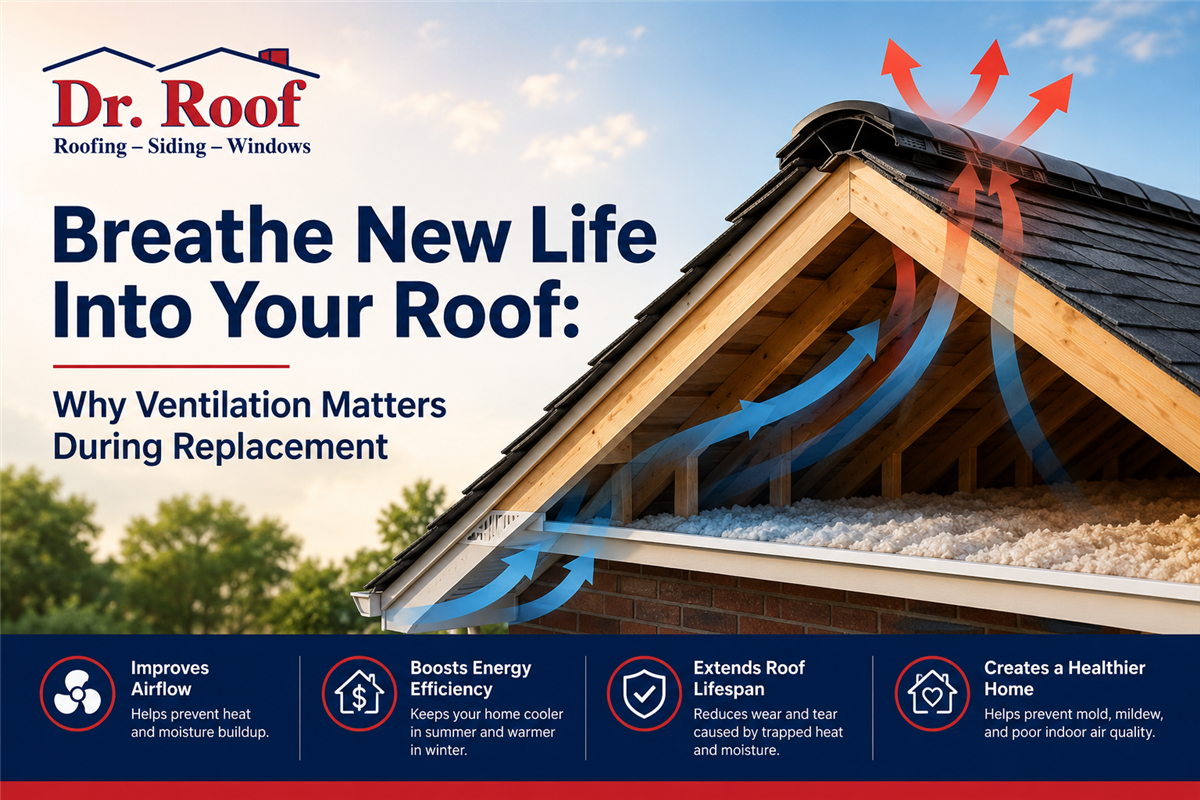
This guide helps Atlanta homeowners understand why proper roof ventilation during replacement is essential for long-term roof performance, home comfort, energy efficiency, and moisture control. It challenges the common belief that ventilation is only a minor detail and explains why attic airflow should be evaluated whenever a roof is replaced.
Unpacking a Common Misconception
When homeowners plan for a roof replacement, the focus often goes straight to shingles, colors, materials, and curb appeal. Those choices are important, but they are only part of a complete roofing system.
One common misconception is that a new roof alone will solve attic heat, moisture, or comfort issues.
In reality, roof ventilation plays a critical role in how well the new roofing system performs. If ventilation is overlooked during replacement, the roof may still be exposed to excess heat, trapped moisture, poor airflow, and unnecessary stress on the home’s energy system.
Dr. Roof understands that proper roof ventilation during replacement is not an afterthought. It is an important part of building a roof system designed for lasting protection, comfort, and efficiency.
The Hidden Impact of Overlooked Airflow
Many homeowners assume that a few vents are enough to keep the attic properly ventilated. Others may not think about attic airflow at all until they notice high energy bills, hot upstairs rooms, musty odors, or premature roof wear.
Proper ventilation depends on balance.
A roofing system needs intake ventilation, often through soffit vents, and exhaust ventilation, often through ridge vents or other roof vents. Intake allows fresh air to enter the attic, while exhaust allows hot, moist air to escape.
When this balance is missing, heat and moisture can build up in the attic.
Over time, poor ventilation can contribute to:
Premature shingle aging
Higher cooling costs
Hot or uncomfortable rooms
Moisture buildup
Mold or mildew concerns
Damaged insulation
Wood deterioration
Ice-related concerns in colder conditions
Shortened roof system performance
For Atlanta homeowners, proper ventilation is especially important because of the area’s heat, humidity, heavy rain, and seasonal storms.
A Real-World Transformation: Improving Attic Airflow
Consider a homeowner preparing for a roof replacement after years of dealing with uncomfortable upstairs rooms and high summer cooling costs.
At first, the roof appeared to be the main issue. But during the inspection, the attic showed signs of inadequate ventilation, including trapped heat, limited intake airflow, and too few exhaust vents for the attic size.
Simply replacing the shingles would have improved the exterior roof surface, but it would not have corrected the airflow problem.
By addressing ventilation during the roof replacement, the homeowner gained a more complete solution. The new roof was installed along with a balanced ventilation plan designed to help move hot, moist air out of the attic while allowing fresh air to enter properly.
This kind of approach helps the full roofing system work more effectively.
Tangible Results: Comfort and Efficiency
Proper roof ventilation can make a noticeable difference in home comfort.
When attic heat is trapped, it can radiate into the living spaces below. This may make upstairs rooms feel warmer and cause the air conditioning system to work harder during Atlanta’s hot summer months.
A balanced ventilation system helps regulate attic temperature by allowing heat to escape. This can reduce strain on the HVAC system and support more consistent indoor comfort.
Ventilation is not a substitute for proper insulation, and every home is different. However, when ventilation and insulation work together, homeowners may experience better energy performance and improved comfort throughout the home.
During roof replacement, this is an ideal time to evaluate whether the existing ventilation is helping or hurting the home’s overall performance.
Beyond Energy: Protecting Against Moisture
Energy efficiency is only one benefit of proper roof ventilation. Moisture control is just as important.
Warm, moist air from inside the home can rise into the attic. Without proper airflow, that moisture may collect on roof decking, framing, or insulation. Over time, trapped moisture can contribute to mold concerns, musty odors, weakened wood, damaged insulation, and premature roof deterioration.
Atlanta’s humid climate makes moisture management especially important.
A properly ventilated attic helps move moist air out of the space before it can create larger problems. This helps protect the roof structure, insulation, and overall health of the home.
When replacing a roof, checking ventilation gives homeowners the opportunity to correct hidden issues before the new roofing materials are installed.
Dr. Roof's Blueprint for Balanced Ventilation
Dr. Roof evaluates ventilation as part of the full roofing system. A roof is not just shingles. It includes decking, underlayment, flashing, ventilation, insulation interaction, and proper installation details.
One important principle is balance. Adding vents without a plan does not always solve the problem.
Too much exhaust without enough intake can cause the attic to pull air from the living space. Too much intake without proper exhaust can leave hot air trapped. Blocked soffit vents can also prevent the system from working correctly, even if roof vents are present.
Dr. Roof looks at the home’s specific attic size, roof design, existing ventilation, and airflow needs to recommend the right approach.
As a GAF Master Elite Certified Contractor, Dr. Roof brings professional installation standards and roofing system knowledge to roof replacement projects. That includes helping homeowners understand how proper roof ventilation supports long-term performance.
Our Meticulous Process for Optimal Ventilation
Here is how Dr. Roof helps ensure proper roof ventilation during replacement:
Inspect the Existing Attic and Roof Structure
Our team begins by reviewing the current roof and attic conditions. We look for signs of poor ventilation, moisture concerns, insulation issues, blocked intake areas, and heat buildup.
This step helps us understand whether the current system is working properly or needs improvement.
Calculate Ventilation Needs
Proper ventilation should be based on the home’s attic size, roof design, and airflow requirements.
Dr. Roof evaluates how much intake and exhaust ventilation is needed to help create a balanced system. The goal is to support steady airflow rather than simply adding vents at random.
Recommend the Right Ventilation Components
Depending on the home, the solution may include soffit vents, ridge vents, box vents, or other ventilation components.
The right choice depends on the roof design, existing conditions, and what will allow the attic to move air effectively.
Install Ventilation During Roof Replacement
Roof replacement is the ideal time to improve ventilation because the roofing system is already being updated.
Our team installs ventilation components with attention to proper placement, integration, and manufacturer guidelines. This helps the new roof function as a complete system.
Review the Finished System
After installation, Dr. Roof reviews the completed work to confirm that ventilation components are properly installed and integrated with the new roof.
We also explain what was done so homeowners understand how the ventilation system supports the roof’s performance.
Securing Your Home's Future
Proper roof ventilation during replacement helps protect more than the roof. It supports attic health, indoor comfort, energy performance, moisture control, and long-term roofing system durability.
Ignoring ventilation can leave homeowners with a new roof that still struggles with old attic problems.
Dr. Roof helps Atlanta homeowners approach roof replacement with the full system in mind. From shingles and flashing to ventilation and workmanship, our goal is to provide a roofing solution built for lasting protection.
If you are planning a roof replacement, contact Dr. Roof to schedule a professional roof assessment and learn how proper ventilation can help protect your home for years to come.
Frequently Asked Questions About Roof Ventilation
Is it true that a new roof doesn't always guarantee improved attic airflow?
Yes, that's a common myth. While a new roof replacement offers a fresh start, it doesn't automatically mean improved attic airflow. Existing ventilation systems might be inadequate, blocked, or improperly balanced for the attic's size and climate. True improvement requires a dedicated assessment and installation of proper roof ventilation during replacement, ensuring a continuous and balanced air exchange.
How does neglecting roof ventilation affect my roof's warranty and its overall lifespan?
Neglecting proper roof ventilation during replacement can severely impact both your roof's warranty and its lifespan. Many shingle manufacturers' warranties require adequate attic ventilation. Without it, trapped heat and moisture can degrade shingles prematurely, potentially voiding your warranty and leading to early roof failure, costing you more in the long run.
Can upgrading my roof ventilation truly lower my home's heating and cooling costs?
Absolutely. Upgrading your roof ventilation system during replacement can significantly lower your heating and cooling costs. A well-ventilated attic prevents heat buildup in summer, reducing the strain on your AC, and helps to maintain consistent temperatures in winter, minimizing heat loss. This translates directly into more efficient energy use and noticeable savings on your utility bills.
What are the critical signs that my existing roof ventilation is insufficient, even if my roof seems new?
Even with a relatively new roof, signs of insufficient ventilation include unusually high energy bills, excessive heat in upper rooms during summer, and visible moisture or mold growth in the attic. You might also notice premature aging of shingles, such as curling or cracking, indicating trapped heat and humidity. These are clear indicators that your proper roof ventilation during replacement may have been overlooked or is no longer adequate.
How does Dr. Roof ensure a balanced and effective ventilation system during a roof replacement?
Dr. Roof ensures a balanced and effective ventilation system by performing a thorough attic assessment and calculating the precise Net Free Vent Area (NFVA) required for your home. We then strategically install a combination of intake and exhaust vents, such as soffit and ridge vents, to create continuous airflow. Our GAF Master Elite certification means our installations meet the highest industry standards, ensuring optimal proper roof ventilation during replacement.
Subscribe to Dr. Roof's Blog



Comments