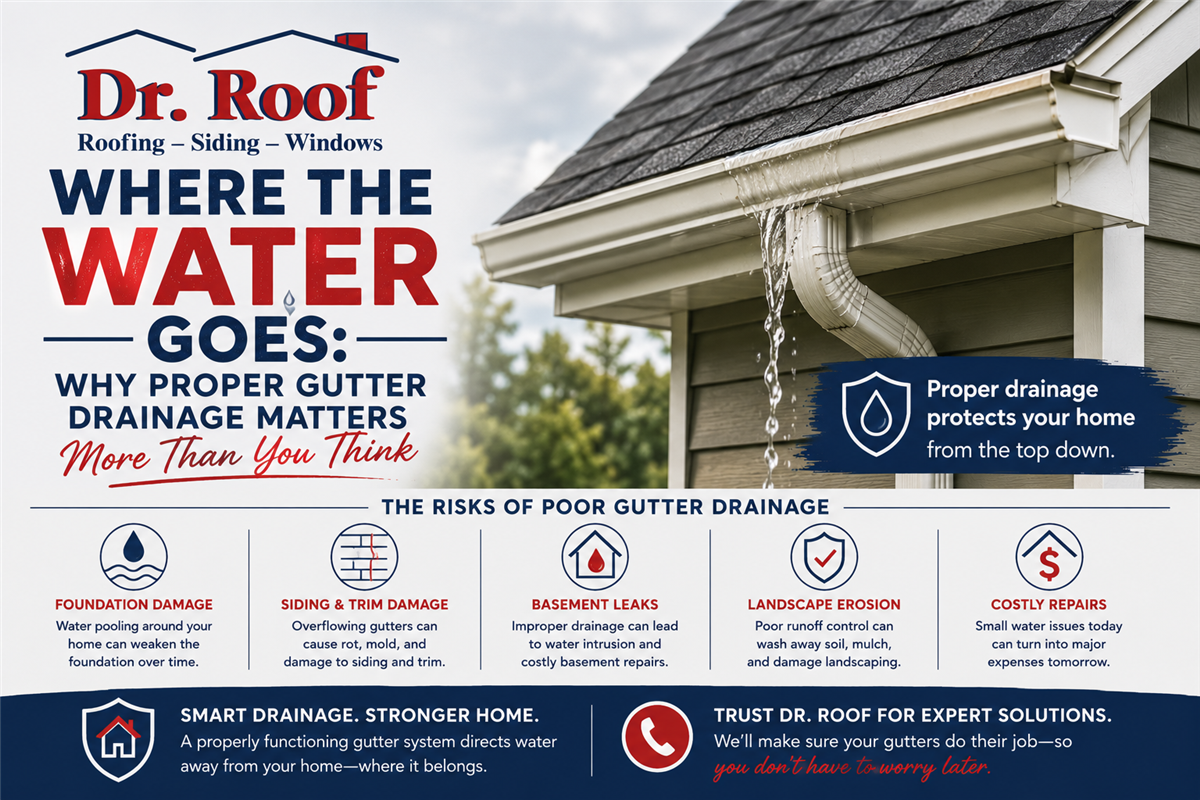
This guide helps Atlanta homeowners understand why proper gutter drainage is essential for protecting the roofline, siding, foundation, landscaping, and overall structure of the home. It challenges the common belief that gutters are working correctly just because water appears to move through them. With expert insight from Dr. Roof, homeowners can better recognize drainage concerns, prevent water-related damage, and make informed decisions about gutter repair or replacement.
Executive Summary: Challenging the 'Good Enough' Gutter Myth
It is common for homeowners to look at their gutters during a rainstorm and assume everything is working properly as long as water is moving off the roof.
At first glance, that may seem reasonable. If water flows into the gutter and exits through the downspout, the system must be doing its job.
However, that assumption can be misleading.
There is a major difference between gutters that move some water and gutters that provide proper gutter drainage. When drainage is incomplete, poorly directed, or slowed by hidden issues, water can still collect in the wrong places and cause damage over time.
For Atlanta homeowners, proper gutter drainage is not just about preventing overflow. It is about protecting the home from moisture problems, foundation concerns, siding damage, and costly repairs.
Background: The Common Misconception About Gutter Flow
Many homeowners believe that if water visibly leaves the roof, the home is protected. But gutters must do more than collect runoff.
A properly functioning gutter system should move water efficiently from the roofline, through the gutters, into the downspouts, and away from the foundation.
If any part of that process fails, the home may still be vulnerable.
Gutters can appear clean and functional while still having problems such as poor slope, undersized downspouts, loose sections, clogged elbows, short extensions, or drainage that directs water too close to the home.
These issues may not be obvious from the ground, but they can create long-term damage.
The Challenge: Unseen Threats of Inadequate Drainage
Inadequate gutter drainage often develops quietly.
A small slope issue may cause water to sit in one section of the gutter. A downspout that empties too close to the home may saturate the soil near the foundation. A clogged underground drain may force water to back up and overflow during heavy rain.
Over time, these problems can contribute to:
Foundation moisture concerns
Basement or crawl space dampness
Soil erosion
Damaged landscaping
Fascia and soffit damage
Siding stains
Mold or mildew concerns
Roof edge deterioration
Gutter sagging
Water pooling near walkways or patios
Atlanta’s heavy rain, seasonal storms, humidity, and tree debris make proper gutter drainage especially important.
A gutter system should not simply move water. It should move water to the right place.
The Approach: Moving Beyond Superficial Observation
The first step is understanding that a quick visual check is not always enough.
A gutter system may look fine from the ground but still fail during heavy rain. Water may overflow from one section, leak at seams, spill behind the gutter, or discharge too close to the foundation.
Proper gutter drainage requires attention to both the roofline and the point where water exits the system.
One common mistake is relying on downspouts that stop too close to the home. When water exits right beside the foundation, it can soak the surrounding soil and increase the risk of moisture concerns.
Another common issue is improper pitch. Gutters need the right slope to move water toward the downspouts. If the slope is too flat or angled incorrectly, water may sit inside the gutter or spill over during storms.
Clogs can also occur in places homeowners do not see, such as elbows, corners, or underground drainage lines.
A professional assessment can help determine whether the system is moving water efficiently and safely away from vulnerable areas.
Case Study: A Drainage Problem Hidden in Plain Sight
Consider a homeowner who regularly cleaned their gutters and assumed the system was in good condition. During moderate rain, water appeared to move through the gutters and out of the downspouts.
However, after several heavy storms, the homeowner began noticing damp areas near the foundation, staining on the siding, and soft soil around one side of the house.
A closer inspection revealed that the gutters were clean, but the problem was still serious. Several sections had an improper slope, allowing water to pool before overflowing during heavy rain. The downspouts also discharged too close to the foundation, sending large amounts of water exactly where it could cause the most damage.
Once the gutter pitch was corrected and the downspouts were extended farther from the home, water moved more effectively away from the foundation.
This example shows why clean gutters are not the same as proper gutter drainage.
Implementation: Dr. Roof's Solution and Practical Identification
Dr. Roof helps homeowners evaluate gutter systems with a focus on long-term home protection. Our team looks at how water moves across the roof, through the gutters, down the spouts, and away from the foundation.
Homeowners can also watch for early warning signs.
Observe During Rain
During a moderate rain, safely observe the gutters from the ground. Look for overflowing edges, water spilling behind the gutter, dripping at seams, or sections where water appears to sit instead of moving.
Overflow may indicate a clog, improper slope, undersized gutters, or insufficient downspout capacity.
Inspect Downspout Discharge
Look at where the downspouts release water. Water should be directed away from the home, not toward the foundation, driveway, walkway, or low spots near the structure.
If water pools near the foundation, the system may need downspout extensions or drainage adjustments.
Check for Subtle Damage
After rain, look for signs of drainage problems around the home. These may include damp siding, soil erosion, mildew stains, washed-out mulch, sagging gutters, damaged fascia, or water marks beneath gutter sections.
These signs often point to drainage issues that need professional attention.
Review Gutter Condition
Check for gutters pulling away from the home, loose fasteners, rust, cracks, visible separation, or sagging sections. These issues can affect water flow and reduce the system’s ability to protect the home.
Schedule a Professional Assessment
A professional gutter evaluation can identify slope issues, drainage concerns, hidden clogs, undersized components, and areas where water is not being moved far enough away from the home.
Dr. Roof can recommend repair, replacement, downspout adjustments, gutter guards, or other solutions based on the condition of the system.
Results: Protecting Homes and Preventing Costly Repairs
Proper gutter drainage helps protect much more than the roofline.
When water is moved away effectively, homeowners can reduce the risk of moisture problems around the foundation, siding, fascia, soffits, landscaping, and lower-level living spaces.
A well-designed and properly installed gutter system can help prevent water from collecting where it does not belong.
This can help homeowners avoid larger issues such as wood rot, exterior staining, landscape erosion, basement moisture, and repeated gutter problems.
The value of proper gutter drainage comes from prevention. It helps stop water damage before it has the chance to spread.
Key Takeaways: The Value of Expert Gutter Assessment
Gutters are a key part of the home’s exterior protection system. They should be evaluated with the same care as roofing, siding, windows, and drainage around the property.
Proper gutter drainage depends on:
Correct gutter pitch
Clean gutter channels
Adequate downspout placement
Proper water discharge
Secure attachment
Appropriate gutter size
Clear drainage paths
Regular maintenance
Professional installation
Attention to Atlanta’s weather conditions
Dr. Roof brings decades of Atlanta-area exterior experience to gutter repair and replacement projects. Our team understands how roofing, gutters, siding, and drainage work together to protect the home.
We help homeowners choose gutter solutions designed to move water properly and support long-term home performance.
Securing Your Home: Your Next Steps for True Protection
The idea that gutters are working simply because water is moving is a common misconception.
True protection depends on where that water goes, how efficiently it drains, and whether it is being directed away from vulnerable areas of the home.
Proper gutter drainage helps protect your foundation, siding, landscaping, roofline, and overall exterior from unnecessary water damage.
If your gutters overflow, sag, leak, drain too close to the foundation, or leave damp areas around your home, Dr. Roof can help.
Contact Dr. Roof to schedule a gutter assessment and get clear guidance on the right drainage solution for your Atlanta-area home.
Frequently Asked Questions
Is a slow drip from my downspout a sign of improper gutter drainage?
While a slow drip might seem harmless, it can absolutely indicate improper gutter drainage. It often suggests a partial clog higher up in the gutter or downspout, or an incorrect pitch that prevents water from flowing quickly and completely. Over time, even slow drips can lead to concentrated erosion, saturation of the soil near your foundation, and potential water damage.
Can clear gutters still lead to foundation problems?
Yes, perfectly clear gutters can still contribute to foundation problems if the proper gutter drainage isn't achieved at the point of discharge. If downspouts are too short, cracked, or direct water directly next to your foundation, all that efficiently collected water is then immediately dumped into a problematic zone. This can lead to soil saturation and hydrostatic pressure against your foundation walls.
How can Dr. Roof's expertise accurately diagnose hidden gutter drainage issues?
Dr. Roof’s experienced technicians go beyond visual inspections. We use our extensive knowledge of local weather patterns and home construction to assess gutter pitch, downspout capacity, and discharge effectiveness. We look for subtle signs of erosion, water staining, and structural stress that homeowners might miss, providing a comprehensive diagnosis for true proper gutter drainage.
What long-term consequences might I face if I ignore minor drainage problems?
Ignoring even minor gutter drainage problems can lead to significant long-term consequences. These include foundation cracks, basement flooding, eroded landscaping, damaged fascia boards and soffits, and even the growth of mold and mildew. Over time, these issues become more complex and expensive to repair, highlighting the critical importance of addressing drainage concerns promptly.
Is it possible for my landscaping to indicate a proper gutter drainage problem?
Absolutely. Your landscaping can serve as a vital indicator of issues with proper gutter drainage. Consistent puddling in flowerbeds near your home, eroded mulch, dying plants in specific areas, or visible trenches worn into the soil are all signs that water is not being diverted effectively away from your property. These visual cues can alert you to underlying drainage deficiencies that need attention.
Subscribe to Dr. Roof's Blog







Comments