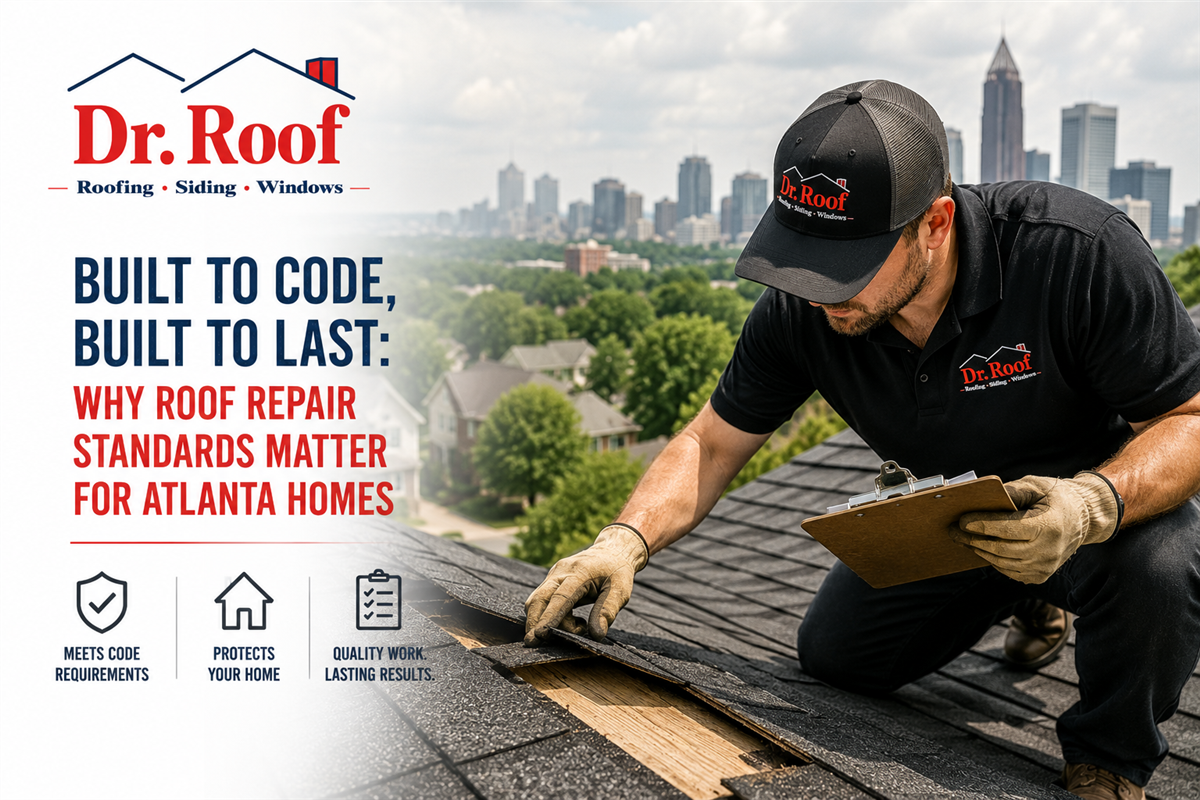
Roof Repair Codes Are There to Protect Your Home
When a roof needs repair, most homeowners focus on the visible problem first. A leak, missing shingles, damaged flashing, or storm damage naturally becomes the priority.
But behind every quality roof repair is something many homeowners do not think about right away: local building codes and regulations.
These standards are not just paperwork. They help ensure roofing work is completed safely, properly, and in a way that supports the long-term protection of your home.
For Atlanta homeowners, understanding the importance of roof repair codes can help you make smarter decisions and avoid costly problems later.
The Myth: Roof Codes Are Just Red Tape
One common misconception is that roofing codes are unnecessary complications. Some homeowners assume codes only apply to new construction or full roof replacements, not repairs.
In reality, certain roof repairs may need to follow specific local requirements depending on the scope of work, the materials used, the condition of the roof, and the local jurisdiction.
Building codes exist to protect the structure, improve safety, reduce risk, and help ensure repairs are completed according to accepted standards.
Ignoring them can create problems that are much bigger than the original roof issue.
Why Roof Repair Codes Matter
Roof repair codes help address important parts of the roofing system, including:
Structural safety
Roofing material requirements
Proper installation methods
Flashing details
Ventilation needs
Underlayment requirements
Fire resistance
Wind resistance
Drainage
Permits and inspections when required
These details matter because your roof is one of your home’s primary defenses against rain, wind, heat, hail, and moisture.
A repair that does not follow proper standards may look finished on the surface but still leave your home vulnerable.
What Can Happen When Codes Are Ignored?
Skipping code requirements or hiring an inexperienced contractor can lead to serious issues.
Potential problems may include:
Continued leaks
Premature roof failure
Moisture trapped beneath materials
Damaged roof decking
Improper ventilation
Failed inspections
Problems during a home sale
Insurance complications
Repairs that need to be redone
Higher long-term costs
A shortcut may save time at first, but it can create expensive problems later.
Permits May Be Required for Some Roof Repairs
Not every small roof repair requires a permit, but some projects may. Requirements can vary by city, county, and scope of work.
Permits may be needed when the repair involves:
Structural changes
Large repair areas
Roof decking replacement
Material changes
Major storm damage repair
Significant roof system work
Work that affects ventilation or drainage
Because requirements can vary across the Atlanta metropolitan area, it is important to work with a contractor who understands local regulations and can help determine what applies to your project.
Inspections Help Confirm the Work Was Done Properly
When a permit is required, inspections may also be part of the process. These inspections help confirm that the work meets applicable code requirements.
While inspections can feel like an extra step, they provide valuable protection for homeowners. They help verify that the repair was completed according to local standards and that important details were not overlooked.
A properly documented repair can also be helpful if you sell your home in the future.
Roof Repairs Should Address the Cause, Not Just the Symptom
A visible roof problem is not always the full problem.
For example, a leak may be caused by missing shingles, but it could also involve damaged flashing, worn underlayment, rotted decking, poor ventilation, or drainage issues.
A quality roof repair should look beyond the surface and identify what caused the issue in the first place.
That is where professional experience matters. Dr. Roof evaluates the roof system carefully so homeowners understand the repair need and any code-related considerations before work begins.
Why Local Atlanta Experience Matters
Roof repair regulations can vary depending on where you live. Atlanta-area homeowners may fall under different city or county requirements, and those requirements may affect permits, inspections, materials, and installation standards.
Dr. Roof has served the Atlanta area since 1988, giving our team decades of experience with local homes, regional weather, and roofing requirements.
That local knowledge helps homeowners avoid confusion and move through the repair process with more confidence.
GAF Master Elite Certification and Quality Workmanship
Dr. Roof is a GAF Master Elite Certified Contractor. This certification reflects professional training, installation standards, and a commitment to quality workmanship.
For homeowners, working with a qualified contractor can provide added confidence that roof repairs are being approached carefully and professionally.
A quality repair should not simply cover up a problem. It should support the roof’s long-term performance and help protect the home.
Storm Damage and Code Considerations
Storm damage can complicate roof repairs. Wind, hail, falling debris, and heavy rain may affect shingles, flashing, gutters, roof decking, vents, and other exterior components.
If storm damage is involved, Dr. Roof can provide photos, written findings, and professional recommendations to help support the insurance claim process.
Every policy and claim is different, but clear documentation can help homeowners better understand the damage, the repair scope, and the next steps.
Questions Homeowners Should Ask Before Roof Repair
Before hiring a contractor for roof repair, ask:
Does this repair require a permit?
Are there local code requirements for this work?
Will the repair address the cause of the problem?
What materials will be used?
Will flashing, ventilation, or decking be inspected?
What warranty options are available?
Will I receive written documentation?
How will storm damage be documented if needed?
What happens if hidden damage is found?
Who will communicate with me during the project?
A trustworthy contractor should be able to answer these questions clearly.
Common Roof Repair Mistakes to Avoid
Homeowners can protect themselves by avoiding these common mistakes:
Choosing a contractor based only on the lowest price
Ignoring permit requirements
Accepting vague repair descriptions
Relying only on verbal promises
Skipping a professional inspection
Delaying repairs after storm damage
Attempting unsafe DIY roof work
Overlooking ventilation or flashing issues
Failing to keep repair documentation
The right repair starts with the right information.
Why Atlanta Homeowners Choose Dr. Roof
Homeowners choose Dr. Roof for roof repair because we offer:
Service in the Atlanta area since 1988
Professional roof inspections
Local roofing experience
GAF Master Elite certification
Clear repair recommendations
Code-conscious workmanship
Storm damage documentation support
Strong warranty options
Honest communication
A commitment to doing the job right
Our goal is to help homeowners protect their homes with roof repairs that are handled properly from start to finish.
Repair It Right the First Time
Roof repair codes and regulations are not just technical details. They help protect your home, your safety, your property value, and your long-term peace of mind.
When your roof needs attention, choose a contractor who understands both the repair itself and the standards that guide the work.
If you need roof repair in the Atlanta area, contact Dr. Roof to schedule a professional inspection and get clear guidance on the best next step for your home.
Frequently Asked Questions
Is it true minor roof repairs don't require permits or code compliance?
No, this is a common misconception. While some very minor repairs might not need a permit, any work involving structural changes, a change in roofing material type, or replacement of a significant portion of the roof assembly typically requires adherence to roof repair codes and regulations and a permit. Always consult a professional to be sure, as ignoring these can lead to fines or problems when selling your home.
What are the biggest misconceptions homeowners have about roof repair codes and regulations?
Many homeowners mistakenly believe codes are only for new construction, are purely bureaucratic, or can be bypassed for small jobs. The biggest misconception is that codes are optional. In reality, these regulations ensure safety, structural integrity, and material quality, protecting your long-term investment and preventing future, more expensive issues.
How do local Atlanta roofing building codes differ from national standards?
National standards, like the International Residential Code (IRC), provide a baseline for roofing building codes. However, local Atlanta jurisdictions (counties and cities) often adopt these codes with specific amendments or additional requirements. These local nuances can relate to factors like high-wind zones, specific material fire ratings, or enhanced energy efficiency standards relevant to the Atlanta climate. An experienced local contractor will understand these differences.
Can adhering to codes actually save me money on my roof repair long-term?
Absolutely. While complying with roof repair codes and regulations might seem like an added upfront cost, it's a critical investment. Code-compliant repairs are inherently safer, more durable, and less prone to premature failure. This prevents expensive re-dos, protects against storm damage more effectively, and ensures your home retains its value, ultimately saving you significant money over the lifespan of your roof.
What happens if I skip permits and don't follow local roofing regulations for my roof repair?
Ignoring permits and local roofing regulations can have severe consequences. You could face steep fines from local authorities, be ordered to remove and redo the work at your own expense, or even have difficulties selling your home if the unpermitted work is discovered during an inspection. Furthermore, your homeowner's insurance might not cover damages to or from unpermitted repairs, leaving you financially exposed.
Subscribe to Dr. Roof's Blog



Comments