Hail Damage Is Not Always Obvious
After a hailstorm, many homeowners look at their roof from the ground and assume everything is fine if they do not see missing shingles, holes, or major dents.
Unfortunately, hail damage is not always easy to spot.
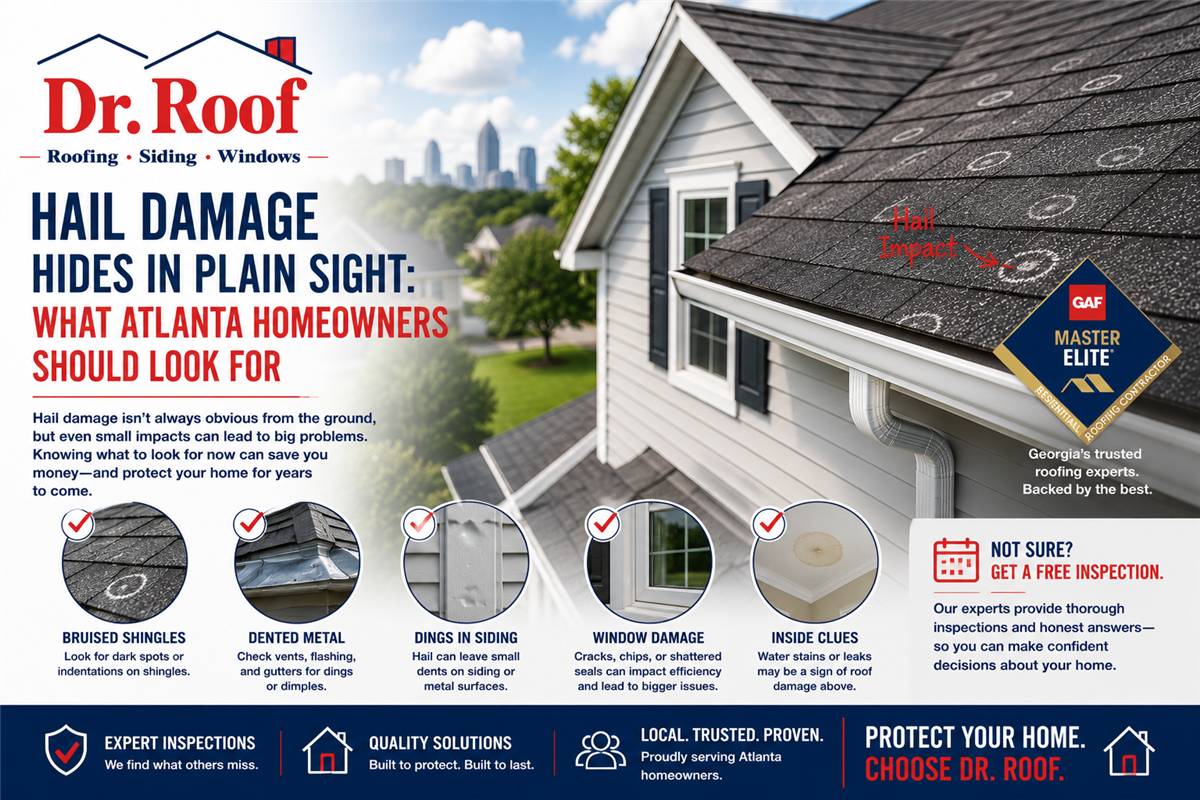
Some of the most important signs of hail damage can be subtle. Granule loss, bruised shingles, cracked seals, small dents, and damage to roof accessories may not be visible from the yard, but they can still affect the roof’s ability to protect your home.
For Atlanta homeowners, scheduling a professional roof inspection after significant hail activity is one of the best ways to understand the true condition of your roof.
The Myth: Hail Damage Always Looks Severe
One common misconception is that hail damage always leaves obvious marks. Homeowners may expect to see large dents, broken shingles, or immediate leaks.
In reality, hail can weaken a roof without creating dramatic visible damage.
Even smaller hail can knock protective granules loose, bruise shingles, damage flashing, dent gutters, or affect vents and skylights. These issues may not cause an immediate leak, but they can shorten the life of the roof and increase the risk of future water intrusion.
Common Signs of Hail Damage on Roofs
Hail can affect several parts of the roofing system. Some signs are easier to spot than others, but all deserve attention after a major storm.
Granule Loss
Asphalt shingles are covered with protective granules that help shield the roof from sunlight, weather exposure, and wear.
When hail strikes, it can knock these granules loose. This may create dark spots on the shingles or cause granules to collect in gutters and downspouts.
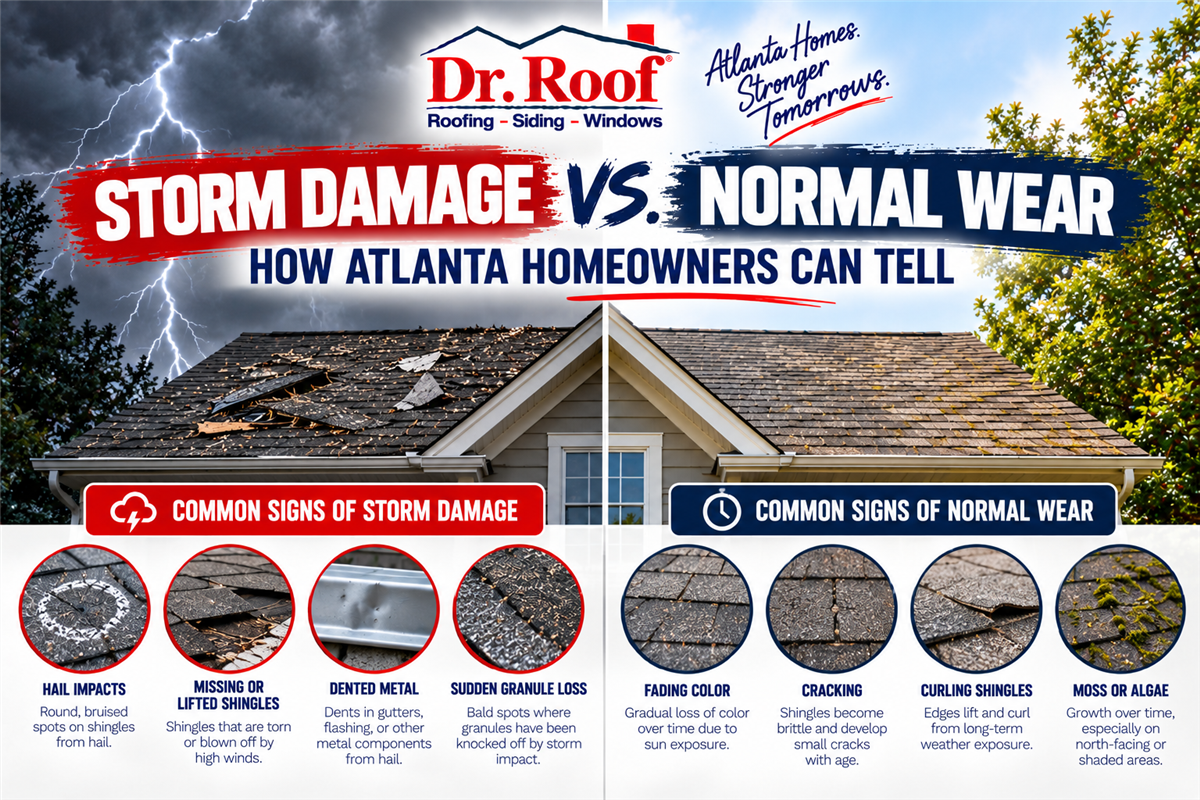
While some granule loss can happen naturally over time, concentrated or widespread granule loss after a storm may indicate hail impact.
Bruised or Soft Shingles
Hail can bruise shingles without tearing them open. A bruised shingle may have a soft spot, indentation, or weakened area where the impact occurred.
These areas can become more vulnerable to cracking, moisture intrusion, and premature wear over time. Because bruising is difficult to see from the ground, a professional inspection is often needed.
Cracked Shingles
Hail impact can create small cracks in shingles. These cracks may begin as minor damage but can expand with heat, rain, wind, and temperature changes.
Cracked shingles may allow water to move beneath the surface, increasing the risk of leaks and roof deck damage.
Dented Gutters and Downspouts
Hail damage does not only affect shingles. Gutters, downspouts, and metal roof components can also show signs of impact.
If you notice dents on gutters, downspouts, flashing, or metal vents, your roof may have experienced hail impact as well.
Damaged Roof Vents and Flashing
Roof vents, pipe collars, flashing, and other roof accessories help protect vulnerable areas from water intrusion. Hail can dent, crack, or loosen these components.
Damage around roof penetrations should be addressed quickly because these areas are common places for leaks to develop.
Skylight or Window Frame Damage
Hail can crack skylights, dent frames, or damage seals. Even small cracks or compromised seals can create moisture concerns later.
After hail, homeowners should also check around windows, siding, and exterior trim for signs of impact.
Loose or Lifted Shingles
Hail can weaken shingle seals, making the roof more vulnerable to wind damage later. If shingles appear lifted, loose, or uneven after a storm, it may be a sign that the roof needs professional attention.
Collateral Damage Can Be a Clue
Sometimes the easiest signs of hail damage are not on the roof itself.
Look around your property for clues such as:
Dented gutters
Dented downspouts
Damaged siding
Dents on outdoor metal surfaces
Damaged window screens
Cracked skylights
Granules near downspout exits
Damage to roof vents or caps
Hail impact marks on soft metals
If other parts of your exterior show hail impact, it is wise to have your roof inspected as well.
Why Hidden Hail Damage Matters
Hidden hail damage can become more serious over time. A roof may not leak immediately after a storm, but weakened shingles and exposed asphalt can deteriorate faster with sun, rain, humidity, and future weather.
If left unaddressed, hail damage may contribute to:
Premature shingle aging
Roof leaks
Water stains
Moisture intrusion
Wood rot
Damaged insulation
Mold or mildew concerns
More expensive repairs later
Early inspection helps homeowners understand whether the roof is still performing properly or whether repair or replacement may be needed.
Why Professional Roof Inspections Are Important
A ground-level check can help homeowners notice obvious concerns, but it is not enough to fully assess hail damage.
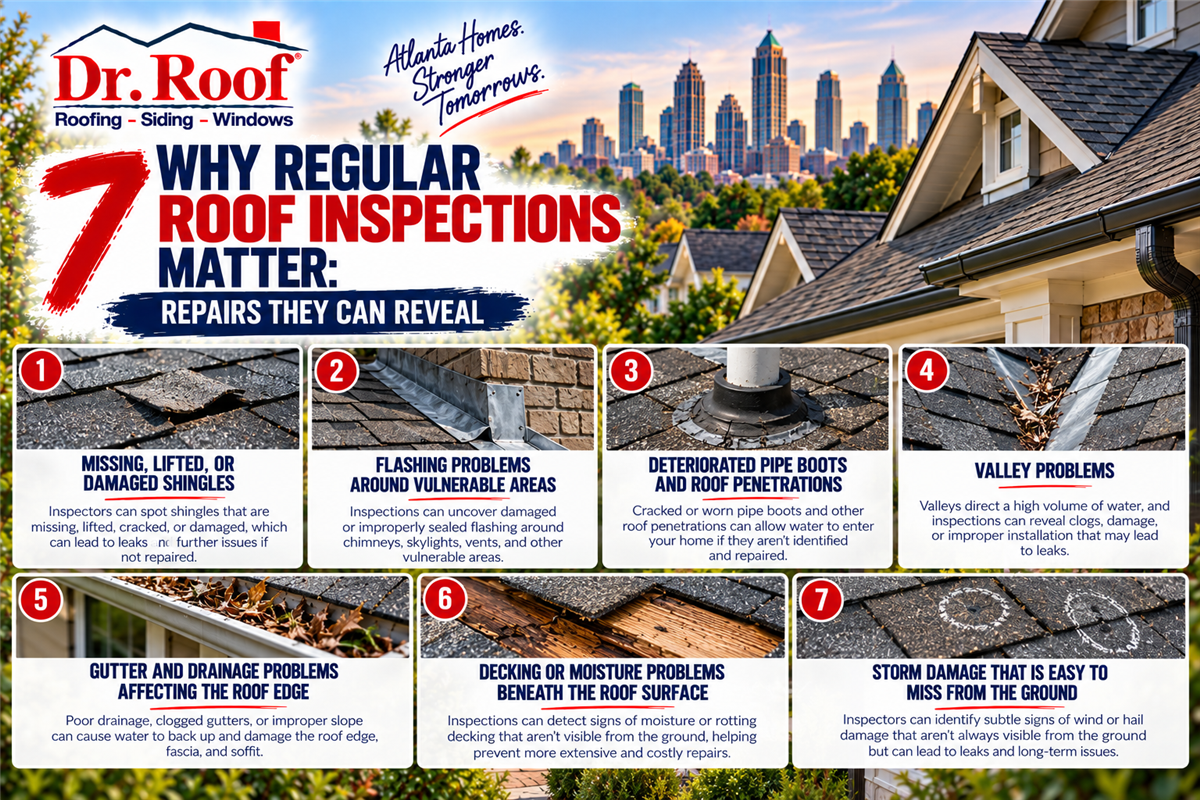
A professional roof inspection can evaluate:
Shingle bruising
Granule loss patterns
Cracks or splits
Flashing damage
Vent and pipe collar damage
Gutter and drainage issues
Signs of water intrusion
Areas vulnerable to future leaks
Dr. Roof provides professional storm damage inspections for Atlanta homeowners, helping identify both visible and hidden signs of hail impact.
Hail Damage and Insurance Documentation
If hail damage is found, documentation may be helpful if insurance is involved.
Dr. Roof can provide photos, written findings, and professional repair or replacement recommendations to help support the insurance claim process. Every insurance policy and claim is different, but clear documentation can make the process easier to understand and more organized.
Homeowners should avoid assuming that hail damage will be obvious or that it can wait. Timely documentation can be important after severe weather.
What to Do After a Hailstorm
After a hail event, homeowners should take a few practical steps.
First, inspect your property safely from the ground. Look for dents on gutters, granules near downspouts, damaged siding, cracked skylights, or visible roof concerns.
Next, avoid climbing onto the roof. Wet or damaged roofing surfaces can be dangerous.
Then, document anything you notice with photos from a safe location.
Finally, schedule a professional roof inspection to determine whether hail damage is present and what next steps may be needed.
Why Atlanta Homeowners Choose Dr. Roof
Dr. Roof has served the Atlanta area since 1988, helping homeowners protect their homes after hail, wind, heavy rain, and everyday roof wear.
Our team understands how Georgia weather affects roofing systems and why hidden storm damage should not be ignored.
Homeowners choose Dr. Roof for:
Professional hail damage inspections
Clear photo documentation
Honest repair or replacement recommendations
Storm damage documentation support
GAF Master Elite certification
Decades of Atlanta-area experience
Quality roof repair and replacement
Strong warranty options
A customer-first approach
Do Not Let Hidden Hail Damage Go Unchecked
Hail damage can hide in plain sight. Your roof may look fine from the ground while still having bruised shingles, granule loss, damaged flashing, or weakened seals.
The safest way to know what your roof needs is to schedule a professional inspection after a significant hailstorm.
If your Atlanta home has recently experienced hail or severe weather, contact Dr. Roof to schedule a roof inspection and get clear guidance on your next step.
Frequently Asked Questions
Is visible damage the only true sign of hail impact on a roof?
No, this is a common misconception. While large dents or missing shingles are obvious, many crucial signs of hail damage on roofs are subtle, such as granule loss, shingle bruising, or damage to vents and gutters. These hidden indicators often go unnoticed by the untrained eye but can lead to severe issues over time.
Can minor hail damage truly lead to significant long-term problems?
Absolutely. What seems like minor damage, like granule loss or small shingle bruises, can compromise your roof’s protective layers. This exposes the underlying materials to UV rays and moisture, accelerating deterioration, leading to leaks, and potentially requiring a full roof replacement much sooner than expected if not addressed through timely storm restoration.
How can I be sure to identify the real signs of hail damage on roofs after a storm?
The most reliable way to identify true signs of hail damage on roofs is to schedule a professional roof inspection. Experts have the experience and tools to safely access your roof, distinguish hail damage from normal wear and tear, and spot the subtle indicators that homeowners often miss from the ground, ensuring a comprehensive assessment.
What common misconceptions do homeowners have about assessing roof hail damage themselves?
Many homeowners mistakenly believe they can thoroughly inspect for hail damage from the ground, or that only large hail causes significant damage. Another myth is that if their neighbors’ roofs are fine, theirs must be too. The reality is that hail damage can vary greatly even across short distances and often requires a close-up, expert inspection.
Why is a professional inspection often necessary even if I see no obvious signs of hail damage on roofs?
A professional inspection is crucial because hail damage can be hidden, affecting the roof’s underlying structure or components in ways that aren’t visible from the ground. Even without obvious damage, compromised shingles or weak seals can lead to leaks and structural issues down the line, making a thorough assessment by a storm restoration expert essential for your home’s protection.
Subscribe to Dr. Roof's Blog







Comments