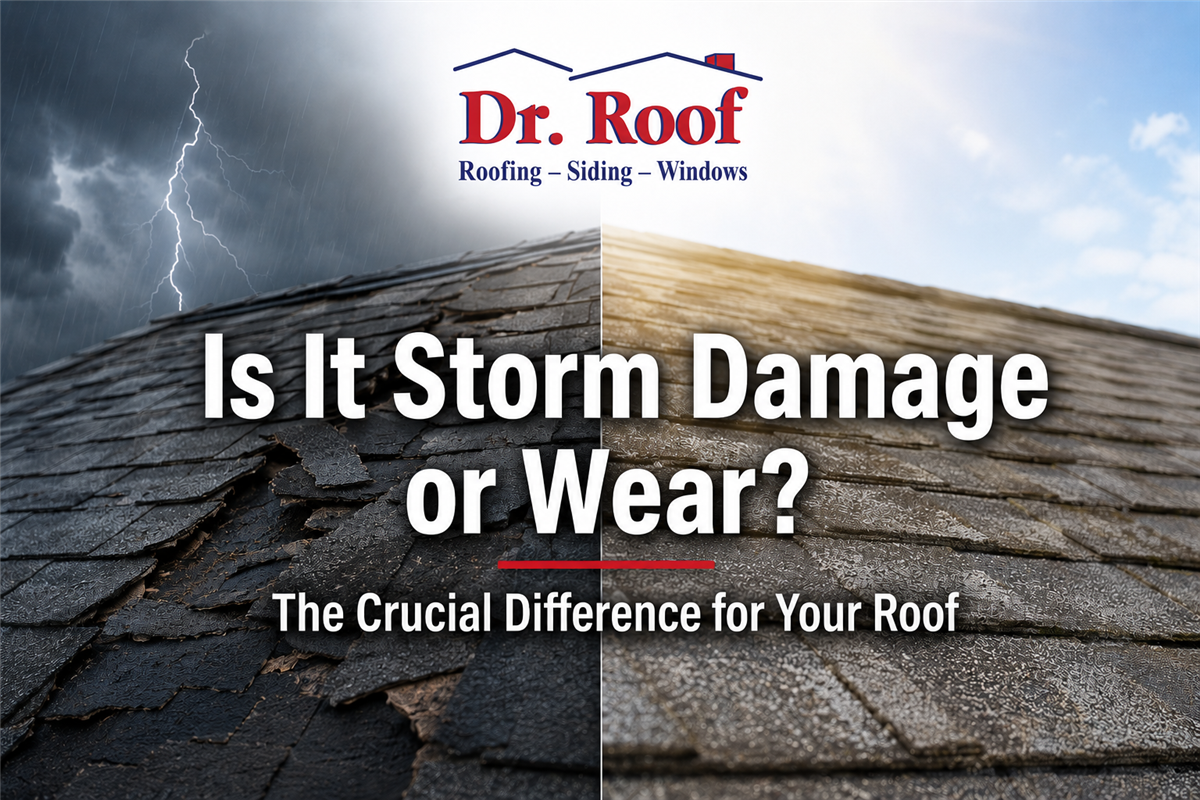
This article helps homeowners understand the vital distinction between roof storm damage vs wear, which is crucial for proper repairs and navigating insurance claims. It offers expert insights and a practical process for accurate assessment to avoid common misconceptions.
Unmasking the Truth: Storm Damage Versus Wear
Many Atlanta homeowners face a common dilemma after severe weather or as their roof ages. Is the visible issue simply normal wear and tear, or is it actual roof storm damage? This question is far more critical than many realize for property integrity.
Often, people mistakenly believe all roof deterioration falls under one category. However, understanding the precise difference between roof storm damage vs wear is fundamental for property owners.
This distinction impacts effective repairs, accurate insurance claims, and ultimately, protecting your home and investment. Our experienced team at Dr. Roof has observed countless instances where this knowledge prevents costly errors and ensures long-term integrity.
A widespread misconception suggests storm damage is always obvious, like widespread missing shingles after a hurricane. People often think wear is subtle, like a faded patch, visible only to the keenest eye.
The truth, however, is far more nuanced than these simple definitions. Normal wear and tear can convincingly mimic storm damage, making it challenging for an untrained eye to differentiate the two.
Conversely, significant storm damage can be surprisingly subtle, hiding its true impact beneath the surface until a major leak appears. This visual deception often leads homeowners down the wrong path when seeking solutions or filing claims.
Decoding the Differences: Wear and Tear vs. Storm Impact
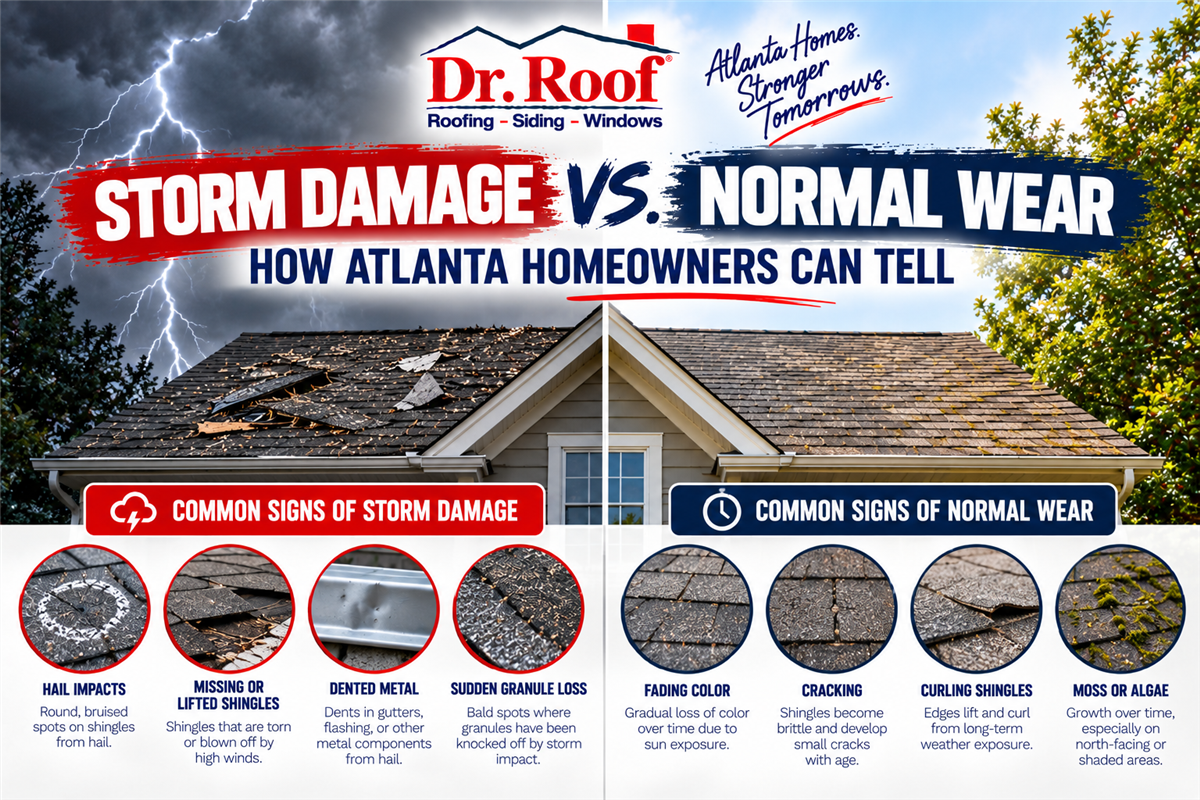
Typically, wear and tear on a roof manifests as a gradual, uniform degradation across the entire surface. You might notice widespread granule loss, where the protective gravel-like coating slowly erodes over time.
Consistent curling and cupping of shingles also occur over many years due to environmental exposure. Sun exposure can cause blistering that appears evenly distributed, all accumulating slowly with age.
In contrast, true roof storm damage usually presents as localized, sudden, and often inconsistent patterns. High winds might tear or crease shingles in specific areas, leaving distinct lines or missing patches.
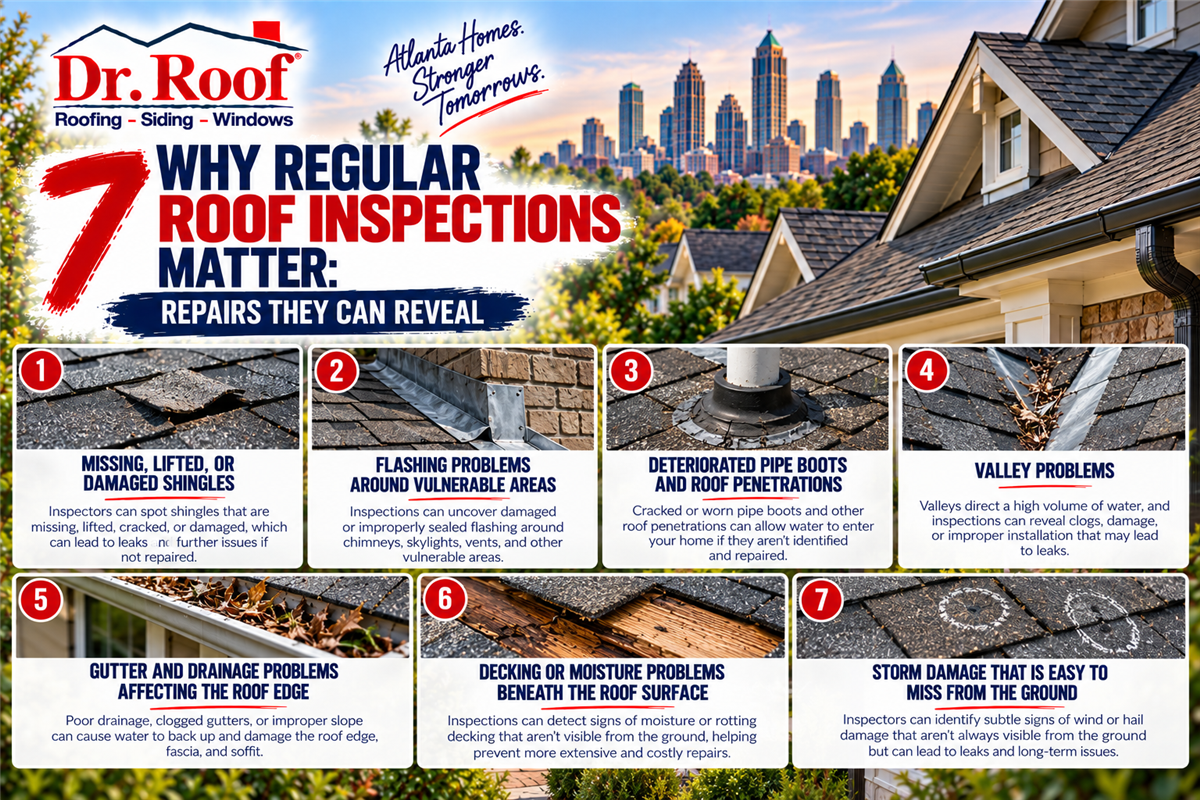
Hail impacts create random, circular dents or bruising on shingles, often accompanied by granule displacement in those specific spots. Water stains appearing suddenly after a heavy storm also point directly to a new point of entry.
The key difference lies in abrupt changes and localized impact, rather than a slow, even decline across the entire roofing system. This distinction is vital for accurate assessment.
Your Action Plan: Expert Assessment and Documentation
The distinction between roof storm damage vs wear becomes especially significant when dealing with insurance providers. Homeowner insurance policies are generally designed to cover sudden, accidental damage caused by specific perils, such as storms.
They typically do not cover damage resulting from neglect, poor maintenance, or the natural aging process of a roof. Attempting to file a claim for wear and tear, even if it looks like storm damage, often leads to denial and frustration.
Therefore, presenting clear, irrefutable evidence differentiating roof storm damage vs wear is paramount for a successful claim. This requires a professional assessment that meticulously documents the specific nature and cause of the roof's condition.
Proper documentation ensures your claim aligns with policy terms, maximizing your chances for approval. This critical step prevents many common pitfalls homeowners experience during the claims process.
The Dr. Roof team saw this distinction prove critical for a client in Alpharetta in March 2026. The homeowner, Mrs. Jenkins, believed her roof was simply showing extensive granule loss due to its age, a common sign of wear and tear.
She was preparing to pay out-of-pocket for a full replacement, expecting no insurance coverage. However, during our initial, complimentary inspection, we discovered numerous small, circular indentations and bruising patterns on the shingles that were not visible from the ground.
These were clear indicators of hail impact, cleverly disguised by the overall aging appearance of the roof. We took detailed photos, highlighted the specific damage points, and cross-referenced them with local storm reports from late 2025.
This thorough documentation allowed Mrs. Jenkins to confidently file an insurance claim for what was clearly roof storm damage. Her claim was approved, saving her approximately $18,000 on a full roof replacement.
This outcome transformed her perspective on what constitutes true storm damage and highlighted the value of an expert assessment in her storm restoration journey. For homeowners, distinguishing between roof storm damage vs wear can feel overwhelming.
However, a structured approach helps you gather initial information before calling in the professionals. Follow these steps for an effective preliminary and professional assessment:
Always prioritize safety. From the ground, walk around your home and look for obvious signs. Note any missing shingles, large dents, or cracks. Observe if granules are missing in concentrated areas rather than uniformly across the roof. Localized or unusual findings after a recent storm warrant further investigation.
Take clear photographs of any suspicious areas you can safely access. Record the date and time of any recent severe weather events. This timeline connection is vital for potential insurance claims, linking damage directly to a specific event.
Contact a GAF Master Elite Certified Expert for a comprehensive assessment. Dr. Roof, with over 30 years of local experience and GAF Master Elite certification, understands the subtle nuances differentiating storm damage from wear. Our professional inspectors use specialized tools to identify hidden damage, ensuring a precise evaluation.
A reputable contractor provides a detailed report with photographs and clear explanations. This report should clearly differentiate between storm-related issues and general aging. Our team ensures you fully understand the damage, necessary repairs, and implications for storm restoration insurance claims.
Beyond Self-Assessment: The Value of Professional Expertise
At Dr. Roof, we pride ourselves on quality craftsmanship and integrity. Our comprehensive storm damage insurance assistance ensures that once we identify legitimate roof storm damage, we help you navigate the often-complex claims process.
We work diligently to document all damage accurately, ensuring your claim has the best chance of approval. Furthermore, our labor and material warranties underscore our commitment to lasting solutions for your home.
We also offer financing options to make essential repairs accessible. Our community-oriented approach means we are not just fixing roofs; we are protecting homes and building trust in the Atlanta metropolitan area, one project at a time.
Avoiding Costly Misconceptions in Roof Assessment
One major mistake homeowners make is believing all roof deterioration falls into a single category. Assuming visible issues are solely “wear and tear” or “storm damage” without proper investigation can lead to incorrect diagnoses.
Another common error is relying solely on ground-level observations, especially for storm damage. Many significant impacts, like hail bruising, are surprisingly subtle and not visible to the untrained eye from below.
Failing to document everything with clear photos and dates of specific weather events is also a critical oversight. Without this evidence, insurance claims for storm damage can be significantly weakened or denied.
Finally, attempting DIY repairs for complex issues, whether storm damage or extensive wear, can void warranties and cause further, more costly problems. Professional assessment and repair are almost always recommended.
Proactive Protection: Beyond Basic Inspections
For advanced roof protection, consider going beyond basic visual checks. Regular, comprehensive inspections by GAF Master Elite certified professionals can uncover hidden issues before they escalate into major problems.
Utilize resources like local storm reports and weather data to cross-reference with any suspected damage. This precise historical context strengthens your claims and understanding of potential impacts.
Educate yourself on your specific insurance policy’s nuances regarding coverage for different types of damage. Understanding exclusions and claim procedures beforehand can save significant time and frustration.
Consider upgrading to impact-resistant roofing materials when replacement is due. These materials offer enhanced durability against future storm events, providing a higher level of long-term protection for your investment.
Secure Your Home: Take the Next Step
The distinction between roof storm damage and wear holds significant implications for your home's longevity and financial planning. Relying on assumptions can lead to costly mistakes.
By understanding the tell-tale signs and engaging experienced professionals, you empower yourself to make informed decisions. This ensures your home receives the precise care it needs for proper storm restoration, protecting your investment for years to come.
Frequently Asked Questions
Is minor roof granule loss always a sign of normal wear and tear?
No, not always. While uniform granule loss typically indicates normal wear, concentrated areas of granule loss, especially if accompanied by slight indentations or bruising, can be a sign of subtle hail impact. An expert inspection is crucial to accurately determine the cause.
Can hail damage be invisible from the ground, looking like natural aging?
Absolutely. Hail damage is often not immediately obvious from ground level. It can manifest as small, soft spots or bruising on shingles that mimic aging or blistering. Only a thorough, professional roof inspection can definitively identify these hidden signs of roof storm damage vs wear.
Why do insurance companies scrutinize the difference between roof storm damage vs wear so closely?
Insurance policies are designed to cover sudden, accidental damage from specific events like storms, not routine maintenance or natural aging. They scrutinize the distinction to ensure claims align with policy terms, protecting against fraud and ensuring fair payouts for legitimate storm restoration.
What are the biggest misconceptions homeowners have about repairing roof storm damage vs wear?
Many homeowners believe repairs are universal, but the approach differs significantly. Another misconception is that DIY repairs for either are sufficient. Storm damage often requires specific repair techniques and materials, while extensive wear might necessitate full replacement, both best handled by certified professionals.
How can Dr. Roof's experience ensure an accurate assessment for my roof's condition?
With over 30 years of local experience and GAF Master Elite certification, Dr. Roof's experts are trained to identify subtle indicators of both wear and storm damage. We provide unbiased, detailed assessments, using our deep knowledge to accurately classify issues and guide you towards the most appropriate and cost-effective storm restoration solution.
Subscribe to Dr. Roof's Blog




Comments