What Are Low-E Window Coatings?
When homeowners start exploring window replacement, they often hear the term “low-E glass” or “low-E window coatings.” At first, it may sound like a technical upgrade that is difficult to understand.
The concept is actually simple.
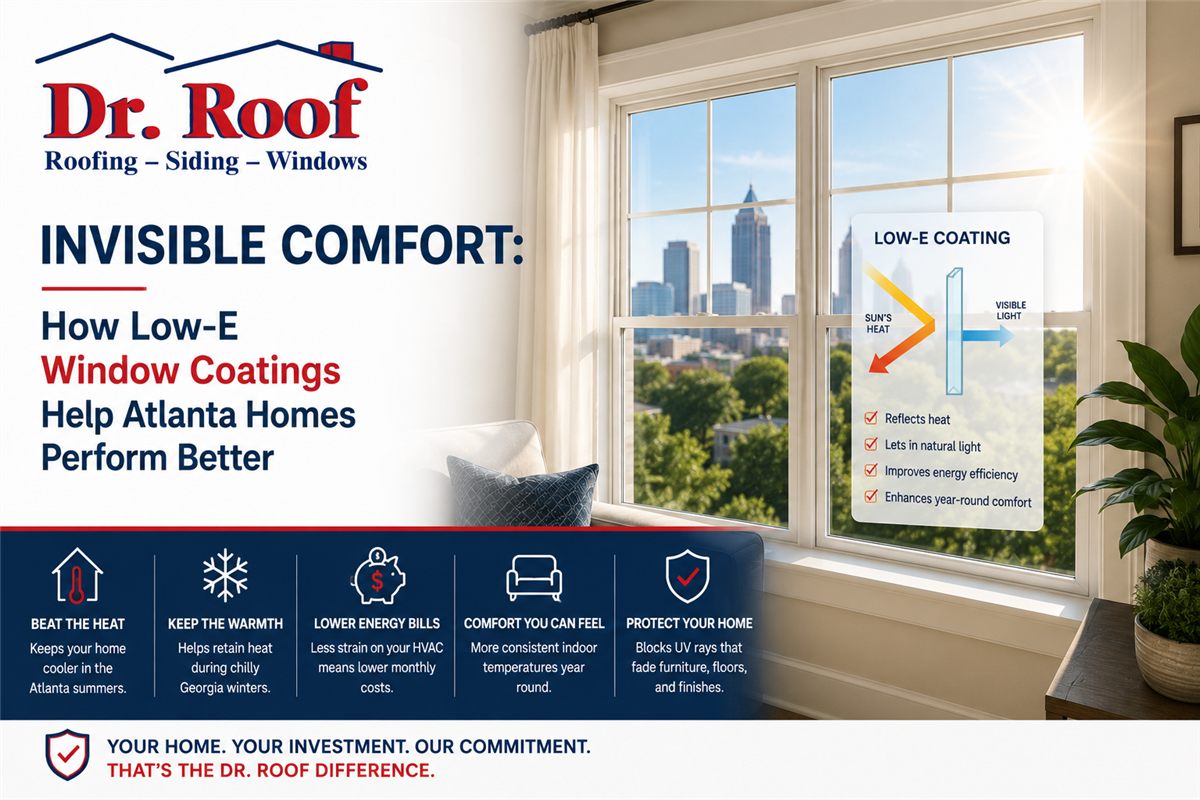
Low-E stands for low emissivity. A low-E coating is a very thin, nearly invisible layer applied to window glass to help control how heat moves through the window.
Its purpose is to improve energy efficiency, indoor comfort, and UV protection while still allowing natural light into the home.
For Atlanta homeowners dealing with hot summers, humidity, seasonal storms, and changing temperatures, low-E window coatings can be an important part of choosing energy-efficient replacement windows.
The Myth: Low-E Glass Is Just a Marketing Term
One common misconception is that low-E coatings are just an added feature with little real benefit. Some homeowners assume the coating does not make much difference or that all windows perform the same once installed.
In reality, glass performance plays a major role in how comfortable and efficient your home feels.
Windows are one of the main areas where heat can enter or escape a home. Low-E coatings help reduce unwanted heat transfer, which can make it easier to maintain a more consistent indoor temperature.
How Low-E Window Coatings Work
Low-E coatings are designed to reflect radiant heat.
In warmer months, they can help reflect outside heat away from the home. In cooler months, they can help reduce heat loss from inside the home. This helps the window work more efficiently throughout the year.
The coating is extremely thin and is typically applied to the glass inside an insulated window unit. Homeowners usually do not notice the coating visually, but they may notice the difference in comfort and performance.
Low-E Coatings and Atlanta’s Climate
Atlanta homes face a mix of heat, humidity, heavy sun exposure, and seasonal temperature changes. During the summer, windows can allow significant heat into the home, especially on south- and west-facing walls.
Low-E glass can help reduce solar heat gain, which may help rooms feel more comfortable and reduce strain on the HVAC system.
In cooler months, low-E coatings can also help keep conditioned heat inside the home. This makes them useful for year-round comfort, not just summer performance.
The Myth: Low-E Windows Make Rooms Too Dark
Some homeowners worry that low-E glass will make their home feel dim or block natural light.
Modern low-E coatings are designed to manage heat transfer while still allowing visible light to pass through. That means homeowners can still enjoy bright, welcoming rooms while benefiting from improved energy performance.
The goal is not to darken your home. The goal is to help control heat and UV exposure without sacrificing the natural light homeowners want.
UV Protection for Your Home’s Interior
Another benefit of low-E window coatings is UV protection.
Sunlight can cause furniture, flooring, rugs, curtains, artwork, and other interior finishes to fade over time. Low-E coatings can help reduce UV exposure, helping protect the items inside your home.
For rooms with large windows or strong afternoon sun, this can be especially valuable.
Are All Low-E Coatings the Same?
Not all low-E coatings are identical. Different window products may use different types of coatings depending on climate, performance goals, and glass design.
Some coatings are designed to reduce solar heat gain, which can be helpful in warmer climates. Others are designed to help retain heat, which may be more important in colder regions.
That is why professional guidance matters. The right window choice depends on your home’s layout, sun exposure, comfort concerns, and energy-efficiency goals.
Why Professional Window Installation Matters
Even high-quality windows with low-E coatings need proper installation to perform as intended.
Poor installation can lead to drafts, air leaks, water intrusion, poor operation, and reduced energy performance. A window is only as effective as the product and the installation behind it.
Professional installation helps ensure that your replacement windows are measured correctly, sealed properly, and installed with attention to detail.
Benefits of Low-E Windows
Low-E window coatings can offer several benefits for homeowners, including:
Improved energy efficiency
Better indoor comfort
Reduced heat transfer
Less UV exposure
Protection against interior fading
More consistent room temperatures
Reduced strain on heating and cooling systems
Continued natural light
Long-term home value
For many homeowners, low-E glass is a practical upgrade that supports both comfort and performance.
Signs You May Benefit From Energy-Efficient Window Replacement
You may want to consider replacement windows with low-E glass if you notice:
Rooms that feel too hot in summer
Drafts near windows
Rising energy bills
Fading furniture or flooring
Fogging between panes
Windows that are difficult to open or close
Damaged seals or frames
Outside noise becoming more noticeable indoors
Older single-pane or inefficient windows
Uneven temperatures from room to room
A professional window assessment can help determine whether new windows could improve your home’s comfort and efficiency.
Why Atlanta Homeowners Choose Dr. Roof
Dr. Roof has served the Atlanta area since 1988, helping homeowners protect and improve their homes with roofing, windows, siding, gutters, and other exterior services.
Our team understands how Georgia weather affects home performance. Heat, humidity, heavy rain, and seasonal temperature swings can all influence the best window choices for your home.
Homeowners choose Dr. Roof for window replacement because we offer:
Decades of Atlanta-area exterior home experience
Professional window assessments
Energy-efficient window options
Clear recommendations
Quality installation
Storm damage documentation support
Strong warranty options
Honest communication
A customer-first approach
Make a Smarter Window Choice
Low-E window coatings may be nearly invisible, but their impact can be significant. They help manage heat transfer, improve comfort, reduce UV exposure, and support better energy performance.
If you are considering window replacement for your Atlanta home, do not overlook the glass. The right low-E window options can help your home feel more comfortable and perform better year-round.
Contact Dr. Roof to schedule a window replacement consultation and explore energy-efficient window options for your home.
Frequently Asked Questions
Do low-e window coatings really block all natural light, or is that a myth?
This is a common misconception; modern low-e window coatings are designed to be virtually transparent. They primarily block infrared and ultraviolet light to manage heat transfer, not visible light. This allows your home to remain bright and full of natural light without compromising energy efficiency or comfort.
Are all low-e glass types the same, or are there different low-e window coatings for various climates?
No, not all low-e glass is the same. There are different types, primarily hard-coat (pyrolytic) and soft-coat (sputtered) low-e, each with varying performance characteristics. These coatings are often optimized for different climates, meaning some are better at reflecting heat in warmer regions, while others excel at retaining heat in cooler areas. The best choice depends on your specific needs and local climate.
Is the higher cost of low-e window coatings truly offset by energy savings after a window installation?
Yes, while windows with low-e coatings may have a higher initial cost, this investment is typically recouped through significant energy savings over time. By reducing heat transfer, your heating and cooling systems operate more efficiently, leading to lower utility bills. Many homeowners experience substantial savings within a few years, making it a cost-effective long-term solution.
How do low-e window coatings protect my home’s interior from fading?
Low-e window coatings are effective at blocking a significant portion of harmful ultraviolet (UV) radiation. UV radiation is the primary cause of fading for furniture, flooring, curtains, and artwork. By reducing UV penetration, these coatings help preserve the color and integrity of your interior furnishings, extending their lifespan and maintaining your home's aesthetic appeal.
Can low-e window coatings improve comfort in specific rooms, like sun-facing areas?
Absolutely. Low-e window coatings are particularly beneficial for rooms that receive a lot of direct sunlight, such as south or west-facing rooms. They reflect solar heat, preventing excessive heat gain in summer. This helps maintain a more consistent and comfortable indoor temperature. This reduces the need for constant air conditioning and eliminates uncomfortable hot spots.
Subscribe to Dr. Roof's Blog




Comments