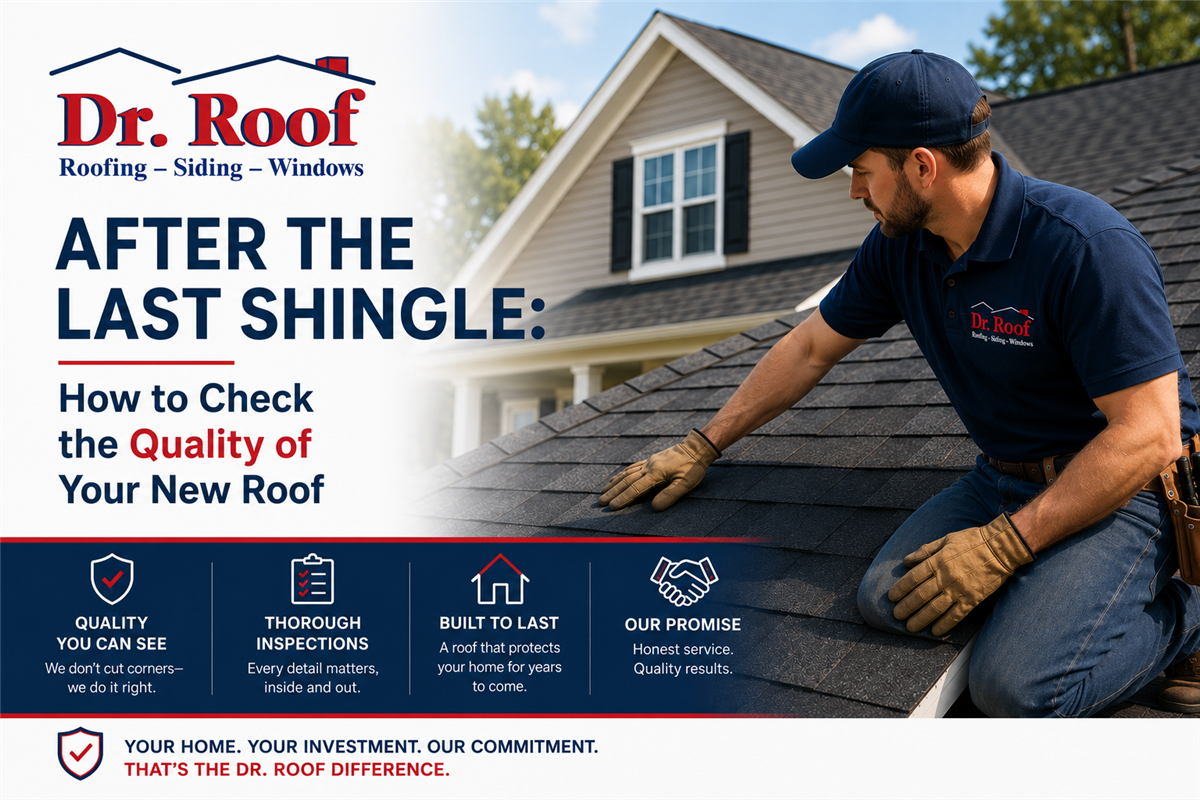
Why a Post-Installation Roof Check Matters
A new roof is a major investment in your home’s protection, value, and curb appeal. Once the installation is complete, homeowners should feel confident that the work was done properly and that the roofing system is ready to perform for years to come.
Even when you hire a trusted roofing contractor, it is helpful to know what quality roof replacement should look like. A basic post-installation review gives you peace of mind and helps you understand the craftsmanship behind your new roof.
This does not mean climbing onto the roof or putting yourself at risk. Most homeowners can perform a simple quality check safely from the ground and inside the attic.
The Myth: Once the Crew Leaves, There Is Nothing Else to Check
Many homeowners assume the roof replacement process ends the moment the crew finishes cleanup. While the installation may be complete, a final review is an important part of protecting your investment.
A quality roof replacement should include more than new shingles. It should also involve proper flashing, ventilation, cleanup, gutter care, and clear warranty information.
Knowing what to look for helps homeowners feel more informed and confident.
Start With a Safe Ground-Level Inspection
Safety comes first. Do not climb onto your roof, especially if it is steep, wet, or unfamiliar. Instead, walk around your home from the ground and use binoculars or your phone camera to zoom in on details.
From the ground, look for:
Straight, even shingle lines
Shingles lying flat
No obvious lifting, buckling, or curling
Clean edges along rooflines
Properly finished ridges and valleys
No visible missing shingles
No exposed underlayment
No obvious gaps around roof penetrations
A newly replaced roof should look clean, even, and professionally installed.
Check the Flashing Areas
Flashing is one of the most important parts of a roofing system. It helps direct water away from vulnerable areas where leaks commonly begin.
Pay attention to areas around:
Chimneys
Skylights
Vent pipes
Roof valleys
Dormers
Wall connections
Roof-to-siding transitions
The flashing should appear secure, smooth, and properly fitted. There should not be obvious gaps, loose sections, or sloppy sealant. Proper flashing helps protect your home from future water intrusion.
Look at the Gutters and Downspouts
Your gutters and downspouts work with your roof to move water away from your home. After a roof replacement, they should be securely attached and free of major debris.
Check for:
Gutters that appear firmly fastened
No visible sagging
Downspouts connected properly
No large debris left inside gutters
Water directed away from the foundation
No obvious damage from the installation process
A professional roof replacement should leave your drainage system clean, secure, and ready to function.
Inspect the Cleanup Around Your Property
A clean jobsite is an important sign of care and professionalism. After roof replacement, walk around your yard, driveway, landscaping, patios, and walkways.
Look for:
Old shingles
Nails
Packaging
Roofing debris
Loose materials
Scraps around shrubs or flower beds
Debris near the driveway or garage
Roofing projects can create a lot of debris, so thorough cleanup matters. A reputable contractor should make cleanup a priority before considering the job complete.
Check Your Attic if It Is Safe to Access
If you can safely access your attic, a quick interior check can provide additional reassurance. Use a flashlight and avoid stepping anywhere that is not properly supported.
Inside the attic, look for:
Any visible daylight through the roof deck
New water stains
Damp insulation
Disturbed insulation
Proper airflow around ventilation areas
Signs of debris or gaps near roof penetrations
You should not see daylight coming through the roof deck except where proper ventilation or roof openings are intentionally installed and sealed as part of the system.
If anything looks concerning, document it and contact your roofing contractor.
Review Ventilation
Ventilation plays an important role in roof performance. Proper airflow helps reduce heat and moisture buildup in the attic, which can support roof longevity and improve home comfort.
After roof replacement, ask your contractor to explain how your attic ventilation is handled. This may include ridge vents, soffit vents, or other ventilation components depending on your home.
Good ventilation is not always obvious from the ground, which is why clear communication with your contractor matters.
Confirm Warranty Information
A quality roof replacement should include clear warranty information. Homeowners should understand what is covered, what is not covered, and how to access warranty support if needed.
Before closing out the project, ask:
What material warranty applies?
What workmanship coverage is available?
What documentation should I keep?
Are there maintenance requirements?
Who should I contact if I notice a problem?
Are there manufacturer warranty options included?
Dr. Roof helps homeowners understand available warranty options so they know how their investment is protected.
Document Your New Roof
Taking photos after installation is a smart way to keep a record of your roof’s condition. Capture images of the roof from several angles, including the front, back, sides, gutters, flashing areas, and any areas discussed during the final walkthrough.
This documentation can be useful for future maintenance, warranty questions, or insurance records.
What to Do if You Notice a Concern
If you see something that does not look right, do not ignore it. Document the concern with photos and contact your roofing contractor promptly.
Examples of concerns may include:
Loose or lifted shingles
Visible debris left behind
Damaged gutters
Missing flashing details
Water stains after rain
Interior moisture concerns
Uneven or unusual roof areas
Questions about ventilation or warranty coverage
A reputable contractor should be willing to review your concerns and explain the next step.
Why Atlanta Homeowners Choose Dr. Roof
Dr. Roof has served the Atlanta area since 1988, helping homeowners protect their homes with professional roofing and exterior services.
As a GAF Master Elite Certified Contractor, Dr. Roof focuses on quality workmanship, clear communication, and careful installation practices. Our team understands how Georgia weather affects roofing systems and why attention to detail matters during every roof replacement.
Homeowners choose Dr. Roof for:
Decades of Atlanta-area roofing experience
Professional roof replacement
GAF Master Elite certification
Clear project communication
Strong warranty options
Thorough cleanup
Storm damage documentation support
A commitment to doing the job right
A Quality Roof Should Give You Confidence
Inspecting your newly replaced roof does not have to be complicated. A safe ground-level review, attic check, cleanup inspection, and warranty conversation can help you feel confident in your investment.
Your new roof should look clean, perform properly, and protect your home from the elements.
If you have recently completed a roof replacement or are planning one soon, Dr. Roof can help you understand what quality installation should include from start to finish.
Frequently Asked Questions
Is it really necessary to inspect a newly replaced roof if I hired a GAF Master Elite contractor?
Yes, even with a GAF Master Elite certified contractor, a homeowner's inspection provides an invaluable layer of personal assurance. While we adhere to the highest standards, your informed review ensures complete peace of mind and allows you to understand the quality of work firsthand, reinforcing our commitment to our 'Make-It-Right' guarantee.
What are the most critical areas to inspect when I want to inspect my newly replaced roof?
The most critical areas include checking shingle alignment and condition, inspecting all flashing around chimneys, vents, and valleys for tight seals, and ensuring gutters and downspouts are undamaged and properly attached. Don't forget an attic check for daylight or leaks, as these are often early indicators of potential issues.
What should I do if I find a problem during my post-roof replacement inspection?
If you identify any concerns during your inspection, the best course of action is to immediately contact your contractor's service team. Document your observations with photos and notes, and we will dispatch a team to assess and resolve the issue promptly under our comprehensive warranties and 'Make-It-Right' Guarantee.
Can inspecting my new roof help extend its overall lifespan?
While a professional installation is the primary factor in roof longevity, your initial inspection helps verify proper installation, which is crucial for maximizing its lifespan. Catching and addressing minor issues early, even aesthetic ones, ensures that your roof starts its life correctly, preventing small problems from escalating and contributing to the enduring quality of your roof replacement.
Subscribe to Dr. Roof's Blog



Comments