Why Gutter Material Choice Matters
Gutters may not be the most exciting part of your home’s exterior, but they play one of the most important roles in protecting it.
A properly installed gutter system helps direct water away from your roof, siding, foundation, landscaping, and walkways. When gutters are damaged, undersized, clogged, or made from the wrong material for your home, water can collect where it should not — leading to erosion, wood rot, foundation concerns, basement moisture, and exterior damage.
Many homeowners assume all gutter materials perform about the same. In reality, the material you choose can make a major difference in durability, maintenance, appearance, and long-term value.
For Atlanta homeowners, choosing the right gutter system means considering local weather, tree coverage, home style, budget, and how much upkeep you want to manage over time.
The Myth: All Gutter Materials Are Basically the Same
One common misconception is that gutter material does not matter as long as the system moves water away from the home.
But different materials respond differently to heat, humidity, heavy rain, debris, impact, and age. Some are more affordable upfront but may need more maintenance or replacement sooner. Others cost more initially but offer greater strength, curb appeal, or longevity.
The best gutter material for your home depends on your specific needs — not just the lowest price.
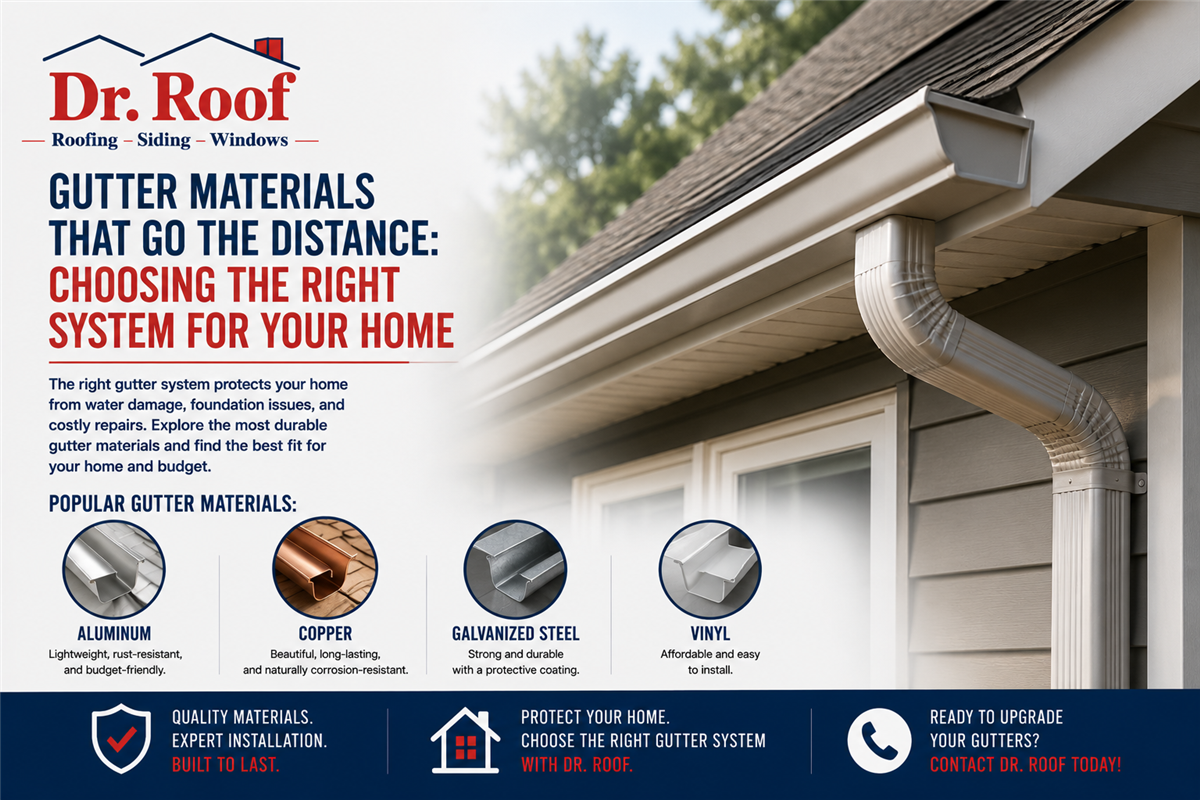
Common Gutter System Materials
Homeowners typically choose from several common gutter materials, each with its own advantages and tradeoffs.
Aluminum Gutters
Aluminum is one of the most popular gutter materials for residential homes, and for good reason. It is lightweight, resistant to rust, available in many colors, and often a strong balance of affordability and performance.
Aluminum gutters work well for many Atlanta-area homes because they can handle regular rainfall and are relatively low maintenance when installed properly.
Benefits of aluminum gutters include:
Rust resistance
Lightweight construction
Wide color selection
Good overall value
Compatibility with seamless gutter systems
However, aluminum can dent from heavy impact, falling limbs, or ladders if not handled carefully. The thickness of the aluminum also matters, so homeowners should compare quality rather than assuming all aluminum gutters are equal.
Vinyl Gutters
Vinyl gutters are often chosen because they are budget-friendly and lightweight. They do not rust and can be a practical option for smaller projects or homeowners looking for a lower initial cost.
However, vinyl may not always be the best long-term choice in climates with heat, humidity, and temperature swings. Over time, vinyl can become brittle, warp, sag, or crack, especially if exposed to harsh conditions or heavy debris.
Benefits of vinyl gutters include:
Lower upfront cost
Rust-free material
Lightweight design
Simple appearance
For homeowners focused on long-term durability, it is important to weigh the lower initial cost against potential repair or replacement needs later.
Steel Gutters
Steel gutters are known for strength. They can be a good option for homes that need a more durable system, especially in areas where gutters may face heavy debris, wind, or impact.
Galvanized steel gutters are coated to help resist rust, but they still require proper maintenance to prevent corrosion over time. Stainless steel is more resistant to rust but typically comes at a higher cost.
Benefits of steel gutters include:
Stronger impact resistance
Durable performance
Good option for demanding conditions
Sturdy appearance
Steel gutters may be heavier than aluminum and typically require professional installation to ensure proper support and long-term performance.
Copper Gutters
Copper gutters are often selected for their distinctive appearance and exceptional longevity. Over time, copper develops a natural patina that many homeowners find attractive, especially on historic, traditional, or high-end homes.
Copper does not rust and can last a very long time when properly installed. While it is one of the more expensive gutter materials upfront, it can provide strong long-term value for homeowners looking for beauty, durability, and low maintenance.
Benefits of copper gutters include:
Premium appearance
Excellent durability
Natural rust resistance
Long lifespan
Minimal painting or finishing needs
Copper is often chosen as much for design as performance, making it a strong option for homeowners who want gutters that enhance curb appeal.
Seamless Gutters: A Smart Upgrade
Beyond material, homeowners should also consider whether to choose sectional or seamless gutters.
Sectional gutters are assembled in pieces, which means they have more joints and seams. Those seams can become weak points over time and may be more likely to leak.
Seamless gutters are custom-made for your home and have fewer joints. This can reduce the risk of leaks and create a cleaner, more polished appearance.
For many Atlanta homeowners, seamless aluminum gutters offer a strong combination of durability, value, and performance.
Factors to Consider Before Choosing Gutter Materials
The right gutter system should be selected based on your home’s needs, not just the material name.
Before deciding, consider:
How much rainfall your home needs to manage
Whether your property has large trees nearby
Your home’s roofline and drainage needs
Your preferred maintenance level
Your exterior style and color preferences
Your budget and long-term value expectations
Whether gutter guards may be helpful
How long you plan to stay in the home
A professional assessment can help determine which gutter material and system design will provide the best protection.
Why Atlanta Weather Matters
Atlanta homes face heavy rain, humidity, intense sun, falling leaves, and seasonal storms. These conditions can affect how well a gutter system performs over time.
A material that works well in one climate may not be the best fit for another. For example, homes surrounded by mature trees may need a stronger system with gutter guards to reduce clogs and overflow. Homes with long rooflines or steep pitches may need properly sized gutters and downspouts to manage high water volume.
Dr. Roof understands the local conditions Atlanta homeowners face and can help recommend gutter solutions designed for Georgia homes.
The Cost of Choosing the Wrong Gutter System
Choosing the cheapest gutter option may save money at first, but it can lead to problems later if the system does not hold up.
Poorly chosen or poorly installed gutters may result in:
Leaks at seams
Sagging sections
Frequent clogs
Overflow during heavy rain
Water pooling near the foundation
Siding or fascia damage
Landscape erosion
Premature replacement
A quality gutter system is an investment in protecting the entire home exterior.
Gutter Guards and Maintenance
No gutter system is completely maintenance-free, but gutter guards can help reduce debris buildup and improve water flow.
Gutter guards are especially helpful for homes near trees, where leaves, pine needles, and twigs can quickly clog open gutters. By limiting debris, gutter guards can reduce cleaning frequency and help prevent overflow during storms.
Pairing the right gutter material with the right gutter protection system can improve long-term performance and reduce maintenance stress.
Why Professional Installation Matters
Even the best gutter material will not perform properly if it is installed incorrectly.
Professional installation helps ensure:
Correct gutter pitch
Secure fastening
Proper downspout placement
Adequate drainage capacity
Clean seams and transitions
Protection for fascia and roof edges
A finished look that complements the home
Dr. Roof has served Atlanta-area homeowners since 1988, bringing decades of exterior home improvement experience to gutter installation and replacement projects.
Choose Gutters Built for Long-Term Protection
The best gutter system is not always the cheapest or the most expensive. It is the one that fits your home, your climate, your maintenance goals, and your long-term protection needs.
By understanding the differences between aluminum, vinyl, steel, copper, seamless systems, and gutter protection options, you can make a more confident decision for your home.
If your gutters are leaking, sagging, overflowing, rusting, or no longer protecting your home properly, Dr. Roof can help. Contact Dr. Roof to schedule a gutter assessment and learn which gutter system is right for your Atlanta home.
Frequently Asked Questions
Is aluminum always the most cost-effective of common gutter system materials?
While aluminum gutters often have the lowest initial installation cost, this doesn't always translate to the most cost-effective choice long-term. Factors like lifespan, maintenance needs, and specific climate conditions can influence total ownership costs. Sometimes, a slightly higher investment in more durable materials like steel or copper can lead to greater savings over decades by reducing repairs and replacements.
Do copper gutters require no maintenance at all?
It's a common misconception that copper gutters are entirely maintenance-free. While they are exceptionally durable and resistant to rust and corrosion, they still require occasional cleaning to remove leaves, twigs, and other debris that can accumulate and cause clogs. The "maintenance-free" aspect primarily refers to their resistance to material degradation and need for painting, not the absence of debris removal.
Are vinyl gutters never a good option for homes in Atlanta?
While vinyl gutters are often seen as less durable, they can be a viable option for certain homes in Atlanta, particularly smaller structures or those with very limited budgets. Their affordability and ease of DIY installation can be appealing. However, their susceptibility to cracking, warping, and sagging in Atlanta's fluctuating temperatures and heavy rainfall makes them a less robust choice compared to metal options for long-term protection and minimal upkeep.
How can I ensure the longevity of galvanized steel common gutter system materials?
To maximize the lifespan of galvanized steel gutters, proper installation is paramount to prevent rust, especially at seams and cut edges. Regular cleaning to prevent debris buildup and ensure proper drainage is also critical. Applying a rust-inhibiting paint or sealant to any exposed areas or scratches can further enhance their durability and protect the zinc coating, helping them last upwards of 20 years.
What's a common misconception about the lifespan of different gutter system materials?
A frequent misconception is assuming all gutter materials have a similar lifespan, or that only expensive options last. The truth is there's a wide range: vinyl typically lasts 10-20 years, while aluminum can last 20-30 years, and copper can exceed 50 years or even a century if well-maintained. Homeowners should avoid comparing based solely on initial cost, and instead consider the projected lifespan in relation to their investment.
Subscribe to Dr. Roof's Blog



Comments