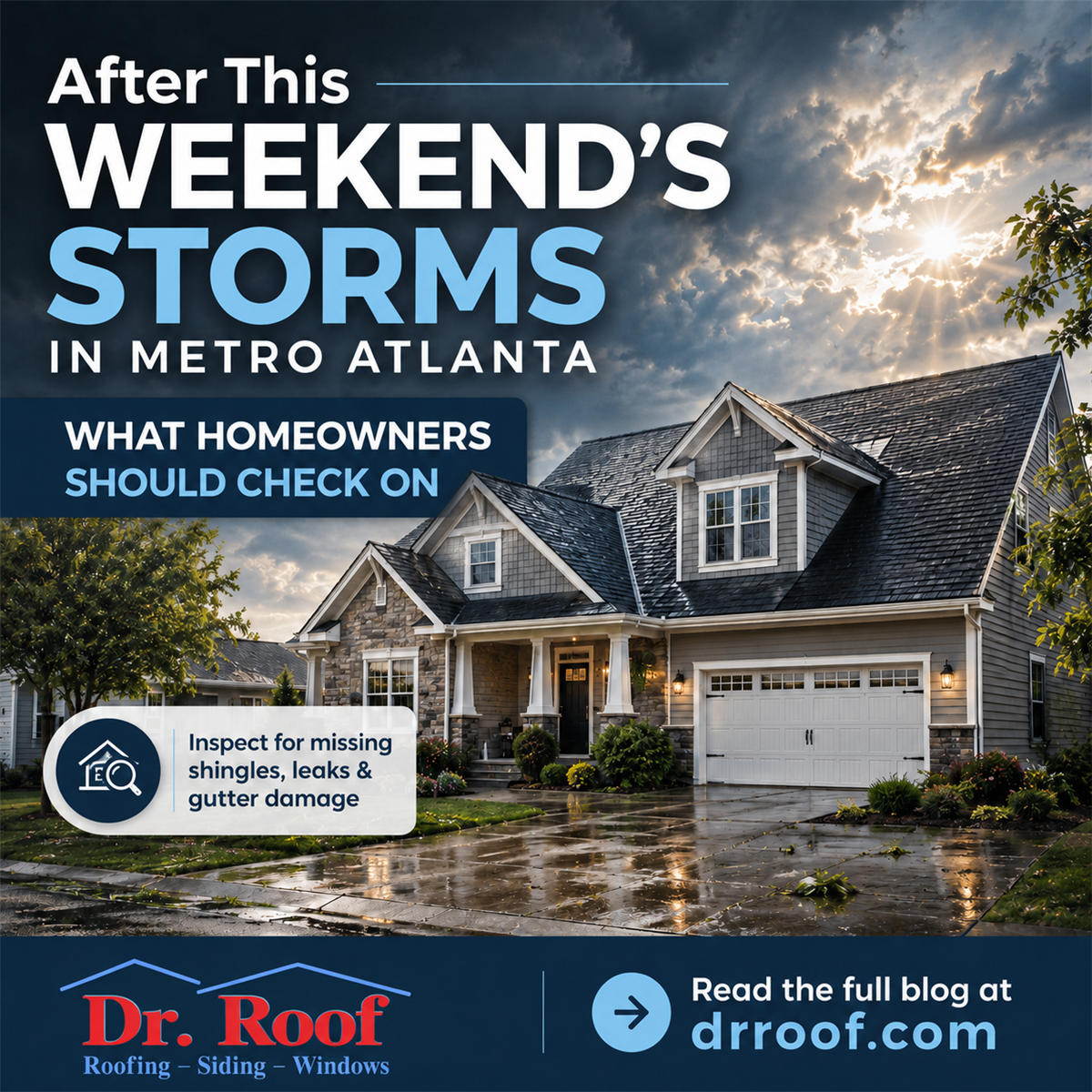
Metro Atlanta saw another round of strong summer storms this weekend, bringing heavy rain, lightning, gusty winds, and hail concerns to parts of the area. For many homeowners, the first instinct after a storm is to check for obvious damage: fallen limbs, missing shingles, or water coming through the ceiling.
But roof damage is not always obvious right away.
In fact, some of the most common storm-related roofing issues start small. A lifted shingle, bruised roof surface, cracked pipe boot, damaged flashing, or clogged gutter may not cause a leak the same day. But once the next round of rain comes through, that small issue can become a much larger and more expensive problem.
At Dr. Roof, we have served metro Atlanta homeowners since 1988, and we know how quickly Georgia storms can expose weak spots in a roofing system. After a weekend like this, it is worth taking a few minutes to safely look around your home and know what warning signs to watch for.
Start With a Safe Ground-Level Inspection
First and most important: do not climb onto your roof after a storm. Wet shingles, loose debris, and hidden damage can make the roof dangerous, even if it looks fine from the ground.
Instead, walk around your home and look for visible signs of storm impact, including:
Missing, lifted, or creased shingles
Shingle pieces or granules near downspouts
Dented gutters, vents, or metal roof accessories
Tree limbs or branches touching the roof
Loose or hanging gutters
Damaged flashing around chimneys, walls, and roof transitions
Water stains on soffits, fascia, ceilings, or attic decking
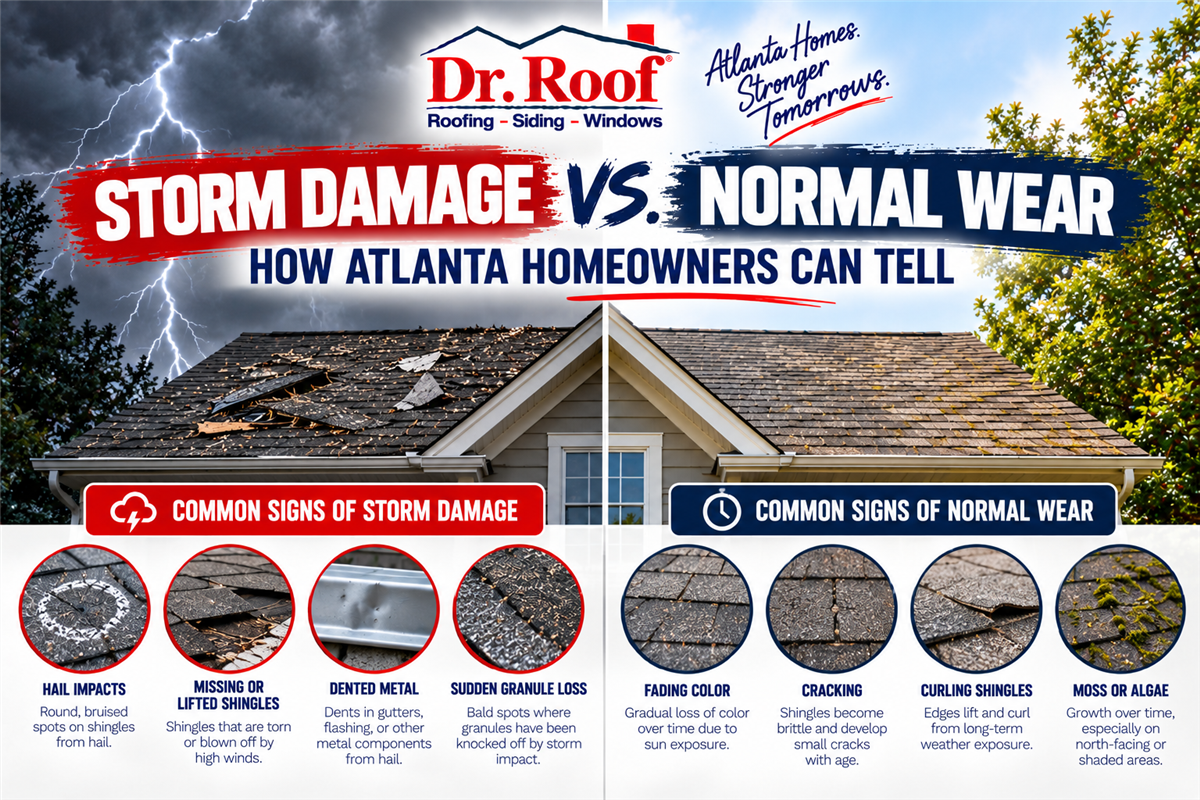
If hail moved through your area, also look at soft metal surfaces such as gutters, downspouts, vents, and metal flashing. Hail damage to shingles can be harder to identify from the ground, but dents on these areas may be a clue that your roof took an impact as well.
Check the Attic Before the Next Rain
Some storm damage shows up inside before it becomes obvious outside. If you can safely access your attic, look for signs of moisture, especially around roof penetrations, valleys, chimneys, and bathroom vent pipes.
Warning signs include:
Dark stains on wood decking
Damp insulation
A musty smell
Daylight coming through roof boards
Drips or wet spots after rainfall
A small leak may not leave a ceiling stain immediately. Many leaks start in the attic and spread slowly before becoming visible in a living space. Finding the issue early can help prevent drywall damage, insulation damage, mold concerns, and more expensive repairs.
Why Wind Damage Matters Even Without a Leak
Strong wind can damage a roof without tearing off large sections of shingles. Sometimes wind lifts the edge of a shingle and breaks the seal underneath. From the street, the roof may look normal. But once that seal is broken, future wind-driven rain can get underneath the shingle and into the roofing system.
That is why homeowners should not assume everything is fine simply because there is no active leak. A storm may create the conditions for a future leak even if water has not yet entered the home.
Don’t Forget Gutters and Drainage
Heavy summer rain can overwhelm gutters quickly, especially if they are clogged with leaves, pine straw, or storm debris. When gutters cannot drain properly, water can back up under the roof edge, overflow near the foundation, or damage fascia and soffit boards.
After a storm, check that your gutters are still attached, draining, and free of visible debris. Also make sure downspouts are pushing water away from the home. Proper drainage is one of the simplest ways to protect your roof, siding, foundation, and landscaping.
Document What You See
If you notice possible storm damage, take clear photos from the ground. Photograph fallen limbs, missing shingles, gutter dents, interior stains, or any debris you find around the home. This helps create a record of what happened and when you noticed it.
If you are considering an insurance claim, documentation matters. A professional roof inspection can also help you understand whether the damage is minor maintenance, repairable storm damage, or something that should be discussed with your insurance carrier.
When to Call a Roofing Professional
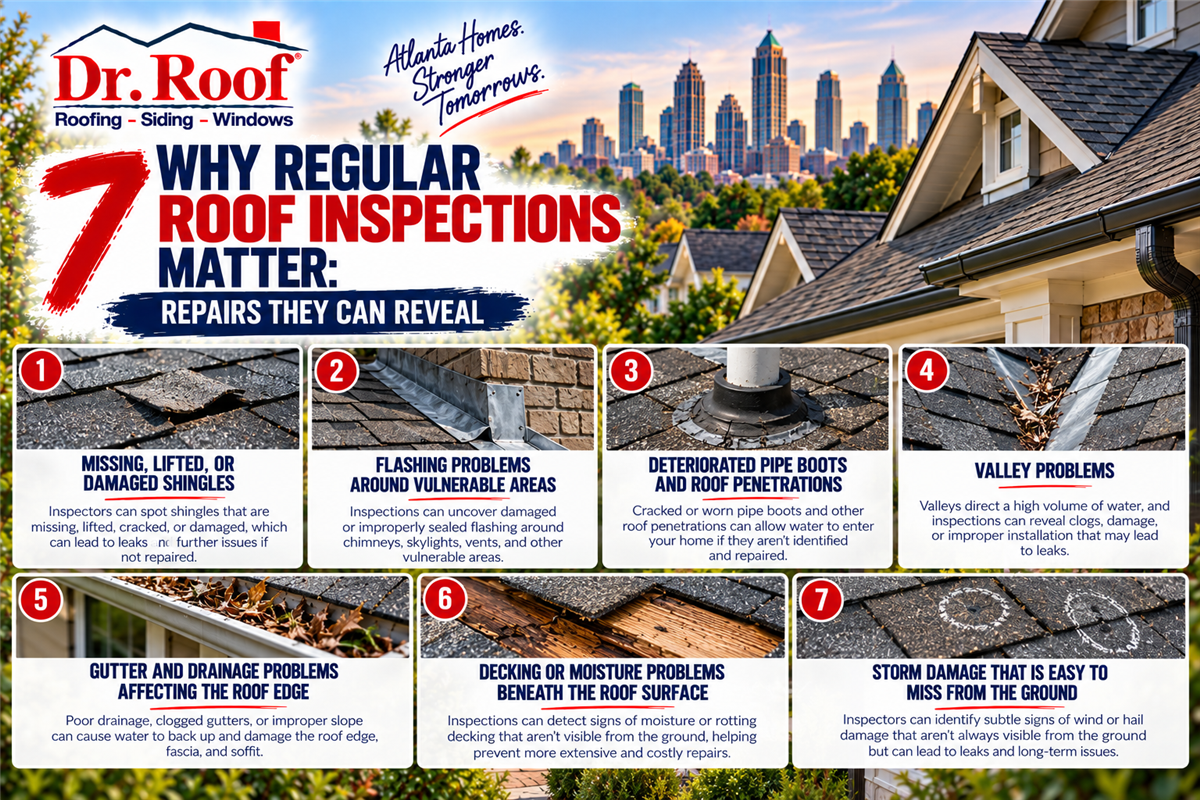
Call a roofing professional if you see missing shingles, interior water stains, gutter or flashing damage, hail indicators, or anything that simply does not look right. You should also schedule an inspection if nearby homes had storm damage or if a large tree limb fell close to your roof.
Storm damage does not get better with time. The sooner it is inspected, the easier it is to determine what happened and what should be done next.
Dr. Roof Is Here for Metro Atlanta Homeowners
For more than 38 years, Dr. Roof has helped Atlanta homeowners protect their homes through every kind of Georgia weather. Whether you need a small roof repair, a storm damage inspection, gutter service, or a full roof replacement, our team is here to help you make an informed decision.
If this weekend’s storms passed through your neighborhood, do not wait for a ceiling stain to appear. Let the experienced team at Dr. Roof take a look and give you honest guidance on the condition of your roof.
Call Dr. Roof today at 770-552-ROOF to schedule your roof inspection.
Dr. Roof - We’ve got you covered.
Subscribe to Dr. Roof's Blog







Comments