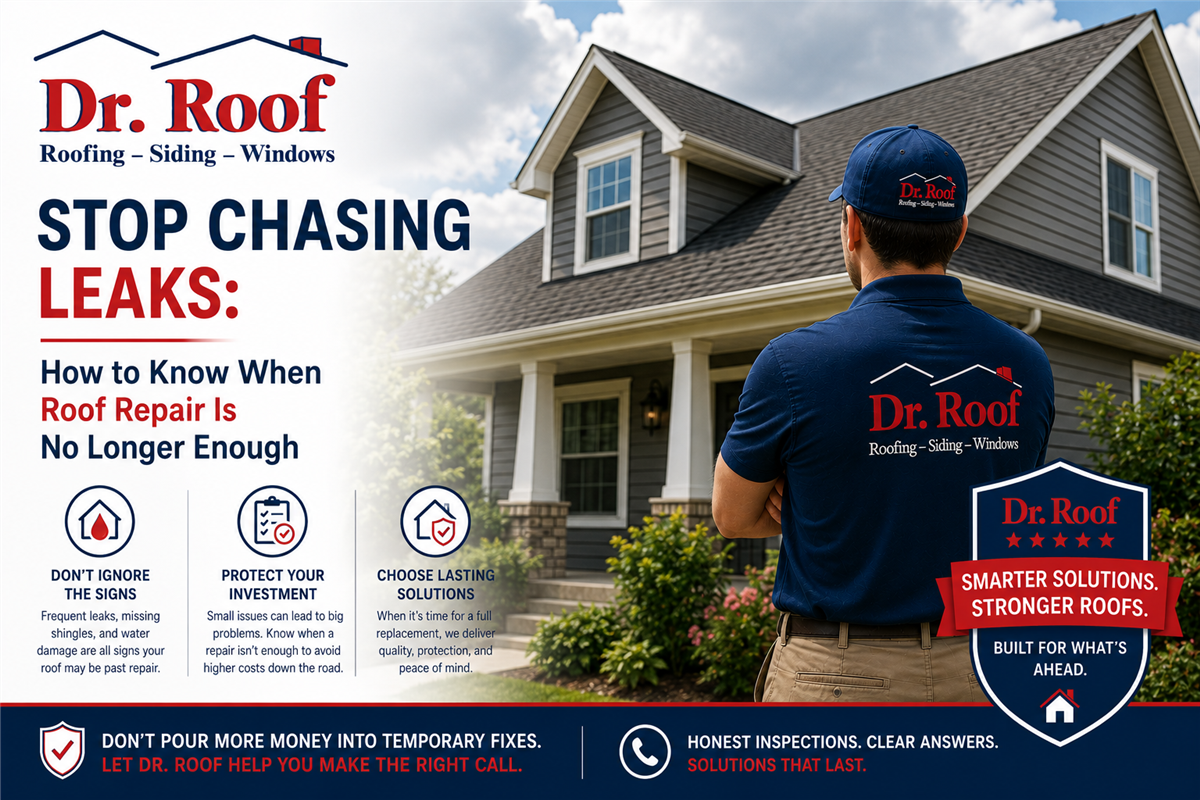
Roof Repair Is Not Always the Long-Term Answer
Roof repair can be a smart, cost-effective solution when the damage is isolated and the rest of the roofing system is still in good condition.
A few missing shingles, a small flashing issue, or a minor leak may be repairable when caught early.
But there comes a point when continued roof repair stops being the best option. If the roof is aging, leaking in multiple areas, showing widespread wear, or has significant storm damage, repeated patching may only delay a bigger decision.
For Atlanta homeowners, knowing when roof repair is no longer viable can help protect your home, avoid recurring problems, and make a smarter long-term investment.
The Myth: A Roof Can Always Be Repaired
Many homeowners assume that if a roof leaks, it can simply be patched. While that may be true in some cases, not every roofing problem is isolated.
A roof is a complete system. Shingles, flashing, underlayment, decking, ventilation, gutters, and roof penetrations all work together to protect the home.
When multiple parts of that system are failing, another repair may not solve the real problem.
At that point, roof replacement may be the more practical and reliable option.
Signs Roof Repair May No Longer Be Enough
There are several warning signs that continued repair may not be the best path forward.
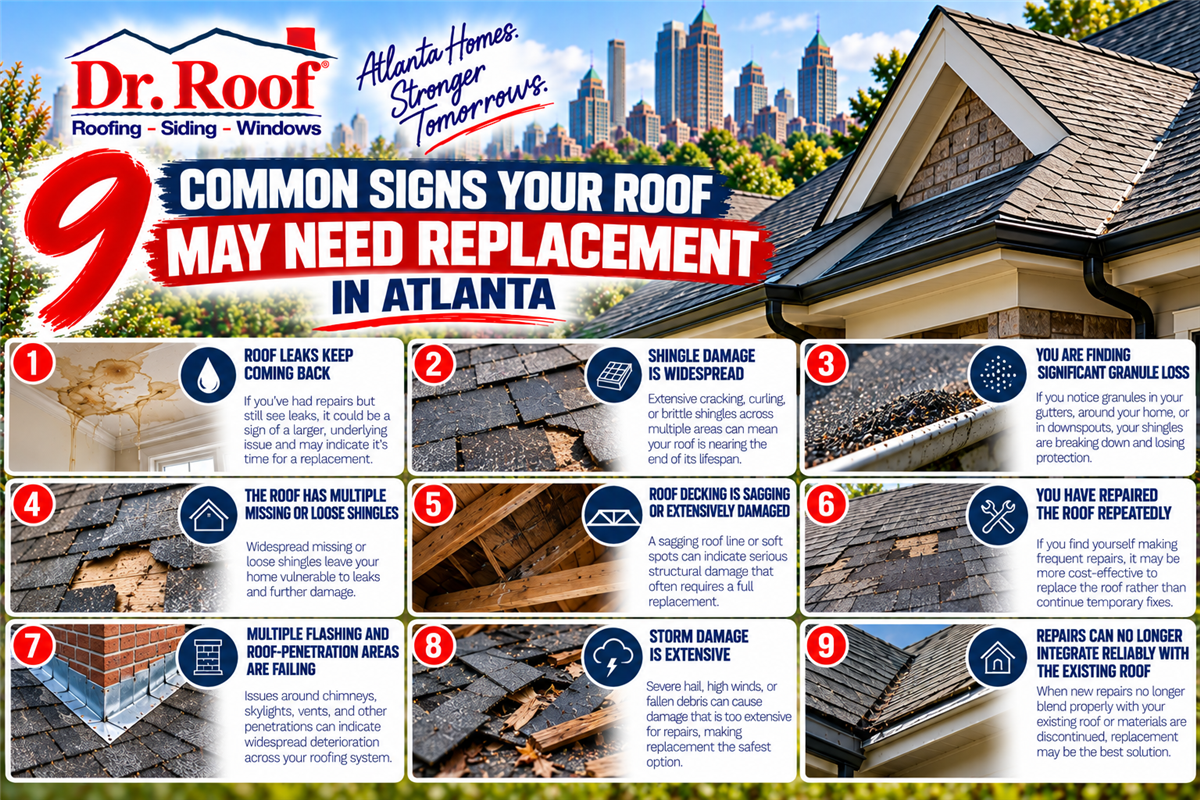
Your Roof Has Multiple Leaks
One leak may point to a specific repair need. Multiple leaks may suggest a larger roofing system issue.
If water is entering in different areas, the roof may have widespread damage, aging materials, or underlying problems that cannot be solved with a simple patch.
Shingles Are Curling, Cracking, or Missing Across Large Areas
A few damaged shingles can often be replaced. But if shingles are curling, cracking, lifting, or missing in several sections, the roof may be nearing the end of its useful life.
Widespread shingle failure can leave the home more vulnerable to water intrusion and storm damage.
There Is Significant Granule Loss
Asphalt shingles rely on protective granules to help shield them from sun exposure and weather. If you notice large amounts of granules in gutters, downspouts, or around the home, the shingles may be wearing down.
Heavy granule loss can reduce the roof’s ability to perform properly and may indicate that repair is only a temporary solution.
The Roof Is Near or Past Its Expected Lifespan
Age matters. Even a roof that has been maintained well will eventually reach a point where repairs become less effective.
If your roof is older and problems are becoming more frequent, it may be time to consider whether replacement would provide better long-term value.
Storm Damage Is Widespread
Wind, hail, falling branches, and heavy rain can affect more than one area of the roof. If storm damage is widespread, repairing only the most visible spots may leave other vulnerable areas unaddressed.
A professional inspection can help determine whether the damage is isolated or whether the roof needs a more comprehensive solution.
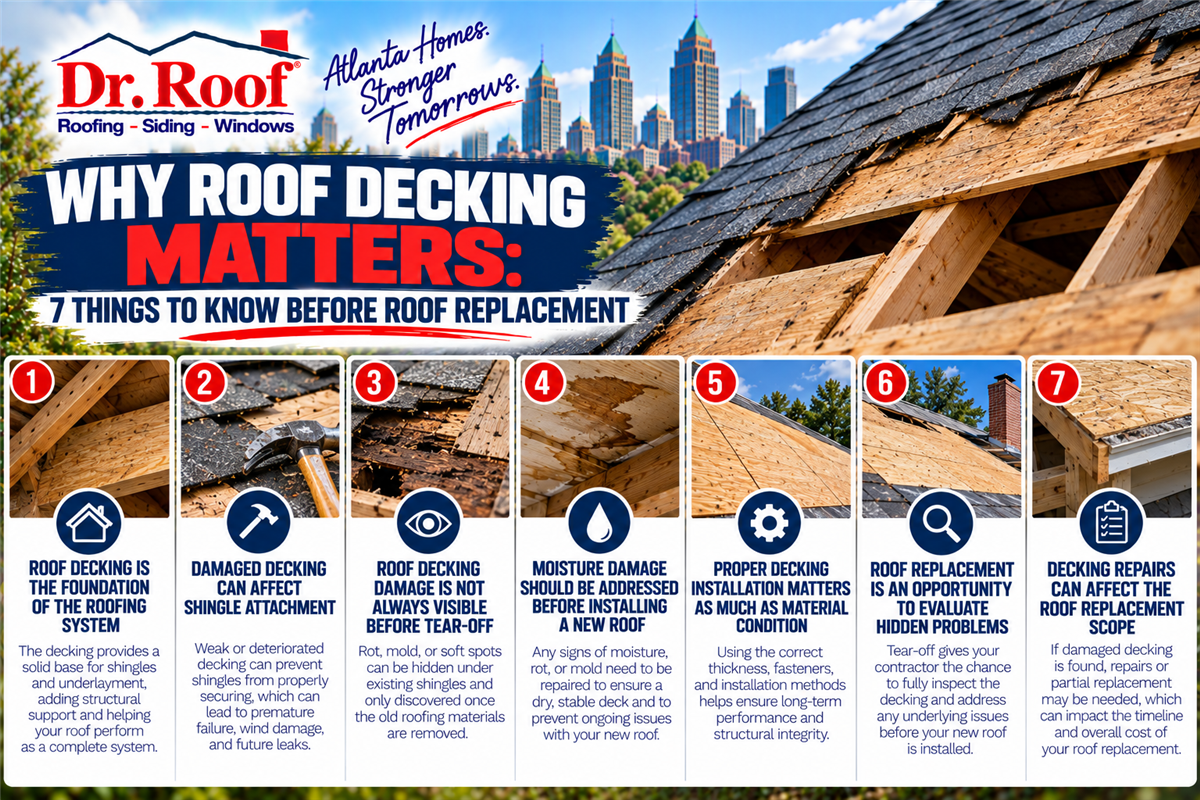
The Roof Decking Is Damaged
If water has reached the decking beneath the shingles, the issue may be more serious than a surface repair.
Damaged decking can affect the stability of the roofing system and may need to be addressed before the home is properly protected.
Repairs Keep Happening Again and Again
If you have repaired the same roof multiple times in a short period, that is a sign worth taking seriously.
Recurring roof repair needs may indicate that the roof is no longer performing as it should. At some point, repeated repairs can become more frustrating and expensive than planning for replacement.
Repair vs. Replacement: What Homeowners Should Consider
The decision between roof repair and roof replacement depends on several factors.
Homeowners should consider:
Age of the roof
Extent of the damage
Number of leaks
Condition of shingles
Condition of flashing
Storm damage concerns
Decking condition
Ventilation concerns
Cost of repeated repairs
Long-term plans for the home
Warranty options
Overall roof performance
A trustworthy roofing contractor should explain both options clearly and help you understand what makes the most sense for your home.
Why a Professional Roof Inspection Matters
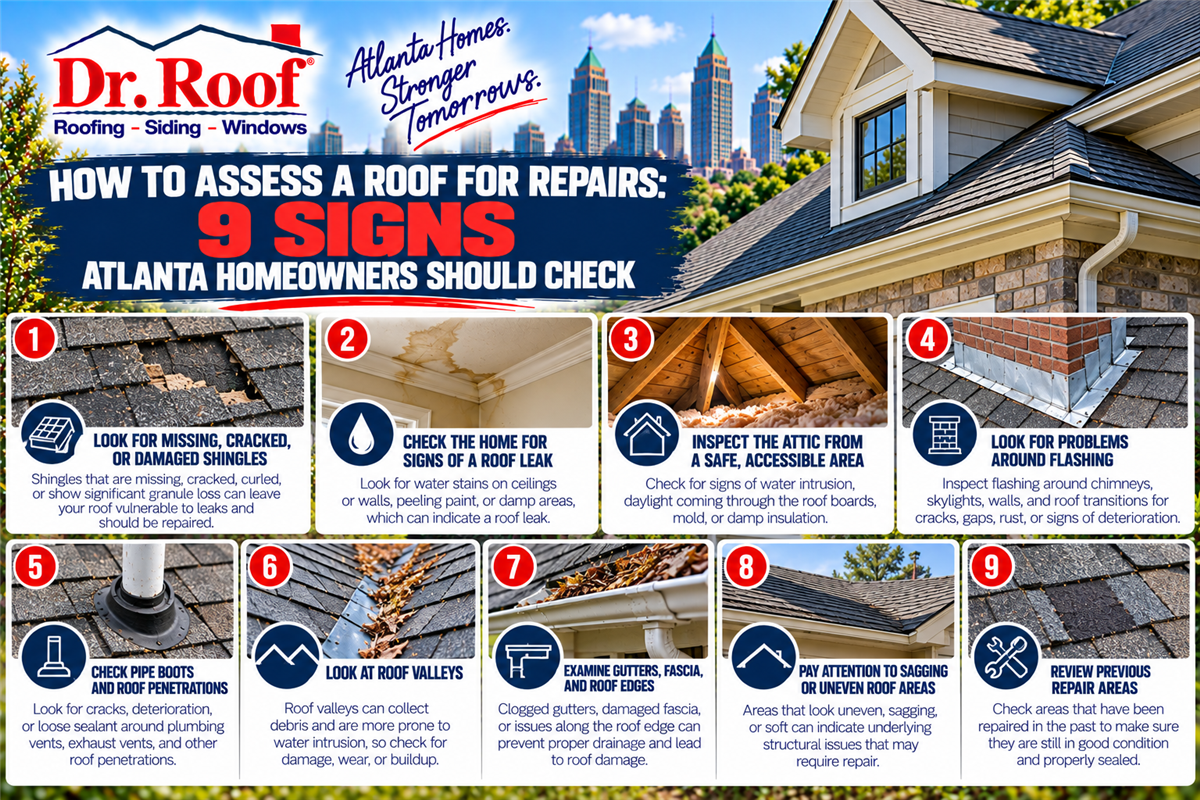
It can be difficult to know from the ground whether roof repair is still a good option. Some damage is obvious, but many roofing problems are hidden beneath the surface.
A professional inspection can help identify:
Shingle deterioration
Flashing failure
Soft or damaged decking
Moisture intrusion
Ventilation issues
Storm damage
Previous repair concerns
Areas vulnerable to future leaks
Dr. Roof provides professional roof inspections for Atlanta homeowners, helping determine whether repair or replacement is the better recommendation based on the roof’s condition.
Do Not Ignore Hidden Water Damage
One of the biggest risks of repeated patching is missing deeper water damage.
A roof may appear repaired from the outside while moisture continues to affect the decking, attic, insulation, or interior spaces. Over time, hidden moisture can lead to more serious concerns.
Signs of possible hidden water damage include:
Ceiling stains
Musty odors
Attic moisture
Mold or mildew concerns
Soft decking
Peeling paint
Sagging roof areas
Water marks around vents or chimneys
If these signs are present, a simple repair may not be enough.
Storm Damage and Insurance Documentation
If your roof damage is related to a storm, documentation can be important.
Dr. Roof can provide photos, written findings, and professional repair or replacement recommendations to help support the insurance claim process. Every insurance policy and claim is different, but clear documentation can help homeowners better understand the damage and communicate with their insurance provider.
Whether repair or replacement is recommended, having a professional assessment helps make the next step clearer.
Why Atlanta Homeowners Choose Dr. Roof
Dr. Roof has served the Atlanta area since 1988, helping homeowners protect their homes with professional roof repair, roof replacement, and exterior services.
Homeowners choose Dr. Roof because we offer:
Decades of Atlanta-area roofing experience
Professional roof inspections
Honest repair and replacement recommendations
GAF Master Elite certification
Quality asphalt shingle and DaVinci roofing options
Storm damage documentation support
Strong warranty options
Clear communication
A customer-first approach
A commitment to doing the job right
Our goal is to help homeowners make informed decisions, not push unnecessary work.
When Replacement May Be the Smarter Investment
Roof replacement may be the better choice when repairs no longer provide lasting protection.
A new roof can offer:
Better home protection
Improved curb appeal
Stronger weather resistance
Updated materials
Better ventilation opportunities
Warranty options
Fewer recurring repair concerns
Long-term peace of mind
While repair may solve a small issue, replacement may be the smarter investment when the roofing system as a whole is worn out or compromised.
Know When to Stop Patching
Roof repair has its place, but it is not always the right long-term solution. If your roof has recurring leaks, widespread shingle damage, significant storm impact, hidden moisture concerns, or age-related wear, it may be time to consider replacement.
The best way to know is to schedule a professional inspection.
If you are unsure whether your Atlanta-area home needs roof repair or roof replacement, contact Dr. Roof. Our team can inspect your roof, explain what we find, and help you choose the option that protects your home for the long run.
Frequently Asked Questions
Is repairing my roof always cheaper than replacing it in the long run?
No, this is a common misconception. While initial roof repair costs are lower, frequent, escalating repairs on an aging or extensively damaged roof can quickly accumulate. Over time, these cumulative costs often exceed the investment of a full replacement, which provides superior, long-term protection and a new warranty, making it a more cost-effective solution.
How do I know when roof repair is no longer viable and replacement is the smarter choice?
Several critical signs indicate when roof repair is no longer viable. These include widespread shingle damage or granular loss, visible sagging, consistent leaks, an aging roof (typically over 20-25 years for asphalt shingles), or if more than 25% of your roof is damaged. A professional inspection from an experienced expert can provide a definitive assessment.
Does the "25% Rule" really apply to my residential roof repair decisions?
Yes, the "25% Rule" is a valuable guideline. It suggests that if 25% or more of your roof is compromised by damage, a full roof replacement is often more practical and financially sound than attempting extensive roof repair. This rule helps homeowners avoid a cycle of ineffective and costly patching on a significantly deteriorated roof section.
Can frequent small roof repairs extend my roof's life indefinitely?
While small, targeted roof repairs can certainly prolong a roof's life in its early to mid-stages, they cannot extend it indefinitely. Frequent repairs on an old or severely damaged roof often act as temporary band-aids, failing to address underlying structural issues or widespread material fatigue. This approach can hide bigger problems and delay an inevitable replacement.
What are the long-term benefits of replacement when roof repair isn't enough?
When roof repair is no longer the answer, a full replacement offers numerous long-term benefits. These include enhanced structural integrity, improved energy efficiency for your home, increased curb appeal and property value, and comprehensive warranty protection, such as lifetime labor and material warranties. It provides lasting peace of mind and superior protection against future elements.
Subscribe to Dr. Roof's Blog



Comments