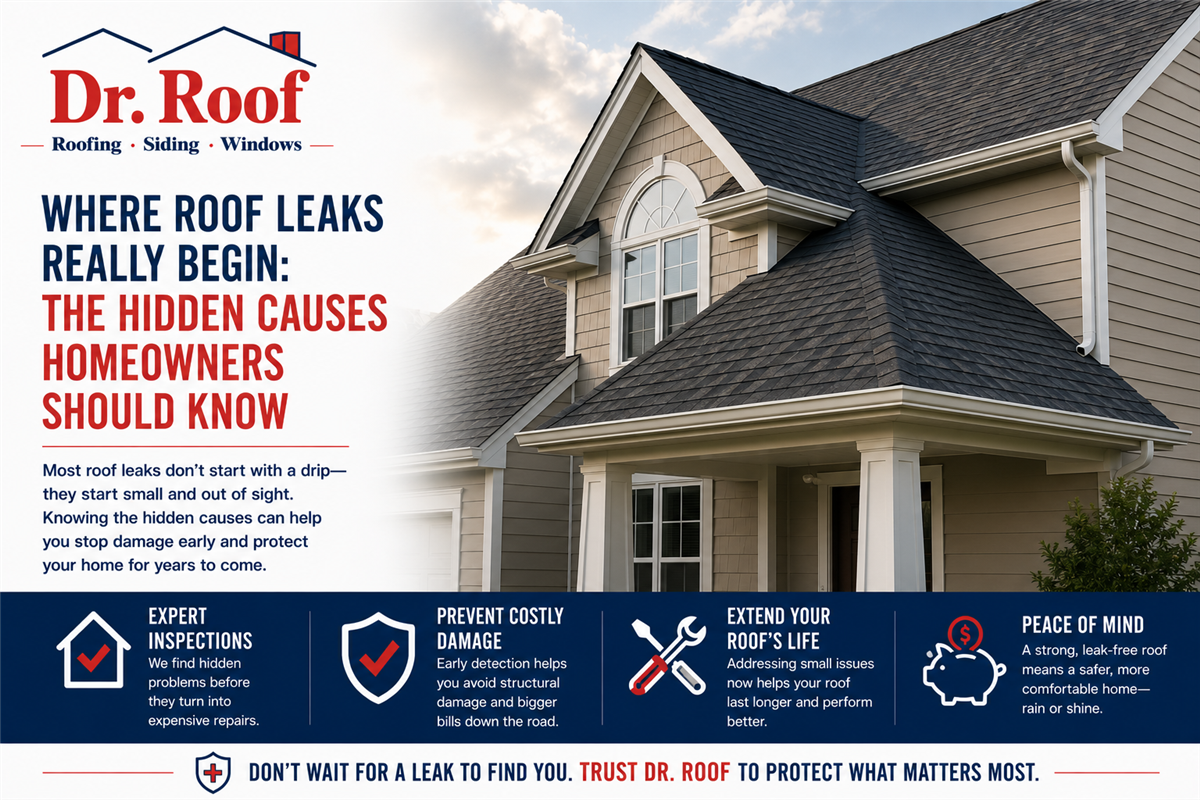
Roof Leaks Are Not Always Where They Seem
When a water stain appears on the ceiling, many homeowners assume the leak is directly above it. It seems logical: water shows up in one spot, so the roof problem must be in that same area.
Unfortunately, roof leaks are rarely that simple.
Water can enter through one part of the roof, travel along rafters, decking, insulation, or interior framing, and appear many feet away from the original entry point. That is why residential roof leaks can be difficult to diagnose without a professional inspection.
At Dr. Roof, we help Atlanta homeowners identify the real source of roof leaks so repairs can address the cause, not just the symptom.
The Myth: Roof Leaks Are Easy to Find
One of the most common misconceptions about roof leaks is that the source will be obvious. Homeowners may look for a missing shingle, a visible hole, or damage directly above the ceiling stain.
But many leaks begin in less obvious places.
Small gaps, worn seals, damaged flashing, aging shingles, clogged gutters, or compromised roof penetrations can allow water into the roofing system without creating an immediate, visible problem from the outside.
A quick visual check is not always enough.
Common Causes of Residential Roof Leaks
Roof leaks can develop for many reasons. Some are caused by storm damage, while others result from age, poor installation, or normal wear over time.
Damaged or Aging Flashing
Flashing is installed around vulnerable areas of the roof, including chimneys, skylights, vents, walls, and valleys. Its job is to help direct water away from seams and transitions.
When flashing becomes loose, rusted, cracked, or improperly sealed, water can enter around these areas. Flashing problems are one of the most common causes of roof leaks because they often happen in places where the roof already has natural weak points.
Worn or Damaged Shingles
Shingles protect the roof from rain, sun, wind, and daily exposure. Over time, they can crack, curl, blister, lose granules, or become loose.
Even if shingles are still in place, they may no longer be protecting the roof properly. Damaged shingles can allow water to seep beneath the surface, especially during heavy rain or wind-driven storms.
Vent Boots and Pipe Collars
Roof vents and plumbing pipes require seals to prevent water from entering around the opening. These seals can wear down from sun exposure, heat, and age.
A cracked or deteriorated vent boot may look minor, but it can create a direct path for water into the home. Because these areas are small and often hard to see from the ground, they are easy to overlook.
Clogged or Damaged Gutters
Gutters play an important role in moving water away from the roofline. When gutters are clogged with leaves, pine needles, or debris, water can back up under shingles or overflow near fascia boards.
This can lead to roof edge damage, fascia rot, siding issues, foundation concerns, and interior leaks.
A roof leak may sometimes begin with a drainage problem rather than a shingle problem.
Skylight or Chimney Leaks
Skylights and chimneys are common leak sources because they require careful flashing and sealing. Over time, sealants can deteriorate, flashing can shift, or surrounding materials can wear down.
Water may enter around these features and travel before showing up inside the home.
Storm Damage
High winds, hail, falling limbs, and heavy rain can all create roof damage. Some storm damage is obvious, such as missing shingles or punctures. Other damage is subtle, including lifted shingles, hail bruising, loosened seals, and granule loss.
After severe weather, a professional roof inspection can help identify damage before it turns into a larger leak.
Poor Installation or Previous Repairs
Sometimes leaks happen because a roof, flashing, vent, or repair was not installed correctly. Shortcuts during installation may not cause problems right away, but over time they can lead to water intrusion.
A professional inspection can help determine whether a leak is caused by wear, storm damage, or an installation issue.
Why Accurate Leak Detection Matters
A roof leak repair is only effective if it addresses the true source of the problem.
If the wrong area is patched, water may continue entering the home. This can lead to repeated repairs, ongoing interior damage, and frustration for homeowners.
Accurate leak detection may include:
Inspecting shingles and flashing
Checking vents, chimneys, skylights, and roof penetrations
Reviewing gutters and drainage areas
Looking inside the attic for water trails or stains
Identifying moisture patterns
Evaluating storm damage
Checking previous repair areas
This thorough approach helps prevent guesswork and supports a more lasting repair.
What to Do If You Suspect a Roof Leak
If you notice signs of a roof leak, taking quick action can help reduce damage.
1. Protect the Interior
Move furniture, electronics, and valuables away from the affected area. Place a bucket or container under active dripping if needed.
2. Look for Interior Clues
Check ceilings, walls, and attic spaces for water stains, damp insulation, moldy odors, or visible moisture.
3. Avoid Climbing on the Roof
A wet or damaged roof can be dangerous. It is safer to leave roof-level inspections to trained professionals.
4. Schedule a Professional Inspection
Contact a trusted roofing contractor to identify the source of the leak and recommend the right repair.
Why Atlanta Homeowners Choose Dr. Roof
Dr. Roof has served the Atlanta area since 1988, helping homeowners protect their homes from leaks, storm damage, and everyday roof wear.
Our team understands how Georgia weather affects residential roofing systems. From heavy rain and humidity to wind, hail, and heat, Atlanta roofs face conditions that can create hidden vulnerabilities over time.
Homeowners choose Dr. Roof for:
Professional leak detection
Thorough roof inspections
Clear repair recommendations
Storm damage documentation support
GAF Master Elite certification
Decades of local experience
Quality workmanship
Strong warranty options
Honest communication
Do Not Let a Small Leak Become a Bigger Problem
A roof leak may seem minor at first, but water damage can spread quickly if the source is not identified and repaired.
The key is not just stopping the drip. It is finding where the water is entering and fixing the underlying problem.
If you notice water stains, dripping, musty odors, missing shingles, or signs of roof damage, contact Dr. Roof to schedule a professional roof inspection. Our team can help identify the cause of the leak and recommend the right repair to protect your home.
Frequently Asked Questions
Why do people often misdiagnose the source of residential roof leaks?
Many homeowners mistakenly believe that a ceiling stain directly corresponds to a leak directly above it. However, water often travels horizontally along roof decking or rafters before dripping inside, making the actual entry point difficult to locate without professional tools and experience.
What are the most common hidden causes of residential roof leaks that homeowners overlook?
Often overlooked culprits include compromised flashing around chimneys, vents, and skylights, deteriorated pipe collars or vent boots, and subtle damage like cracked or curled shingles that aren't immediately obvious from the ground. Clogged gutters can also cause water to back up and seep under the roofing materials.
Is it true that a new roof can't experience residential roof leaks?
No, this is a common misconception. While less common, new roofs can still leak due to improper installation techniques, material defects, or damage sustained during subsequent installations (like satellite dishes). Even a high-quality roof requires expert care to prevent issues.
How are elusive residential roof leaks pinpointed?
Professional contractors utilize a thorough, multi-step diagnostic process. This includes detailed interior and exterior inspections, careful examination of all roof components, and often targeted water testing to simulate rainfall and trace the precise path of water intrusion, ensuring an accurate roof repair plan.
What proactive steps can homeowners take to prevent unexpected residential roof leaks?
Regular professional roof inspections, especially after severe weather, are crucial for early detection of potential issues. Keeping gutters clean, trimming overhanging branches, and addressing minor shingle damage promptly can significantly reduce the risk of major residential roof leaks developing.
Subscribe to Dr. Roof's Blog







Comments