
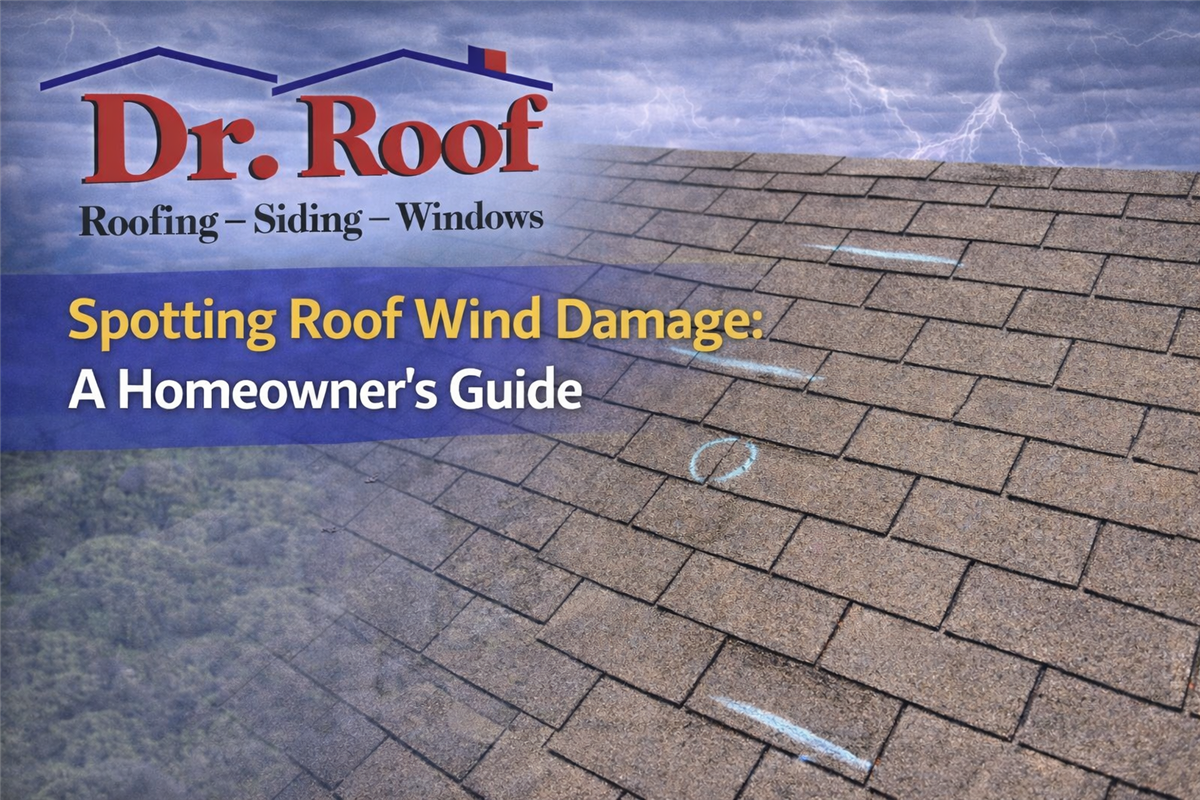
This guide helps Atlanta homeowners identify potential wind damage on a roof following a storm, ensuring they can take prompt action to prevent further damage. Learn to spot missing shingles, granule loss, and other signs of wind-related roof issues to protect your home with timely storm restoration.
Understanding the Impact of Wind Damage on Your Roof
Identifying wind damage on a roof is crucial for maintaining the structural integrity of your home. Strong winds can wreak havoc, leading to missing shingles, leaks, and costly repairs if left unaddressed for too long.
As a GAF Master Elite certified contractor in the Atlanta area, Dr. Roof has seen firsthand the impact of severe weather on roofs. We understand the importance of early detection to protect your investment.
The Hidden Dangers of Undetected Roof Wind Damage
Our priority at Dr. Roof is Quality Craftsmanship, Integrity, and Customer Satisfaction. A core value is providing industry-leading warranties on both labor and materials for our clients.
With over 30 years of local industry experience, Dr. Roof has encountered countless wind-damaged roofs. We know that undetected damage can quickly escalate into more significant problems, compromising your home's safety.
Key Indicators of Wind Damage: What to Look For
Begin by conducting a visual inspection of your roof from the ground, using binoculars for a closer look. Never climb onto the roof yourself unless you possess proper safety equipment and experience.
Look for shingles that are missing, cracked, or curled, paying close attention to the roof edges. These areas are often the most vulnerable to strong wind gusts. Also, inspect roof vents, chimneys, and other protrusions for any signs of compromise.
Missing shingles are a clear sign of wind damage, as high winds can lift and tear them away, exposing the underlayment. This exposure can lead to water infiltration and further damage to the underlying roof structure.
Curled or lifted shingles also indicate wind damage, as strong winds can bend or warp them, creating an uneven surface prone to leaks. Additionally, cracked shingles may suggest wind damage, especially if they have become brittle from sun exposure.
Granule loss is another significant indicator of wind damage. Shingles are coated with granules that protect them from UV rays and enhance durability. Wind can dislodge these granules, leaving bare spots on your shingles.
This loss can shorten your roof's lifespan and make it more susceptible to leaks. Check your gutters and downspouts for excessive granules, which often signal granule loss. Inspect the areas around your downspouts for any signs of water damage, indicating a potential roof leak.
Addressing Flashing Damage and Professional Expertise
Our team addresses the impact of wind on flashing around chimneys, vents, and skylights as part of our Make-It-Right guarantee. Wind can lift or tear away flashing, creating gaps for water to seep into your home.
Examine the flashing for any signs of damage, such as bends, cracks, or rust. You should also inspect the sealant around these areas for deterioration. Proper attention to flashing is crucial for effective storm restoration.
During a storm restoration project in North Druid Hills in March 2025, we assisted a client whose chimney flashing was severely damaged by high winds. Our comprehensive inspection and repair resolved the issue, preventing further leaks.
The client received industry-leading warranties on both labor and materials, and the project took about two weeks. This timely intervention saved them from significant water damage, which could have cost an additional $5,000 in repairs.
Your Systematic Approach to Wind Damage Restoration
Once you've identified potential wind damage, it's essential to contact a qualified roofing contractor for a professional inspection. They can accurately assess the extent of the damage and recommend appropriate repairs or replacement.
It is equally important to contact your insurance company to file a claim. Document all damage with photos and videos, and keep detailed records of every communication with both your insurance provider and roofing contractor.
Professional Storm Restoration: What to Expect
The storm restoration process typically involves several key steps. First, a roofing contractor will conduct a thorough inspection to assess the damage to your roof. They will then provide you with a detailed report outlining all necessary repairs or replacements.
Next, you will work with your insurance company to file a claim and obtain approval for the work. Once the claim is approved, the roofing contractor will begin the repairs or replacement, ensuring the work meets the highest standards.
Finally, upon completion, the roofing contractor will provide you with a warranty on both their workmanship and the materials used. This guarantees peace of mind for your repaired roof.
Protecting Your Roof: Proactive Measures
Implementing preventative measures can significantly help protect your roof from future wind damage. Trim any trees and shrubs located close to your roof, as they can cause damage during strong winds.
Ensure that your gutters and downspouts remain clear of debris. Clogged gutters can cause water to back up onto your roof, leading to further issues. Consider upgrading to impact-resistant shingles designed to withstand high winds and hail.
Regular inspections by a qualified roofing contractor are also vital. These assessments can identify and address potential problems before they escalate into costly damage, ensuring your roof's longevity.
Safeguarding Your Home Against Wind Damage
Addressing wind damage on a roof promptly is crucial for protecting your home from further harm. By taking proactive steps and seeking professional assistance when needed, you can maintain the integrity of your roof and avoid expensive repairs down the road.
Frequently Asked Questions
What is wind damage on a roof, and how does it occur?
Wind damage on a roof refers to any harm caused by strong winds, such as missing shingles, granule loss, or damaged flashing. It typically occurs when high winds exert excessive force on roofing materials, leading to their detachment or deterioration.
How long does the storm restoration process typically take?
The storm restoration process timeline can vary depending on the extent of the damage, insurance claim processing, and contractor availability. Generally, it can take anywhere from a few weeks to a couple of months to complete the entire restoration.
What makes a professional roofing inspection effective in detecting wind damage on a roof?
Professional roofing inspections are effective because they involve trained experts who can identify subtle signs of wind damage that homeowners might miss. They also have the tools and expertise to assess the structural integrity of the roof and provide accurate recommendations.
What mistakes should I avoid when dealing with wind damage on a roof?
Avoid attempting DIY repairs without proper knowledge and safety equipment. Also, be wary of contractors who offer unrealistically low bids or pressure you into signing contracts without thoroughly reviewing them.
How can impact-resistant shingles protect my roof from future wind damage?
Impact-resistant shingles are designed to withstand higher wind speeds and resist damage from hail and debris. They offer enhanced protection compared to traditional shingles, reducing the likelihood of future wind damage on a roof, and they increase your roofs overall durability.
Subscribe to Dr. Roof's Blog





Comments