
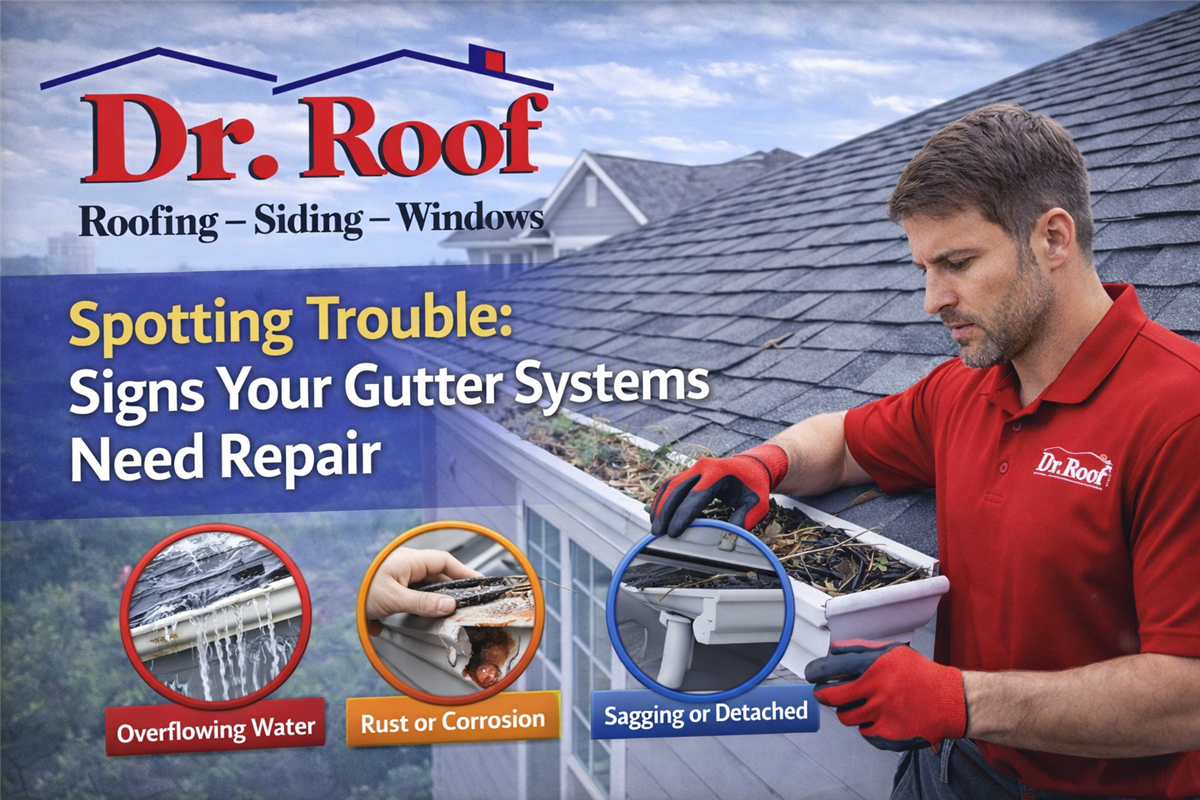
This guide helps homeowners identify signs of damaged house gutters, preventing costly water damage. It's essential for maintaining your home's value and structural integrity by understanding gutter health.
We cover common problems like leaks, sagging, and rust, emphasizing timely action. Understanding the importance of gutter systems for home protection is key for proactive maintenance and avoiding significant water damage repairs.
A Compelling Story of Gutter Neglect
During the spring of 2025, I encountered a homeowner facing a significant issue: water was consistently pooling around their foundation. This seemingly minor problem signaled a much larger underlying issue with their home's protection system.
Upon closer inspection, our team at Dr. Roof discovered the existing gutter systems were severely corroded and leaking in multiple places. This kind of damage compromises a home's structural integrity and can lead to expensive repairs if left unchecked.
We recommended replacing the old system with a more durable, seamless gutter solution. Within five days of installation, the water pooling issue was entirely resolved, and the client reported saving an estimated $1,200 in potential foundation repair costs. This firsthand experience vividly demonstrated the critical role of properly functioning gutters in safeguarding a home's foundation.
The Silent Protectors: Understanding Gutter Importance
Your home's gutter systems are more than just an aesthetic feature; they are essential for directing rainwater away from the foundation, siding, and landscaping. Properly functioning gutters prevent water damage, soil erosion, and costly structural repairs.
Conversely, damaged gutters can lead to a host of problems, often silently, before they escalate into major issues. Recognizing these early signs of trouble is crucial for maintaining your home's health and value over time.
Uncovering Visible and Hidden Damage
The journey to identifying gutter problems often begins with visible damage. This can manifest as noticeable cracks, holes, or rust spots directly on the gutters themselves, indicating material fatigue or impact damage.
Sagging gutters, or those that have visibly pulled away from the house, are another clear and urgent indication of a problem. These issues severely compromise the system's ability to effectively channel water away, making professional assessment vital.
Leaks are also a common symptom of damaged house gutters. Homeowners should look for water stains or persistent dampness around the foundation, as this suggests water is overflowing or escaping from the gutters and seeping into the surrounding ground.
Furthermore, signs of water damage on siding or fascia boards often point to leaky gutters allowing water to run down the side of the house. Even seemingly minor issues like clogged gutters can create significant stress, potentially leading to sagging, leaks, or even system collapse.
Beyond the direct gutter issues, peeling paint or water stains on your home's exterior are critical indicators. These suggest water is not being properly diverted and is instead causing damage to the paint and siding over time.
Beyond the Obvious: Addressing Hidden Obstacles
Sometimes, the indicators of damaged gutters are not immediately visible. An unexpected increase in pests like mosquitoes or rodents around your home can be a subtle but telling sign.
These pests are naturally attracted to standing water, which often accumulates in damaged or persistently clogged gutters. Addressing these underlying gutter issues can significantly help in reducing pest problems around your property.
For homeowners looking to conduct an initial assessment, here are key steps to properly inspect your gutter systems:
Visually inspect the gutters: Look for cracks, holes, rust, sagging, or any other signs of physical damage.
Check for leaks: Examine areas around downspouts and seams for water leakage, especially during rainfall.
Inspect the downspouts: Ensure they are securely connected and effectively directing water away from the foundation.
Clean out any debris: Regularly remove leaves, twigs, and other blockages that can clog the gutters and strain the system.
However, for a thorough diagnosis and lasting solutions, a professional perspective is invaluable. Experts at Dr. Roof possess the experience and tools to identify subtle damage and recommend the most effective repairs or replacements.
The Cost of Delay: Lessons from Neglect
As the client story vividly illustrates, ignoring damaged house gutters can lead to significant and escalating problems over time. The most severe consequence is often water damage to the foundation, which can severely compromise your home's structural integrity.
These foundational issues invariably lead to costly and extensive repairs that could have been avoided with timely intervention. Beyond structural concerns, damaged gutters can also contribute to unwanted mold growth, posing potential health risks to your family.
The lesson learned is clear: addressing gutter issues promptly is not just about maintenance; it's about safeguarding your entire home and protecting your significant investment. Proactive care ensures minor issues don't snowball into major financial burdens.
Connecting the Dots: Your Gutters and Home Value
The challenges faced by the homeowner in our story underscore a universal truth: the type and condition of your gutter systems directly impact your home's long-term health. Understanding these systems is crucial for every property owner.
Different gutter materials offer varying lifespans and levels of susceptibility to damage. For instance, aluminum gutters are often chosen for their affordability and durability, yet they remain vulnerable to extreme weather or falling debris.
In contrast, while copper gutters are recognized for their superior durability and longevity, they typically come with a higher price point. Choosing the right system and ensuring its upkeep are vital for consistent protection.
Regardless of the material, a well-maintained gutter system acts as a frontline defense against environmental wear and tear. This proactive approach prevents the kind of severe damage experienced by our featured client.
Proactive Protection for Lasting Peace of Mind
Regular inspection and proactive maintenance are paramount to keeping your gutter systems in optimal condition. Identifying and addressing signs of damage early, as we saw with our client, prevents costly future repairs and safeguards your home from extensive water damage. For comprehensive evaluations and expert solutions, consider scheduling a professional gutter inspection with Dr. Roof to ensure your property remains protected.
Frequently Asked Questions
What are the main signs of damaged house gutters?
The main signs include visible cracks, holes, rust, sagging gutters, leaks, water damage on the siding or foundation, peeling paint, and an increase in pests around your home.
How long does gutter repair typically take?
The duration of gutter repair depends on the extent of the damage. Minor repairs can be completed in a few hours, while more extensive repairs or replacements may take a day or two.
What makes professional gutter inspection effective?
Professional gutter inspections are effective because they identify hidden damage and potential issues that homeowners might miss. They also ensure proper installation and functionality of the gutter system.
What mistakes should I avoid when maintaining gutter systems?
Avoid neglecting regular cleaning, ignoring minor damages, improper DIY repairs, and using harsh chemicals that can damage the gutter material. Regular maintenance and professional assessments are key.
What is a typical cost to replace damaged gutter systems?
The cost to replace gutter systems can vary widely depending on the material, size of the home, and complexity of the installation. It's best to get quotes from local contractors, but, in my experience helping clients, complete replacement of damaged gutters typically costs between $900 and $2,000, installed.
Subscribe to Dr. Roof's Blog







Comments